Executive Summary
According to the available source information, a major earthquake in Kumamoto Prefecture has halted operations at multiple semiconductor factories in Kyushu, one of Japan’s most important chip manufacturing regions. Renesas Electronics’ Kawajiri and Nishiki plants are specifically identified as affected, with reported damage including ceiling collapses, wall cracks, and water leaks.
The immediate significance is operational: industry experts cited in the report warn that supply of automotive chips and other semiconductor components could stagnate. For Asia’s technology and industrial supply chains, the broader issue is concentration risk. When several facilities in the same region are disrupted by a single event, downstream effects can spread quickly even before the full scale of the damage is known.
This matters not only for Japan’s domestic manufacturing base but also for regional supply-chain planning. Kyushu plays a visible role in Japan’s semiconductor ecosystem, and any prolonged outage at key facilities could tighten supply for sectors that depend on stable chip deliveries. At this stage, the key question is not simply how much damage occurred, but how quickly affected plants can return to normal operations.
Watch the Short Brief
Watch this short visual briefing for the key strategic implications behind the story.
Key Developments
A source report published on July 30 states that a major earthquake in Kumamoto Prefecture disrupted semiconductor production across Kyushu. Multiple factories reportedly halted operations following the disaster.
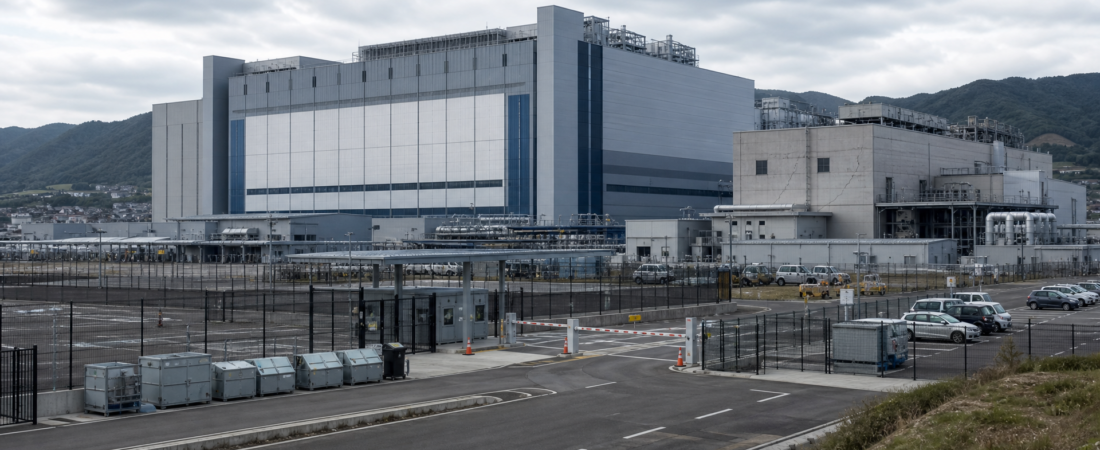
Renesas Electronics’ Kawajiri and Nishiki plants are among the facilities specifically named in the report. Reported damage at affected sites includes ceiling collapses, wall cracks, and water leaks, indicating that the disruption is not limited to precautionary shutdowns alone.
Industry experts cited in the report warn that supply of automotive chips and other key semiconductor components may stagnate as a result. The source title also says numerous industries have seen factories halted, though the available summary does not provide a full industry-by-industry breakdown beyond the warning around automotive-related semiconductor supply.
The report situates the disruption in Kyushu, a region often referred to as Japan’s “Silicon Island.” That label matters because it reflects the region’s importance to Japan’s semiconductor manufacturing footprint, even if the available source information does not quantify the full scope of output now at risk.
TSMC and Sony Group are listed as related companies in the source materials. However, the available information does not confirm operational disruption at their facilities, if any, and that distinction is important. For now, the clearly reported impact is centered on the Renesas plants and on broader factory stoppages in the region.
Strategic Analysis
The most immediate reading of this event is straightforward: a natural disaster has interrupted chip production in a strategically important Japanese manufacturing region. But for TechPowerAsia readers, the deeper relevance lies in what this episode may reveal about supply-chain structure across Asia’s semiconductor ecosystem.
Semiconductor manufacturing often benefits from geographic clustering. Regions develop specialized supplier bases, talent pools, logistics links, and customer relationships that make production more efficient over time. Kyushu fits that pattern. The same concentration that supports industrial efficiency, however, can also create vulnerability when a single shock affects multiple facilities at once.
That vulnerability matters especially when the products in question include chips used in automotive and industrial systems. These are not always components that can be replaced quickly with generic alternatives. Even without making plant-specific assumptions that are not confirmed in the source, the reported risk of supply stagnation suggests that recovery speed will matter as much as the initial damage assessment.
For Japan, this is also a test of how resilient its semiconductor resurgence is under real-world operating stress. In recent years, semiconductor strategy in Asia has increasingly emphasized not only capacity expansion but also supply security, manufacturing continuity, and ecosystem depth. An event like the Kumamoto earthquake does not by itself overturn that strategy, but it does underline a practical point: expanding capacity is one thing, maintaining resilience under disruption is another.
There is also a wider regional implication. Asia’s semiconductor supply chains are deeply interconnected. A production interruption in Japan can matter far beyond Japan when affected outputs sit upstream of vehicle assembly, industrial electronics, or other manufacturing processes elsewhere in the region. Even if the direct impact proves limited, the event may reinforce existing caution among companies that rely on tightly timed semiconductor deliveries.
At the same time, it is important not to overstate what has been confirmed. The available source information does not establish the duration of the shutdowns, the percentage of capacity affected, or the extent of downstream shortages. Nor does it confirm whether the disruption extends in a material way beyond the named Renesas sites. That means the strategic signal today is about risk exposure and monitoring, not about declaring a full-scale regional semiconductor shortage.
The mention of TSMC and Sony Group in the source materials is best understood as part of that monitoring framework rather than as evidence of broader confirmed damage. If later reporting shows that additional facilities in Kyushu have been materially affected, the story could shift from a serious but contained operational disruption into a wider regional supply-chain event. Until then, the strongest conclusion supported by the current information is that a key Japanese semiconductor cluster has been hit by a natural disaster and that the risk to supply continuity is credible enough to warrant close attention.
Another strategic implication concerns corporate and policy planning. Events like this may strengthen the case for redundancy in production networks, inventory buffers for critical components, and wider geographic dispersion of some manufacturing steps. That does not mean companies can or will rapidly reconfigure their footprints. But it does suggest that resilience planning remains a live issue for the semiconductor sector, particularly in Asia where major manufacturing clusters are both highly productive and exposed to natural and geopolitical shocks.
Investor Takeaway
For investors and industry observers, the most useful approach is to treat this as an evolving supply-chain risk event rather than a fully defined earnings or production story.
The first issue to watch is restart timing at Renesas’ Kawajiri and Nishiki plants. According to the report, the physical damage includes structural and water-related issues. The practical question is whether those problems can be addressed quickly or whether they point to a longer interruption. Early restart signals would reduce the likelihood of broader supply pressure; prolonged downtime would raise it.
The second issue is scope. The available source information says multiple semiconductor factories in Kyushu halted operations, but it does not yet map the full extent of those stoppages. Investors should monitor whether later disclosures show the disruption to be concentrated in a few sites or spread across a wider portion of the region’s semiconductor base.
The third issue is downstream visibility. The source report specifically cites concern over automotive chip supply. That makes automotive manufacturers, parts suppliers, and industrial users of Japanese semiconductors key areas to monitor for any signs of production adjustments, procurement warnings, or tighter component availability. Absence of such signals would suggest the disruption is being contained. Their emergence would indicate a broader operational spillover.
A fourth issue is whether related companies become part of the confirmed impact story. TSMC and Sony Group are named in the source materials, but no specific disruption is detailed in the available information. Investors should therefore avoid assuming broader regional damage before additional facts emerge.
The bigger lesson is structural. This event may serve as another reminder that semiconductor supply security depends not only on capacity growth but on physical resilience, regional diversification, and recovery speed. For Asia’s technology landscape, those factors are increasingly relevant to how capital is allocated, how customers manage sourcing risk, and how governments think about strategic manufacturing infrastructure.
For now, the central takeaway is measured but important: the reported Kumamoto disruption has created a credible near-term risk to chip supply from a significant Japanese manufacturing region, with automotive exposure at the center of concern. Whether this remains a localized interruption or develops into a wider supply-chain issue will depend on the pace of plant recovery and on whether additional impacts are confirmed in the days ahead.