Executive Summary
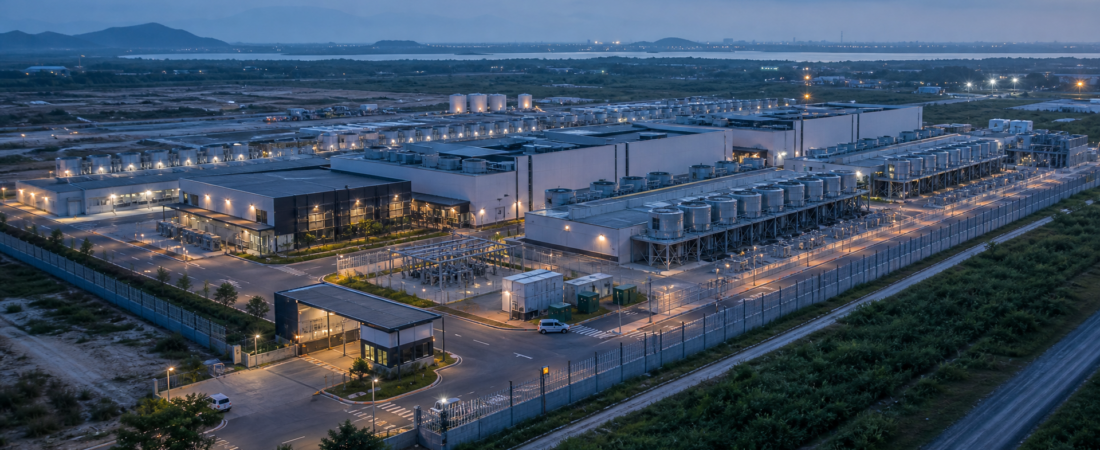
According to the available source information, AI cloud provider CoreWeave has announced an expansion into Indonesia, marking its first infrastructure footprint in the Asia-Pacific region. The project is reported to include three new data centers totaling 360 megawatts of contracted IT power, with operations targeted for 2028.
Those facts are limited but strategically important. AI infrastructure investment has increasingly been shaped by access to power, land, and long-duration build capacity rather than software demand alone. In that context, a multi-site Indonesia project of this scale may indicate that Southeast Asia is becoming more relevant not just as a consumer of AI services, but as a location for the physical backbone that supports them.
For TechPowerAsia readers, the significance is less about one company’s expansion announcement and more about what it could signal for regional capital flows, power planning, and digital infrastructure competition. If the reported plan advances on schedule, it would strengthen the case that new AI compute capacity is starting to spread beyond the most established global hubs into newer Asian markets.
Watch the Short Brief
Watch this short visual briefing for the key strategic implications behind the story.
Key Developments
– CoreWeave has announced an expansion into Indonesia, according to the report.
– The move marks the company’s first reported infrastructure presence in the Asia-Pacific region.
– The project is described as three new data centers.
– Combined, the facilities are reported to represent 360 megawatts of contracted IT power.
– The facilities are slated to come online in 2028, according to the available source information.
– No additional project details were provided in the source package on financing, precise locations, construction partners, energy sourcing, customer commitments, or government support.
On the confirmed facts alone, this is a notable announcement. A three-site project with a 2028 target suggests a long planning horizon and a buildout that would need substantial coordination across infrastructure, permitting, and power availability. At the same time, the current information set does not establish how the capacity will be phased, how quickly it may be absorbed, or what mix of workloads the facilities are intended to serve.
Strategic Analysis
CoreWeave’s reported move into Indonesia is best read as part of a broader shift in where AI infrastructure can realistically be built. In earlier stages of cloud growth, operators favored the deepest and most mature connectivity hubs. AI changes that equation because demand is no longer defined only by network density and enterprise proximity. Large-scale compute also depends on a reliable path to power, physical expansion room, cooling capacity, and construction execution over multiple years.
That matters for Asia. The region has long been central to electronics manufacturing, semiconductor supply chains, and digital consumption, but the geography of advanced AI infrastructure is still developing. A project of this type may suggest that operators are evaluating Southeast Asia more seriously as a host for large compute clusters, not just as an end market for cloud services.
Indonesia stands out in that discussion because of sheer market scale and the possibility of larger physical buildouts than may be available in more land-constrained locations. That does not automatically make every major AI project viable there. Power readiness, grid stability, site development, and operating economics remain critical unknowns. Still, the reported selection of Indonesia as CoreWeave’s first Asia-Pacific infrastructure footprint may indicate that the country is becoming harder to ignore in regional infrastructure planning.
The 360-megawatt figure is also important. Even without further breakdown, that is a large number in the context of AI-oriented data center development. TechPowerAsia would treat it as an indicator of intent rather than a guaranteed end state, but the scale implied by the announcement suggests CoreWeave is not framing Indonesia as a small trial deployment. If accurate, the company is signaling a willingness to commit to substantial future capacity in a market that is still less established than traditional global data center centers.
That has several implications.
First, it reinforces the idea that the next phase of AI infrastructure competition is becoming increasingly physical. Investors often focus on model capability, accelerator supply, and software ecosystems, but infrastructure providers still need power contracts, equipment delivery, civil works, and interconnection. In Asia, that shifts attention toward the sectors that make deployment possible: utilities, engineering and construction, electrical equipment, cooling systems, and fiber and network connectivity.
Second, the announcement may sharpen competition within Southeast Asia. If major AI cloud operators begin placing meaningful capacity in emerging regional markets, the competitive map could widen beyond the most established nodes. That does not imply displacement of incumbent hubs. More likely, if this pattern continues, the region could evolve into a more distributed infrastructure model in which different markets serve different roles based on cost, policy, power access, and connectivity. The current source material does not establish how CoreWeave intends to position Indonesia relative to other regional locations, so any such interpretation should remain provisional.
Third, the project highlights how semiconductor and compute supply chains remain embedded in every data center expansion story, even when the headline is geographic. Large AI facilities ultimately depend on the availability of advanced server systems, accelerators, networking gear, and power equipment. The source package does not disclose hardware commitments, but the broader strategic point is clear: data center announcements are also indirect signals about future demand for the upstream technologies that make AI cloud capacity usable.
The biggest question is execution. Announcements in AI infrastructure can be strategically meaningful long before revenue or operating utilization is visible, but multi-year projects also carry substantial delivery risk. A 2028 target leaves room for shifts in financing conditions, equipment availability, regulatory timelines, and power development. That does not weaken the signal value of the announcement; it simply means investors should separate the strategic direction from the certainty of delivery.
Another question is whether this project remains company-specific or becomes part of a wider regional pattern. One expansion announcement, even at meaningful scale, does not by itself confirm a structural reordering of Asia’s AI infrastructure map. It does, however, create a reference point. If additional operators pursue comparable capacity in Indonesia or elsewhere in Southeast Asia, the case for a broader regional build cycle becomes much stronger.
Investor Takeaway
For investors and strategic observers, CoreWeave’s Indonesia announcement should be treated as an early but credible infrastructure signal. The confirmed facts are narrow: first Asia-Pacific footprint, three data centers, 360 megawatts of contracted IT power, and a 2028 target. The interpretation is broader: Southeast Asia may be moving into a more important position in the buildout of AI compute capacity.
The most important next indicators are likely to be project specifics. Investors should monitor whether future disclosures clarify site locations, construction phasing, energy arrangements, customer demand, and interconnection strategy. Any detail on how the 360 megawatts will be delivered over time would materially improve visibility into the project’s practical significance.
It will also be important to watch for corroboration from the wider market. If other AI cloud providers, hyperscalers, or major colocation operators announce comparable Southeast Asia capacity plans, that would strengthen the thesis that the region is entering a new infrastructure investment cycle. If follow-on activity does not appear, the CoreWeave move may still matter, but more as a targeted strategic bet than as evidence of a broad regional shift.
From a sector perspective, the read-through extends beyond AI cloud providers themselves. A project of this nature could create attention around regional data center development, power infrastructure, electrical systems, thermal management, and the hardware supply chains tied to large compute deployments. The key issue is not simply who builds AI capacity, but which parts of the Asian technology and industrial stack are positioned to support it.
The bottom line is that CoreWeave’s reported Indonesia expansion is notable less because it resolves the future of Southeast Asia’s AI market and more because it reframes the question. The region is increasingly relevant not only as a destination for digital demand, but potentially as a host for the infrastructure that serves that demand. Whether this becomes an isolated project or the start of a wider reallocation of AI buildouts across Asia will depend on what comes next.