Executive Summary
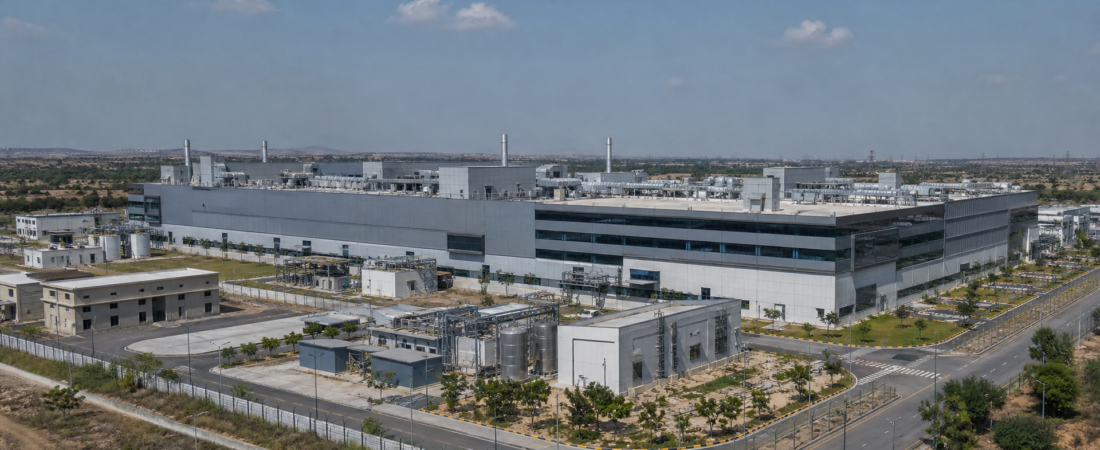
Prime Minister Narendra Modi used India’s 80th Independence Day address to reiterate the country’s semiconductor ambitions, saying three semiconductor plants have begun operations and that five to eight more plants are likely to be established over the next seven to eight years.
According to the available source information, the announcement did not include company names, investment figures, plant locations, or technical details about the facilities. That limits its immediate value as a company-specific market event. But as a policy signal, the statement is still meaningful. It suggests semiconductor manufacturing remains a long-horizon strategic priority for New Delhi rather than a short-cycle industrial announcement.
For Asia technology watchers, the significance lies less in the exact plant count than in what the message may indicate about India’s positioning within the region’s semiconductor and supply-chain landscape. A head-of-government statement on a nationally important platform can shape expectations around policy continuity, infrastructure planning, and the country’s effort to become a more credible manufacturing node in a sector still concentrated in a relatively small number of markets.
Watch the Short Brief
Watch this short visual briefing for the key strategic implications behind the story.
Key Developments
On August 15, during India’s 80th Independence Day address, Modi said three semiconductor plants have begun operations.
He also said five to eight additional semiconductor plants are likely to be established over the next seven to eight years.
The remarks, according to the source summary, were presented within a broader message around national technological capability and self-reliance.
The available source information does not identify the operators of the three plants, their locations, their manufacturing focus, or whether they are fabrication, packaging, testing, or other semiconductor-related facilities.
No subsidy figures, investment commitments, or named domestic or foreign partners were disclosed in the material provided.
That means the reported development is best understood, at this stage, as a top-level political and industrial-policy signal rather than a fully specified project pipeline.
Strategic Analysis
The most important takeaway is policy continuity. Semiconductor manufacturing is among the most capital-intensive and execution-heavy segments in the technology economy. Plants take years to plan, finance, build, qualify, and ramp. Because of that, public statements about multi-year facility targets can matter even when project-level details are limited. They may indicate that the government wants industry participants, foreign partners, and domestic investors to view semiconductors as a durable national priority.
That matters in an Asian context. The region remains the center of gravity for semiconductor production, but it is also where concentration risk is most visible. Over the past several years, governments and companies have placed greater emphasis on diversifying supply chains, building redundancy, and expanding capacity into additional jurisdictions. India has been trying to position itself within that broader shift. Modi’s remarks do not, by themselves, prove that India has secured a meaningful new share of global semiconductor capacity. But they do reinforce the country’s intent to remain part of that conversation.
One reason this signal carries weight is that semiconductor policy is rarely effective on rhetoric alone. The sector depends on long-term alignment across industrial land, power, water, logistics, permitting, workforce development, and cross-border technology relationships. When a prime minister publicly cites a multi-year pipeline, that can serve as a benchmark against which future execution will be judged. In that sense, the statement may function as both a political commitment and a public accountability marker.
At the same time, the market should avoid reading too much into the headline numbers. “Semiconductor plants” is a broad category. Without more detail, it is not possible to determine the strategic value of the three operating facilities or the proposed future plants with much precision. Different segments of the semiconductor chain carry very different implications. A facility focused on mature-node production, specialty semiconductors, or downstream packaging and testing can still be strategically important, but it is not equivalent to advanced logic fabrication. The absence of technical specificity means the announcement should not be treated as evidence that India has already secured any particular position in leading-edge manufacturing.
This distinction matters because the global semiconductor ecosystem is not a single market. Capacity in mature nodes, analog chips, power devices, assembly, testing, and advanced packaging all serve different industrial goals. For India, even success in less advanced segments could still be economically and strategically meaningful. It could support electronics manufacturing, reduce some import dependence, improve domestic supply-chain depth, and build operational capability over time. But investors and industry observers will need more clarity before assigning the announcement a precise place in the global hierarchy of chip manufacturing.
There is also a geopolitical layer. Across Asia, semiconductor capacity is increasingly treated not just as an economic asset but as part of national strategic resilience. Governments are using industrial policy to reduce exposure to external shocks and to secure a stronger role in critical technologies. India’s messaging fits that pattern. The reference to self-reliance is consistent with a regional environment in which semiconductor capability is tied to broader concerns around economic security, technology sovereignty, and supply-chain control.
From a capital-flows perspective, high-level political support is a necessary condition for sector buildout, though not a sufficient one. Global semiconductor investments typically require credible policy frameworks, execution discipline, infrastructure reliability, and confidence that regulatory support will outlast one political cycle. Modi’s remarks may help sustain that perception of continuity. But investment decisions will still depend on more operational factors: who is building, what exactly is being built, under what incentive structure, and on what timetable.
Another implication is narrative positioning. India has long aimed to move up the value chain in technology manufacturing, but semiconductors present a more demanding test than many other electronics segments. A public projection of five to eight more plants over seven to eight years suggests New Delhi wants to frame semiconductors as a nation-building sector with a long runway, not a one-off manufacturing initiative. If that framing is backed by visible execution, it could gradually reshape how multinational technology firms evaluate India within Asian supply chains. If follow-through is weak, however, the gap between ambition and delivery will become more apparent.
In that sense, the announcement is strategically relevant precisely because it is incomplete. It provides a directional signal, but not yet a fully investable map. For TechPowerAsia readers, the core insight is that India’s semiconductor push remains alive at the highest political level, and that alone can influence how capital, policy attention, and supply-chain planning evolve over time.
Investor Takeaway
This is best treated as a policy-confirmation development, not a near-term transaction trigger.
The available source information supports two core points: three semiconductor plants have begun operations, according to Modi’s remarks, and five to eight more plants are likely over the next seven to eight years. Beyond that, many of the details investors would normally use to assess commercial impact are still missing.
The most important next step is verification through specificity. Investors should monitor whether subsequent government or corporate disclosures identify the facilities already operating, clarify the type of semiconductor activity involved, and attach named operators, partners, timelines, and investment levels to future plants.
A second key issue is segment mix. India’s strategic position would look very different depending on whether future facilities are focused on fabrication, packaging, testing, specialty devices, or other parts of the semiconductor chain. That distinction will shape the country’s eventual relevance to AI infrastructure, electronics manufacturing, and regional supply resilience.
Third, execution will matter more than aspiration. Multi-year semiconductor plans are common across Asia, but delivery tends to separate durable industrial platforms from headline-driven ambitions. The credibility of the reported five-to-eight-plant outlook will depend on whether today’s operational plants scale successfully and whether follow-on projects move from political messaging to implementation.
Finally, this development should be read within a broader regional competition for semiconductor capital. India is not operating in isolation. Other Asian markets continue to strengthen their own positions across manufacturing, packaging, materials, and supply-chain services. India’s opportunity may be real, but it will be judged relative to the speed, clarity, and bankability of competing regional ecosystems.
For now, the signal is strategically important but still early. The announcement points to continued Indian ambition in semiconductors, yet the real investment case will depend on what comes next: named projects, technical detail, capital commitments, and measurable execution.