Executive Summary
According to the available source information, the US Pentagon’s Office of Strategic Capital is in talks to provide a US$5 billion loan to AI cloud startup Fluidstack to support domestic manufacturing capacity for critical data center components, including power and cooling equipment. If confirmed, the reported financing would stand out less for backing AI compute directly than for targeting the physical systems needed to deploy that compute at scale.
That distinction matters. Much of the policy debate around AI infrastructure has centered on chips, export controls, and semiconductor capacity. This reported transaction suggests that US strategic thinking may be broadening to include the industrial base behind data center build-outs, particularly the power and thermal systems that can constrain deployment even when compute is available.
For Asia-focused readers, the relevance is indirect but important. Many Asian manufacturers sit inside the global supply chains for data center hardware, electrical systems, thermal management, and related industrial equipment. A stronger US push to finance domestic production in these categories could eventually influence sourcing patterns, supplier positioning, and capital allocation across connected supply chains. At this stage, however, that remains an analytical implication rather than a confirmed policy shift.
The key point is not that a US$5 billion facility has been finalized. It is that a defense-linked financing arm is reportedly considering a large-scale intervention in the hardware layer that supports AI infrastructure. That may signal a broader redefinition of what counts as strategically sensitive in the AI economy.
Watch the Short Brief
Watch this short visual briefing for the key strategic implications behind the story.
Key Developments
According to the report, the Pentagon’s Office of Strategic Capital is in discussions over a potential US$5 billion loan to Fluidstack, an AI cloud infrastructure startup.
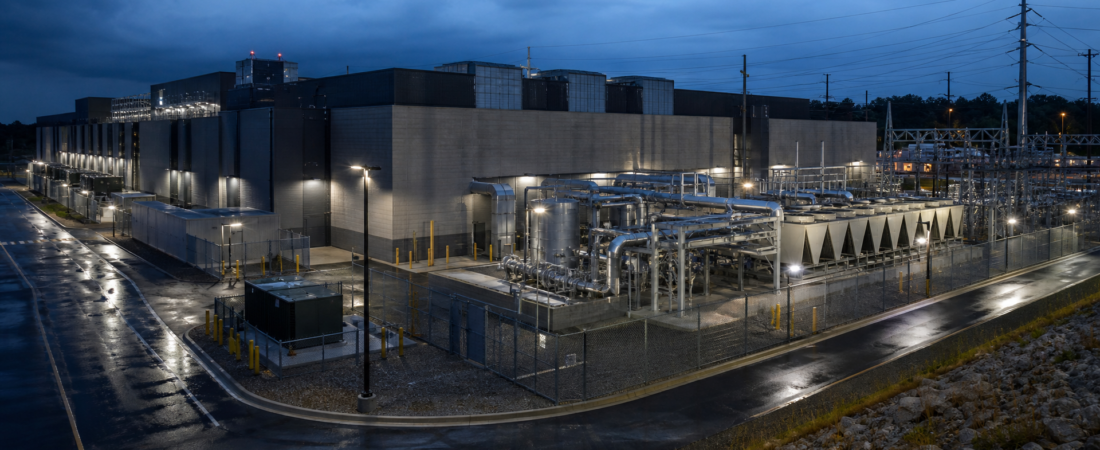
The stated purpose of the reported financing is to strengthen domestic US manufacturing capacity for critical data center components, specifically power and cooling gear. Those systems are essential to large-scale AI infrastructure but often receive less policy attention than semiconductors.
The available source information does not confirm final loan terms, timing, facility locations, production targets, or the precise structure of the financing. The transaction should therefore be treated as reported talks rather than a completed government commitment.
The development is notable because it reportedly links national-security-oriented public financing with the physical build-out of AI infrastructure. That is a different emphasis from more familiar forms of AI industrial policy focused on chips, fabs, or model development.
While the core development is centered on the United States, the wider supply-chain implications may extend beyond the US market because data center infrastructure is built through globally integrated manufacturing networks.
Strategic Analysis
If the report proves accurate, the Fluidstack discussions point to an important shift in how governments may be defining AI infrastructure risk. The market has tended to treat advanced chips as the principal strategic bottleneck. But in operational terms, power delivery and cooling capacity can become equally binding constraints once data center deployment accelerates. Compute is only useful if the physical environment can support it.
One implication is that industrial policy around AI may be moving down the stack. Rather than focusing only on semiconductors or software, policymakers may increasingly target the industrial systems that make AI compute usable in practice. In this case, the reported emphasis on power and cooling suggests that resilience concerns are extending into electrical and thermal infrastructure, areas that historically sat closer to industrial equipment and construction supply chains than to headline technology policy.
The involvement of the Office of Strategic Capital is also significant. According to the report, this is not simply a commercial financing discussion or a conventional procurement story. It indicates that parts of the US government may be assessing AI infrastructure through a strategic-capacity lens. That framing matters because it can change the types of companies, assets, and supply-chain layers that become eligible for public support.
Fluidstack’s role is notable in that context. If a startup focused on AI cloud infrastructure can become a vehicle for large-scale state-backed financing, that could widen the set of actors through which AI infrastructure policy is executed. The market has often assumed that the biggest hyperscalers would remain the natural focal points for infrastructure build-out. This reported case suggests that government-backed capital could also flow through newer cloud or compute intermediaries if they are seen as useful to capacity formation.
That does not yet establish a broader pattern. One reported financing discussion does not, on its own, confirm a durable policy model. But it does raise the possibility that the next phase of AI competition will involve more direct public involvement in the industrial systems surrounding data centers, not just in chips or energy availability.
For Asia, the implications are mostly second order for now, but they are relevant. Asian companies are deeply embedded in the manufacturing ecosystems tied to electrical equipment, mechanical systems, thermal components, metals, subassemblies, and industrial electronics used in data center construction. If the US increasingly directs strategic capital toward domestic production of these categories, Asian suppliers could face a more complex environment.
That complexity could take more than one form. Some suppliers may see pressure if customers shift part of their sourcing toward US-based capacity. Others could benefit if localized US manufacturing still depends on imported components, tooling, or specialist subassemblies from Asia. There is not enough information in the current report to determine which effect would dominate, and outcomes would likely vary by product segment.
The broader Asia relevance is therefore not about an immediate disruption. It is about an emerging policy signal. If data center power and cooling systems are being elevated into a strategic category, companies across Asia’s technology and industrial base may need to pay closer attention to how the US classifies and finances infrastructure dependencies tied to AI expansion.
Another important point is that capital flows in AI are becoming harder to separate from supply-chain policy. A reported US$5 billion loan tied to manufacturing capacity would blur the line between infrastructure finance, industrial policy, and national security planning. For investors and operators, that means future competitive dynamics may depend not only on technology leadership or customer demand, but also on which parts of the hardware stack attract government-backed financing.
Investor Takeaway
The immediate takeaway is caution with attention. According to the available source information, this is a reported financing discussion, not a finalized program. The headline number is large, but the more important issue is what the talks may indicate about the direction of AI infrastructure policy.
First, investors should monitor whether the proposed loan is formally confirmed and whether the use of proceeds remains focused on domestic manufacturing for data center power and cooling systems. Confirmation would matter more than the headline itself because it would establish that this layer of the AI stack is eligible for strategic public financing.
Second, the key question is whether this is a one-off case or an early example of a broader funding model. If other transactions follow, the market may need to reassess where policy support is likely to concentrate across AI infrastructure.
Third, supply-chain watchers should pay attention to which component categories are treated as strategically important. If power delivery, cooling, and related industrial systems receive more policy backing, it could affect valuation assumptions and capacity planning across a wider set of companies than the core semiconductor names that usually dominate AI discussions.
Fourth, Asia-based manufacturers and investors should watch for any evidence that US localization efforts are beginning to alter procurement behavior. At this stage, no such shift is confirmed in the available information. But even an incremental policy preference for domestic capacity in critical infrastructure categories could influence medium-term competitive positioning across cross-border supply chains.
Finally, this development reinforces a broader market lesson: AI infrastructure is no longer just a story about chips and models. The enabling hardware around power, cooling, and industrial deployment may become a more contested arena for both public capital and strategic policy. If the Fluidstack talks advance, they could become an early marker of that transition.