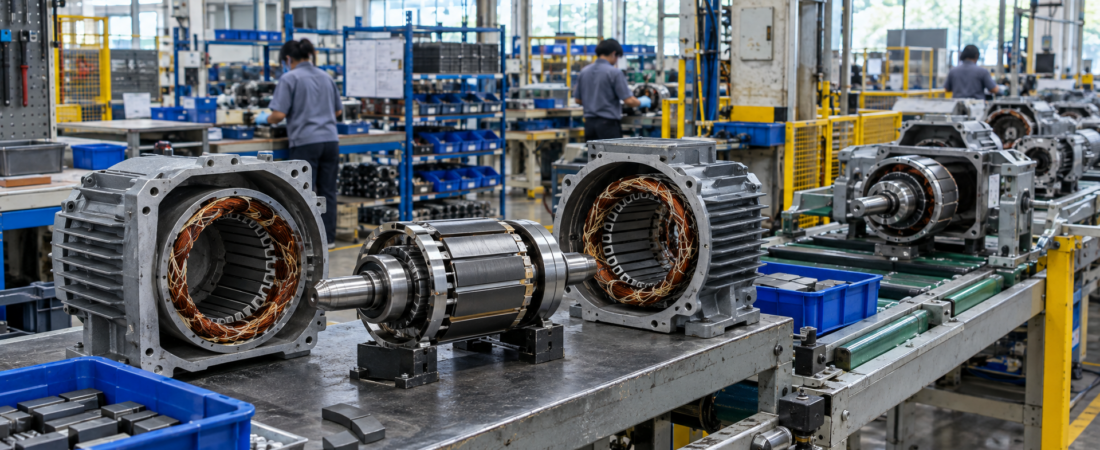
Executive Summary
China’s tightening control over rare earth exports is becoming a more important test of industrial power than a conventional trade dispute. According to the available source information, Beijing has imposed stricter export controls on rare earths, including rules that can affect foreign factories using Chinese-origin materials. That matters because rare earth dependence is not only a mining issue. It is also a processing, compliance, and supply-chain visibility issue.
For the United States, the reported development underscores a broader strategic problem: rebuilding critical-mineral independence is likely to be much harder than announcing new mines, subsidies, or reshoring plans. If Chinese export rules can influence products made outside China when those products rely on Chinese-origin inputs, then geographic diversification alone may not be enough to reduce exposure.
The larger significance is structural. Rare earths sit inside multiple strategic industries, including defense systems, electric vehicles, wind power, and advanced manufacturing. A tighter export-control regime could therefore create friction well beyond the commodities market, reaching into industrial planning, procurement, and capital allocation. For policymakers and investors alike, the key question is no longer whether dependence exists. It is whether alternative supply chains can be built fast enough, and deeply enough, to matter.
Watch the Short Brief
Watch this short visual briefing for the key strategic implications behind the story.
Key Developments
According to the source summary, China has introduced strict export controls on rare earths that are complicating Western efforts to rebuild independent supply chains. The available information also indicates that these rules affect not only direct exports from China but also foreign factories that use Chinese-origin rare earth materials.
That reported reach is strategically important. It suggests the issue is not limited to shipments crossing China’s border at the moment of export. Instead, the controls may extend influence into downstream manufacturing decisions in other countries, depending on material origin and product composition. The available source information does not fully detail the legal mechanism or exact scope, but the implication is that Chinese-origin rare earth content can remain a point of leverage even after materials move through global supply chains.
The source framing also places the current situation in a longer historical context: the United States did not suddenly lose rare earth leverage in a single policy failure. Rather, the reported analysis suggests a gradual ceding of leadership over time, shaped by policy neglect and shifting industrial economics. That matters because it reframes the challenge. What the West faces now is not simply a short-term supply disruption but the consequences of long-term underinvestment in a strategic materials ecosystem.
This is especially relevant in Asia, where manufacturing networks, materials processing, and export controls intersect more directly than in many Western policy debates. Rare earths are not just an upstream resource story. They sit inside the region’s broader industrial architecture, from materials refining to component production and final assembly.
Strategic Analysis
The reported development highlights a recurring weakness in Western industrial strategy: governments often focus on visible endpoints such as factory construction, final assembly, or domestic mining announcements, while underestimating the power of midstream control. In rare earths, that midstream layer includes separation, refining, materials handling, and the know-how required to turn raw inputs into usable industrial feedstock.
That distinction is critical. A country may have access to rare earth deposits or may finance new extraction projects, yet still remain dependent if processing and material qualification sit elsewhere. In this case, the available source information points to a deeper problem than simple import reliance. If Chinese-origin material continues to flow through a wide range of industrial products, then supply chains can remain exposed even when the final manufacturing footprint is relocated.
This has clear parallels with other technology chokepoints. In semiconductors, for example, leverage often comes not from access to sand or basic inputs but from control over specialized manufacturing steps, tools, or process ecosystems. Rare earths appear to follow a similar logic. The strategic value lies not only in possession of resources but in concentrated competence across the value chain.
For the United States, this may indicate that reshoring rhetoric has outrun industrial reality. A Western supply chain can be described as independent on paper while still carrying hidden material dependencies underneath. If reported export rules can reach foreign factories using Chinese-origin rare earths, then many manufacturers may face a difficult mapping challenge: tracing not just first-tier suppliers but the origin of embedded materials several layers down.
That creates three separate pressures.
First, there is a compliance pressure. Multinational manufacturers may need to build more detailed origin-tracking systems for components and materials that historically received less scrutiny than advanced chips or controlled electronics. In practical terms, that could raise administrative cost, slow procurement decisions, and complicate qualification cycles.
Second, there is a timing pressure. Alternative supply chains for critical minerals are slow to build. Mining, refining, environmental approvals, technical staffing, customer qualification, and logistics all take time. Even when governments provide funding or political support, industrial systems do not become resilient overnight.
Third, there is a strategic pressure on alliances. If one country cannot economically support a complete rare earth chain on its own, then diversification may depend on trusted cross-border industrial partnerships rather than pure self-sufficiency. That could push the United States and its partners toward more coordinated stockpiling, shared refining capacity, and supply agreements with politically aligned producers. Whether such efforts can scale fast enough remains an open question.
From an Asia technology-intelligence perspective, the more important lesson is that resource leverage can be exercised through supply-chain design as much as through raw scarcity. China’s advantage, as reflected in the broader rare earth debate, is not simply that it participates in the market. It is that many global industrial systems were built with Chinese processing and material flows deeply embedded in them. Export controls become more powerful in that context because they operate against an existing dependency rather than a hypothetical one.
This also complicates Western narratives around de-risking. De-risking is easier to announce than to implement when the dependency sits in low-visibility inputs rather than headline products. A manufacturer can move assembly to another country, but that does not automatically remove Chinese-origin material from its bill of materials. The result is a form of residual dependence that may persist long after political strategy has shifted.
Investor Takeaway
For investors and strategic readers, the main takeaway is that rare earth exposure should be evaluated as a systems problem, not a commodity headline. The reported tightening of China’s export controls may matter less for short-term price moves than for what it reveals about the durability of Chinese leverage in critical industrial inputs.
Several monitoring points stand out.
The first is supply-chain transparency. Companies in defense, electric vehicles, wind equipment, industrial motors, and other advanced manufacturing segments may face growing pressure to identify where rare earth materials originate and how deeply Chinese inputs are embedded in their products. The ability to map those dependencies could become a competitive advantage in itself.
The second is midstream capacity, not just mining announcements. Investors should pay close attention to whether Western and allied-country projects address refining, separation, and industrial qualification rather than focusing only on extraction. New mines may attract headlines, but processing capability is more likely to determine whether dependency actually falls.
The third is policy durability. The key question is whether the current export-control posture proves to be a tactical instrument or part of a longer-term framework. If the reported rules are enforced consistently and continue to affect foreign manufacturers using Chinese-origin materials, that would suggest a more durable restructuring of supply-chain risk.
The fourth is alliance execution. Western resilience in critical minerals is likely to depend on sustained coordination across trade, financing, environmental approvals, and industrial planning. Investors should monitor whether announced cooperation turns into operational capacity or remains at the level of strategy documents and political statements.
The broader implication is that capital will increasingly flow toward traceability, materials substitution, and processing infrastructure, not only toward upstream resource projects. In that sense, rare earths are becoming part of the same strategic conversation that already shapes semiconductors and AI infrastructure: which parts of the supply chain are truly sovereign, which are merely relocated, and which remain exposed to external control.
China’s reported export-control tightening does not by itself resolve that debate, but it sharpens it. For the United States and other Western economies, the challenge is now clearer. Rebuilding rare earth independence is not just a matter of spending more. It is a matter of rebuilding industrial depth that was allowed to erode over many years.