Executive Summary
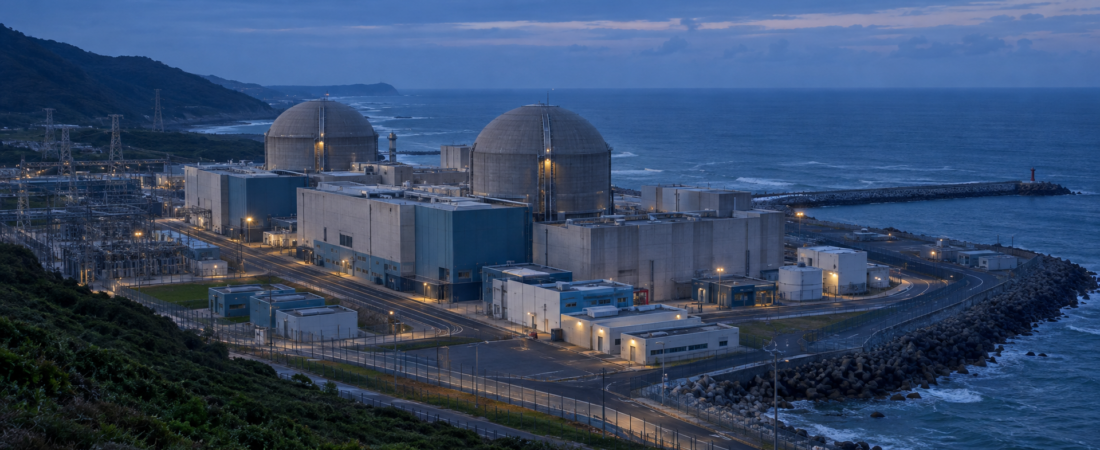
Taiwan’s Nuclear Safety Commission has cleared a preliminary review to restart the idled Ma-anshan Nuclear Power Plant, according to the available source information. The report describes the move as a reversal of the ruling party’s anti-nuclear stance and ties that shift to pressure from power-hungry semiconductor fabrication operations.
At one level, this is an energy-policy story. At another, it is a signal that semiconductor expansion is increasingly constrained by basic industrial inputs, especially reliable electricity. For Taiwan, that matters well beyond domestic politics. The island remains central to advanced semiconductor manufacturing, and any indication that power supply is shaping strategic policy deserves close attention across the chip, AI infrastructure, and supply-chain landscape.
The key point is not that a restart is now assured. The reported action is a preliminary review, not a final restart decision. But even at this stage, the development may indicate that electricity availability is becoming a harder policy constraint on semiconductor growth than many market narratives assume.
Watch the Short Brief
Watch this short visual briefing for the key strategic implications behind the story.
Key Developments
Taiwan’s Nuclear Safety Commission has advanced a preliminary review related to restarting the Ma-anshan nuclear plant, according to the source summary.
The same source summary characterizes the move as a reversal of the ruling party’s longstanding anti-nuclear position. That political shift is significant in its own right, given how sensitive nuclear policy has been in Taiwan.
The available source information also links the review directly to demand pressure from semiconductor fabs. That does not necessarily establish a single company, facility, or project as the driver. However, it does frame the issue as one in which industrial electricity demand is materially influencing national policy choices.
TSMC and Taiwan Power Co. sit within the broader ecosystem around this story, but the currently available information does not support stronger claims about specific public requests, commitments, or direct operational decisions by either company tied to this review.
What is confirmed by the available reporting is narrower, but still meaningful: an idled nuclear asset is being reconsidered, and the reported rationale is connected to the power needs of Taiwan’s semiconductor base.
Strategic Analysis
The deeper significance of this development lies in what it suggests about the physical economics of semiconductor leadership in Asia. Semiconductor strategy is often discussed in terms of process technology, capital intensity, export controls, and geopolitical leverage. Those are all important. But none of them remove the underlying requirement for large amounts of stable power delivered on time and at industrial scale.
That is especially relevant in the AI era. As compute demand rises, semiconductor supply chains face pressure not only to produce more chips, but to sustain more power-intensive manufacturing systems across longer planning cycles. A leading-edge fab is not just a cleanroom and a tool set. It is also a continuous-load infrastructure asset whose operating environment depends on grid reliability.
From that perspective, the reported policy reversal may indicate a harder reality emerging in Taiwan: energy ideology and industrial policy can remain misaligned only up to the point where electricity supply begins to constrain strategic sectors. If policymakers are now reconsidering previously sidelined generation assets because of fab demand, that would suggest the semiconductor industry’s energy requirements have moved from background concern to front-line policy issue.
For Taiwan, the implications extend beyond power planning. The island’s global strategic importance is closely tied to its semiconductor manufacturing position. That position depends not only on engineering leadership, but also on whether the supporting infrastructure can absorb continued expansion. If electricity supply becomes uncertain, Taiwan’s competitive edge could face a constraint that is domestic rather than geopolitical in origin.
This is why the Ma-anshan review matters even before any final restart decision. It may be an early sign that the next phase of semiconductor competition will be shaped as much by infrastructure readiness as by technology roadmaps. In practical terms, countries seeking to host advanced manufacturing need more than incentives and industrial branding. They also need dependable generation capacity, grid resilience, and political willingness to make difficult trade-offs.
There is also an Asia-wide readthrough. Across the region, governments are trying to balance decarbonization targets, industrial competitiveness, and supply-chain security. Semiconductor manufacturing intensifies that balancing act because it demands both scale and consistency from power systems. Intermittent supply can create operational risk in manufacturing environments where downtime is expensive and process stability matters.
That does not mean nuclear power is the only answer, nor does the current report establish that Taiwan has settled on a long-term nuclear-centered strategy. But it does suggest that policymakers may be re-evaluating previously unpopular options when faced with the infrastructure demands of strategic industries. If that pattern broadens, energy policy in major Asian chip hubs could become more pragmatic, and in some cases more politically contentious.
Another important point is that the development should not be overstated. A preliminary review is still an early-stage policy signal. Restarting an idled nuclear facility typically involves regulatory, technical, and political hurdles, and the available source information does not establish how quickly or smoothly this process would move. The strategic relevance comes from the direction of travel, not from assuming a completed outcome.
For TechPowerAsia readers, the central analytical question is straightforward: is Taiwan now entering a period where semiconductor power demand can visibly reshape national infrastructure policy? If the answer is yes, the implications could reach beyond one plant. They could influence how investors assess fab expansion risk, utility planning, industrial competitiveness, and the durability of Taiwan’s manufacturing centrality in the AI supply chain.
Investor Takeaway
The main takeaway is that this development should be read as a strategic signal, not as a finalized energy transition event. According to the available reporting, the key fact is that Taiwan has moved a nuclear restart issue into preliminary review and that semiconductor electricity demand is part of the reported context.
For semiconductor investors and industry strategists, that matters because it may indicate that power availability is becoming a more explicit variable in Taiwan’s capacity outlook. If energy constraints are rising, the market may need to place greater weight on infrastructure readiness when evaluating the pace and resilience of future manufacturing expansion.
For power and infrastructure watchers, the story points to a potential repricing of baseload generation in strategic economies. If advanced manufacturing is increasingly treated as a national priority, governments may become more willing to revisit politically difficult energy assets rather than risk supply bottlenecks in sectors tied to exports, technology leadership, and national security.
For Asia-focused capital allocators, several indicators now deserve monitoring. First, whether the preliminary review progresses into formal approvals or actionable restart planning. Second, whether Taiwan’s broader energy policy messaging becomes more openly linked to semiconductor competitiveness. Third, whether major ecosystem players such as TSMC or Taiwan Power Co. begin speaking more directly about power security, grid adequacy, or generation mix as factors in long-term planning.
Equally important are the downside signals. Political resistance could still slow or halt progress. Regulatory findings could complicate any restart path. And it is possible that the current review proves more symbolic than transformational if Taiwan addresses semiconductor demand through other generation sources, grid investment, or demand management.
Even with those caveats, the story is strategically important. In the AI era, semiconductor leadership is no longer just a question of who can design or fabricate the most advanced chips. It is also a question of who can supply the electricity needed to sustain that advantage. Taiwan’s reported nuclear reconsideration may be one of the clearest recent signs that energy constraints are moving closer to the center of semiconductor strategy.