Executive Summary
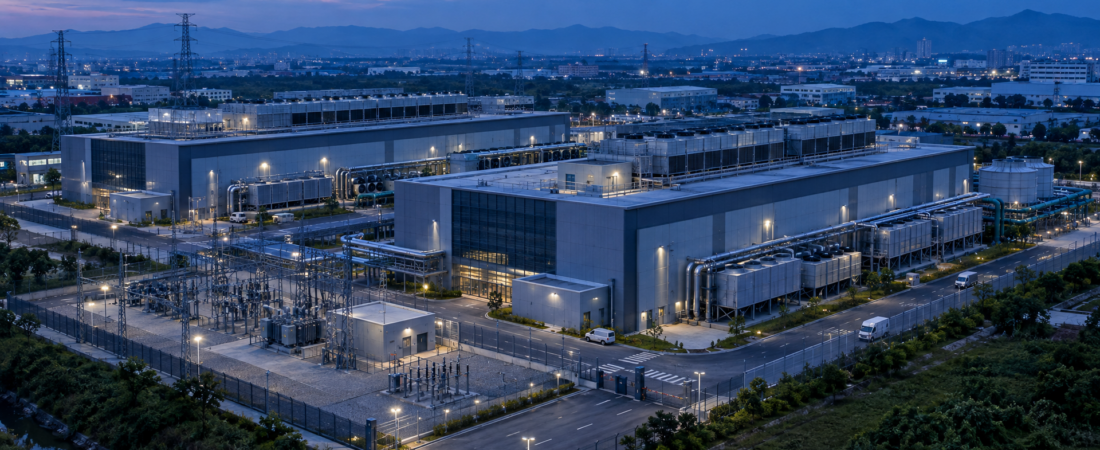
A Taipei Times editorial published on October 5 argues that public opposition to data center construction is becoming more visible in both the United States and parts of Asia-Pacific. According to the available source information, the main concerns are rising utility costs, environmental impact, and broader quality-of-life effects for communities near large projects.
For the AI industry, that matters because infrastructure debates are often framed around semiconductors, capital spending, and power supply in aggregate. The editorial points to a different issue: even where financing, chips, and electricity planning exist, local acceptance may still become a meaningful constraint on execution.
For Asia-focused technology intelligence, the relevance is straightforward. Taiwan and the wider Asia-Pacific region are deeply embedded in the AI hardware and supply-chain buildout. If resistance to data center expansion broadens, the pressure would not stop at real estate or utilities. It could affect the pace of AI deployment, the geography of compute capacity, and the relationship between digital infrastructure growth and public energy affordability.
The available source material is editorial rather than project-level reporting, so it should be read as an early strategic signal rather than a quantified market trend. Even so, it raises a question the sector can no longer treat as secondary: whether social acceptance becomes a gating factor for AI infrastructure scaling.
Watch the Short Brief
Watch this short visual briefing for the key strategic implications behind the story.
Key Developments
A Taipei Times editorial published on October 5 highlights what it describes as growing distrust of data center development.
According to the source summary, this opposition is visible in both the United States and the Asia-Pacific region. Taiwan is identified as a relevant regional lens for the issue.
The concerns cited in the available source information are rising utility costs, environmental effects, and quality-of-life impacts on local communities. Those concerns matter because modern AI infrastructure is unusually power-intensive relative to many earlier waves of digital expansion.
No specific companies, projects, investment amounts, or regulatory actions are identified in the source package. The article therefore does not establish a documented list of delayed or cancelled projects. Instead, it surfaces a broader political and social concern around the physical expansion of data-center capacity.
That distinction is important. The editorial does not provide empirical market data, but it does highlight a narrative that strategic readers should monitor closely: the possibility that AI infrastructure growth faces not only supply-side bottlenecks, but also public-resistance risk.
Strategic Analysis
The core analytical value of this development lies in what it adds to the standard AI infrastructure framework.
Most market discussion still concentrates on three variables: semiconductor availability, capital intensity, and power access. Those are all critical. Advanced chips remain scarce, data-center buildouts require enormous capital, and electricity supply is becoming central to competitiveness. But the Taipei Times editorial points toward a fourth variable that receives less consistent attention: social license to build.
That concept is especially relevant in the AI era because data centers are no longer perceived only as neutral digital infrastructure. As workloads scale, communities may increasingly associate large facilities with higher energy demand, local environmental burdens, and uneven distribution of economic benefits. Whether that perception is fully supported in each case is a separate question. Strategically, what matters is that the perception itself can shape politics, permitting, and public pressure.
In practical terms, this could create friction at several points in the infrastructure pipeline. Community resistance may complicate site selection. Political sensitivity around electricity pricing may make large new loads more controversial. Environmental scrutiny may increase the time and negotiation needed before projects advance. None of those outcomes is confirmed by the source material as a documented pattern, but they are plausible implications of the concerns described.
For Asia-Pacific, the issue deserves particular attention because the region is already balancing multiple layers of industrial electricity demand. Semiconductor manufacturing, advanced packaging, cloud infrastructure, and broader electrification trends all compete within national and local energy systems that vary widely in resilience and surplus capacity. In such an environment, AI data centers could become politically visible faster than market participants expect.
Taiwan makes this especially relevant from a strategic perspective. The island is a critical node in the global semiconductor ecosystem, and energy questions already carry economic and policy sensitivity. If public debate around data centers strengthens, it could add another layer to how policymakers, utilities, and communities think about electricity allocation, infrastructure priorities, and the broader costs of AI-led growth. That does not imply a confirmed policy shift in Taiwan. It does suggest that AI infrastructure planning in Asia cannot be separated from domestic political tolerance.
This also has implications for how investors and operators interpret “capacity expansion.” In recent years, announcements around AI have often been read through a scale lens: more accelerators, more racks, more campuses, more power procurement. The editorial suggests that a simple linear scaling model may be incomplete. Physical infrastructure depends not only on engineering and finance, but also on whether local stakeholders believe the trade-offs are acceptable.
That matters for capital flows. If opposition becomes more common, the market may place greater value on jurisdictions with clearer siting processes, stronger grid headroom, and more durable public consensus around industrial digital infrastructure. Conversely, markets that appear attractive on land, incentives, or proximity to chip supply could still prove slower to monetize if politics turns against large-load projects.
Another strategic implication is that AI infrastructure risk may become more localized. Chip shortages are global. Capital cycles are broad. But public opposition tends to emerge place by place, often shaped by local utility structures, environmental expectations, and community experience. That means two projects with similar technical profiles may face very different execution risk depending on geography. For companies allocating regional AI infrastructure spending, that could elevate local political mapping from a secondary exercise to a core diligence requirement.
The broader industry message is not that data-center expansion is stalling. The source material does not support that conclusion. Rather, the message is that opposition to infrastructure growth is becoming visible enough to deserve a place in strategic analysis. In AI, where timelines and competitive positioning depend on timely deployment of compute, even moderate siting friction can matter.
Investor Takeaway
Investors should treat public resistance to data-center development as an emerging execution variable rather than a settled market trend.
The first implication is analytical discipline. Announced AI infrastructure expansion should not be evaluated solely through capex size, chip procurement, or headline power agreements. The key question is whether projects can secure and sustain local acceptance in addition to technical readiness.
The second implication is regional differentiation. In Asia-Pacific, investors should watch for signs that energy affordability, environmental concerns, or quality-of-life debates are becoming more central to local politics around data centers. Taiwan deserves particular attention because of its systemic importance to the semiconductor industry and the sensitivity of power issues to industrial policy.
The third implication is monitoring. Useful signals would include sharper public debate around large-load electricity users, more visible scrutiny of data-center siting, or policy discussions that explicitly weigh AI infrastructure growth against community cost concerns. None of those signals, on its own, would confirm a structural shift. Together, they could indicate that social acceptance is moving from background risk to a more material constraint.
For operators, developers, and capital allocators, the strategic lesson is simple: AI infrastructure scaling is not just a function of chips, land, and power. It also depends on whether the public is willing to absorb the perceived costs of that expansion. According to the available source information, that willingness can no longer be assumed.
For TechPowerAsia readers, this is best understood as an early warning indicator. The editorial evidence is limited, but the issue it surfaces is credible and highly relevant to the next phase of AI buildout across the United States and Asia-Pacific. If the industry underestimates public resistance, infrastructure timelines may prove less predictable than current growth narratives suggest.