Executive Summary
According to the reported information, TSMC is evaluating a possible expansion of its manufacturing footprint in Texas and has confirmed that it is participating in discussions related to a proposed “Terafab” project. At the same time, the company has drawn a clear boundary around any such effort: if TSMC process technology is used, the facility must remain under TSMC operation.
That condition is the most important signal in the story. It suggests that for advanced semiconductor manufacturing, physical location is only one part of the equation. Operational control, process discipline, and execution remain tightly linked to the foundry itself. In practice, that means efforts to expand US-based chip production may face a more complex constraint than land, capital, or policy support alone.
For Asia-focused technology intelligence, the development matters well beyond Texas. TSMC’s position points to the continued strategic weight of Taiwan’s semiconductor know-how even as production footprints become more geographically distributed. It also offers a useful lens on how AI-era chip demand, national industrial policy, and foundry governance may intersect in the next phase of global capacity expansion.
Watch the Short Brief
Watch this short visual briefing for the key strategic implications behind the story.
Key Developments
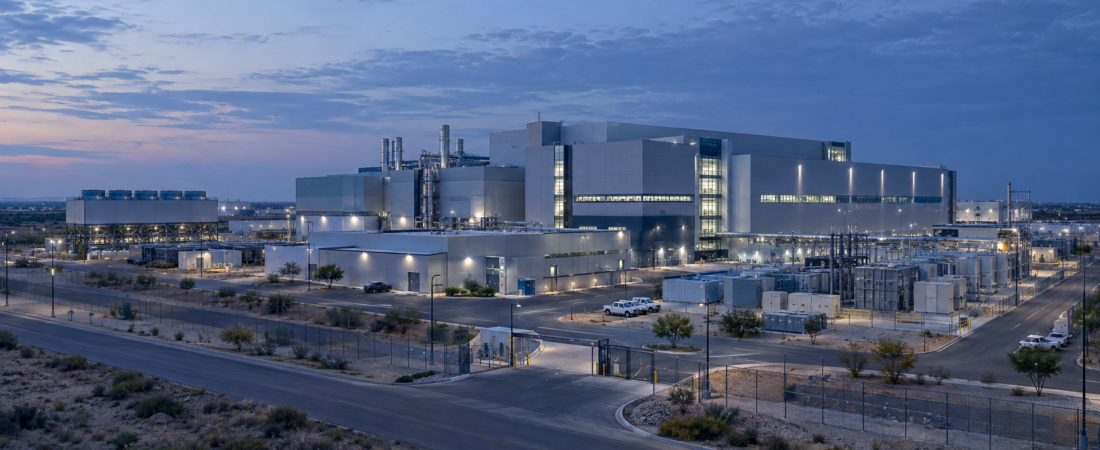
According to the available source information, TSMC has sent a team to assess a potential expansion in Texas. The report does not provide confirmed details on the scale of that review, the type of facility under consideration, or any timeline for a final decision.
TSMC also confirmed that it is taking part in discussions surrounding a project referred to as “Terafab.” Based on the source summary, that confirms engagement but does not establish a finalized structure, ownership model, investment size, or construction plan.
The most concrete reported point is TSMC’s operating-control requirement. The company’s stated position, as reflected in the source summary, is that any facility using TSMC technology must be operated by TSMC. That is a narrower and more defensible point than broader claims about specific governance models being formally rejected. Still, it is strategically significant because it places control of execution at the center of any future arrangement.
The source package also lists xAI and Intel as related companies. However, the available information does not define their specific roles in the Texas review or in Terafab discussions. They should therefore be treated as contextually relevant names rather than confirmed participants with established responsibilities.
The regional significance is clearer. This is a Taiwan-United States story with implications for semiconductor strategy, AI infrastructure, and supply-chain geography. It reflects a cross-border industrial dynamic in which advanced manufacturing capacity may move or expand, while technological and operational authority remains more concentrated.
Strategic Analysis
The central takeaway is not simply that TSMC may expand in Texas. It is that TSMC appears to be reinforcing a principle that advanced process technology is inseparable from the operating system behind it.
That matters because semiconductor reshoring is often discussed as if it were mainly a question of where fabs are built. In reality, leading-edge manufacturing depends on much more than buildings and equipment. It requires process integration, yield discipline, workforce training, supplier coordination, and management systems that have been refined over long operating cycles. TSMC’s insistence on operational control may indicate that the company sees those capabilities as non-transferable, or at least too sensitive to separate from its own management.
If that interpretation holds, the implications for US industrial policy are notable. Public policy can support site selection, financing, permitting, and customer alignment. But policy alone may not be enough to redefine control over advanced-node production. The reported Texas review therefore points to a possible limit in current reshoring ambitions: capacity can be localized, while strategic operating authority remains anchored to the original technology owner.
That distinction is especially important in the Asia context. Taiwan’s role in the semiconductor value chain is often framed in terms of fabrication concentration. This story suggests the deeper source of leverage may be organizational rather than purely geographic. Even if more capacity is established outside Taiwan, the high-value layer may still reside in the systems, talent structures, and process governance developed by Taiwanese industry leaders over decades.
In that sense, a Texas expansion and a firm operating-control condition are not contradictory. They may instead reflect the model through which TSMC is willing to internationalize: geographic diversification without surrendering control of execution. For governments and customers, that is a more constrained form of localization than some political narratives imply. For Taiwan, it may reinforce the durability of its strategic relevance even as production footprints evolve.
The Terafab discussions add another layer. The available information does not define what Terafab would look like in practice, who else may be involved, or what commercial rationale is driving the concept. Even so, the very existence of such discussions may indicate growing interest in larger-scale or differently structured manufacturing projects tied to advanced compute demand. In the current market environment, that naturally intersects with AI infrastructure planning, where access to leading-edge chips has become a strategic issue rather than just a procurement issue.
This is where caution matters. It would be easy to overread the presence of xAI or Intel in the source package as evidence of a confirmed multi-party architecture. The source material provided here does not support that conclusion. Still, their inclusion is directionally useful. It suggests that any conversation around a project like Terafab is being interpreted through a wider lens that includes AI demand, foundry competition, and the future structure of US semiconductor capacity.
Another strategic implication concerns capital efficiency and execution risk. Advanced fabs are among the most complex industrial assets in the world, and large-scale expansion is rarely just a matter of funding. If TSMC is reviewing Texas while holding firm on operating control, it may be signaling that expansion is possible only within a tightly managed framework. That could make future projects more credible operationally, but it could also narrow the range of acceptable partnership structures.
For TechPowerAsia readers, the broader lesson is straightforward: in semiconductors, sovereignty claims based on fab location alone can be misleading. Control over manufacturing technology is exercised not only through IP ownership, but also through day-to-day operating authority. The current report may therefore be less about one project and more about the rules under which the next generation of cross-border chip investments will proceed.
Investor Takeaway
Investors should view this development as a strategic signal rather than a near-term financial event. The available information does not provide capital expenditure figures, capacity targets, customer commitments, or timelines. What it does provide is a clearer sense of the terms under which TSMC may be willing to expand its US footprint.
The first point to monitor is whether future disclosures continue to pair overseas expansion with explicit TSMC operational control. If that language remains consistent, it would reinforce the view that geographic diversification does not imply a looser governance model.
Second, investors should watch whether Terafab evolves into a defined project with disclosed structure, partners, or commercial purpose. At present, the concept is still too loosely described to support strong conclusions. Any future clarity on ownership, operating responsibility, or customer alignment would materially change the analytical picture.
Third, the story is relevant to AI infrastructure buildout even without confirmed customer roles. If advanced foundry capacity becomes a more active subject of discussion among large compute players, that could reshape how investors think about the relationship between chip manufacturing, cloud-scale AI deployment, and long-duration capital planning. The key question is whether those pressures change fab design and financing, or whether foundries continue to dictate the terms of expansion.
Fourth, the Taiwan angle remains central. If TSMC can expand in the United States while preserving operational sovereignty, that may support a more nuanced view of supply-chain diversification. In that scenario, the physical map of production broadens, but the strategic center of gravity remains linked to Taiwanese semiconductor capabilities.
Overall, the reported Texas review and Terafab discussions should be read as an early indicator of how the next phase of semiconductor localization may actually work. The location of fabs will matter. But who runs them may matter more.