Executive Summary
According to the available source information, Singapore-based Acrab has raised US$130 million in a Series B funding round led by Vertex Ventures. The source summary says the financing brings Acrab’s total funding to more than US$350 million and will support commercialization of its Agent Box platform, a full-stack edge AI system built around the company’s GΞLIX 1 technology.
On its face, this is a company funding announcement. Strategically, it is more interesting as a signal about where capital may be willing to go next in Asia’s AI stack. Rather than focusing on application software alone, the reported raise points to investor interest in a more difficult part of the market: edge AI infrastructure that combines hardware and software in a single product strategy.
That matters for TechPowerAsia readers because it touches multiple themes at once: Southeast Asia’s effort to deepen its role in AI beyond deployment and data-center demand, the search for alternatives to cloud-only AI architectures, and the question of whether regional venture capital is becoming more comfortable with capital-intensive semiconductor and systems bets.
At the same time, the significance of the round should be kept in proportion. A funding event is a useful capital-flow indicator, but it is not proof of technical performance, manufacturing readiness, customer adoption, or durable market position. The key question now is whether Acrab can turn reported investor backing into commercial evidence.
Watch the Short Brief
Watch this short visual briefing for the key strategic implications behind the story.
Key Developments
According to the report, Acrab raised US$130 million in a Series B round led by Vertex Ventures. The available source information identifies Acrab and Vertex Ventures as the relevant companies and places the development in Singapore.
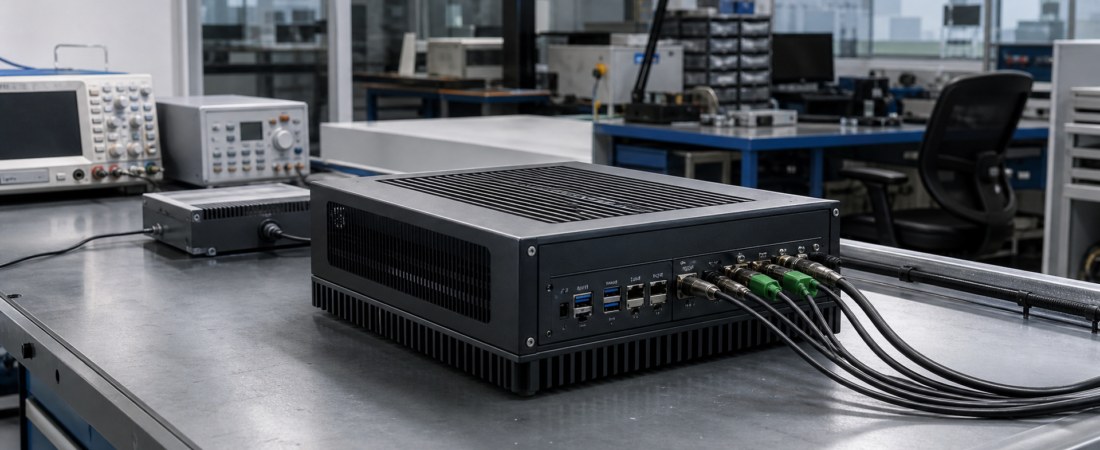
The source summary says the new capital will be used to scale commercialization of Agent Box, which is described as a full-stack edge AI platform combining custom silicon and software. The platform is reported to be powered by GΞLIX 1. Beyond that, the source package does not provide independently verified detail on manufacturing partners, production status, customer deployments, or revenue.
The available information also indicates that Acrab’s cumulative funding now exceeds US$350 million. For a Singapore-based AI infrastructure company, that is a notable reported sum, particularly because it is tied to a hardware-software platform strategy rather than a pure software model.
What is not yet established by the available material is just as important as what is. The source package does not name customers, disclose foundry relationships, provide third-party technical benchmarks, or demonstrate shipment scale. As a result, the event is best understood as an early commercial acceleration attempt backed by fresh capital, not as confirmed proof that Acrab has already secured broad market adoption.
Strategic Analysis
The larger strategic relevance of this round lies in the type of AI infrastructure Acrab is attempting to commercialize. The reported focus on edge AI suggests a view that at least some agentic and inference workloads may be better served locally, or closer to the point of use, rather than relying entirely on centralized cloud compute.
That thesis is not hard to understand. In AI deployments, latency, bandwidth costs, uptime requirements, and data-governance concerns can all push buyers to consider on-premise or edge-based architectures. This is especially relevant in parts of Asia where enterprise environments, public-sector procurement, and cross-border data rules can make cloud dependence less attractive for certain workloads. If a company can offer a workable full-stack platform that reduces integration complexity, it may have a stronger proposition than a chip-only vendor.
For Asia, the deeper question is geographic. Much of the region’s role in AI infrastructure has historically been tied to manufacturing, packaging, assembly, electronics integration, and growing data-center demand. Original AI silicon design and full-stack compute platform creation have been more concentrated in a narrower set of ecosystems. A reported funding round of this size for a Singapore-based company therefore may indicate that investors see room for Southeast Asia to participate more directly in upstream AI infrastructure creation, not just downstream deployment.
That does not mean a structural shift has already occurred. One company’s fundraising does not establish a regional trend. But it does expand the map of where serious AI infrastructure ambitions are being financed. In that sense, the round is less important as a standalone headline and more important as a test case for whether Southeast Asia can support companies trying to build differentiated AI systems technology.
Vertex Ventures’ role as lead investor is also worth watching in the context of capital allocation. Deep-tech and semiconductor-oriented investments typically require a different underwriting mindset from software deals. They demand longer timelines, larger capital needs, and tolerance for technical and supply-chain execution risk. If more regional capital begins to back these models, that could gradually change the shape of Southeast Asia’s technology ecosystem. But for now, investors should treat this as a data point, not a trend line.
Another strategic issue is product positioning. A full-stack edge AI platform can, in theory, create tighter control over performance, power efficiency, deployment, and software optimization than a disaggregated approach. It can also make commercialization harder. Companies pursuing vertical integration must execute across silicon design, systems engineering, software enablement, customer support, and supply-chain coordination. Success in one layer does not guarantee success across the stack.
This is where commercial proof becomes decisive. In AI hardware, funding rounds often attract attention before products are validated at scale. The most important next-stage evidence is usually practical rather than promotional: named deployments, recurring customers, benchmark transparency, manufacturing continuity, and signs that the product solves a real integration or cost problem for users.
For Singapore specifically, the development fits a broader strategic narrative around moving up the value chain in advanced technology. The city-state has long sought to strengthen its position in semiconductors, enterprise technology, and regional innovation infrastructure. A Singapore-based company pursuing edge AI compute commercialization is aligned with that ambition, even if the long-term outcome remains uncertain. The Asia relevance, then, is not just that the company is based in Singapore. It is that the round speaks to whether smaller but well-capitalized innovation hubs in Asia can produce companies with influence over the architecture of AI deployment.
Investor Takeaway
For strategic and investor-facing readers, Acrab’s reported Series B should be treated as a meaningful capital-flow signal with important caveats.
First, the round may indicate that investors are willing to finance harder AI infrastructure bets in Southeast Asia, not just application-layer companies. That is notable in a region where software and platform models have generally attracted a larger share of venture attention than semiconductor-led strategies.
Second, the reported commercialization push around Agent Box puts the focus on edge AI as a practical deployment category rather than a purely conceptual one. If enterprises in Asia increasingly want local or near-edge AI capability for latency, privacy, or operational reasons, vendors with integrated hardware-software offerings could gain strategic relevance. Whether Acrab can capture that demand remains to be seen.
Third, the biggest risks are execution risks. Investors should monitor whether Acrab discloses credible evidence on product readiness, performance, deployment scale, and customer traction. Supply-chain visibility will also matter. Hardware companies do not succeed on architecture alone; they need manufacturing discipline, software maturity, and dependable go-to-market execution.
Fourth, the regional significance of this round depends on follow-through beyond Acrab itself. A broader shift would be more convincing if similar companies in Southeast Asia begin attracting capital, partnerships, or customer validation in AI hardware and systems infrastructure. Without that, this round may remain an important but isolated case.
In short, Acrab’s US$130 million Series B is best read as an early indicator of ambition and investor appetite in Singapore’s AI infrastructure landscape. It does not yet confirm a commercial breakthrough or a new regional center of gravity in AI silicon. But it does suggest that some capital is now willing to test that possibility in Asia, and that alone makes the company worth watching.