Executive Summary
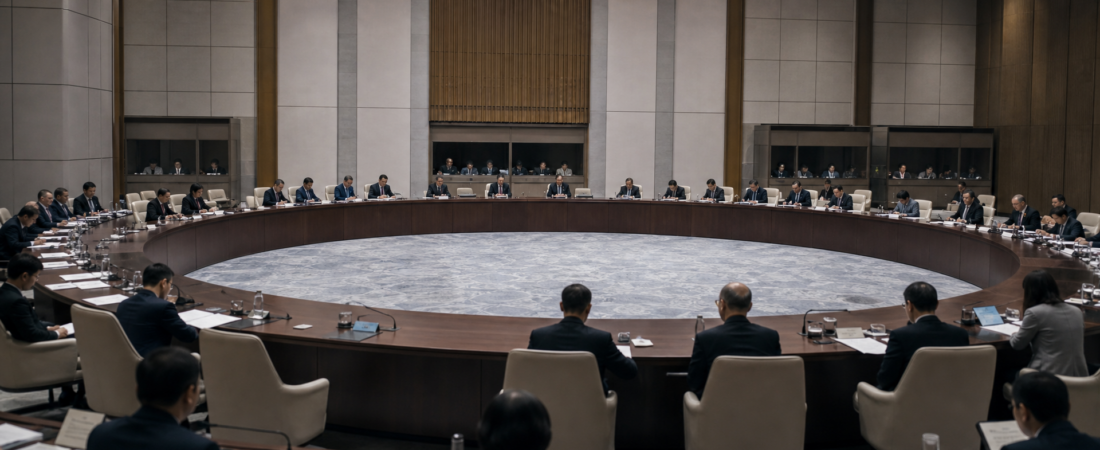
According to the available source information, the World Artificial Intelligence Cooperation Organisation, or Waico, was launched in mid-July 2026 as a China-led intergovernmental initiative with 29 founding members, including Pakistan. The reported purpose is significant: it points to an effort by Beijing to help shape an alternative framework for global AI governance.
That matters because AI competition is no longer centered only on chips, models, and cloud infrastructure. It increasingly includes the rules around how AI systems are governed, how standards are set, and which countries participate in writing those rules. If Waico develops beyond a diplomatic platform into a functioning standards or coordination body, it could give China greater institutional influence across parts of the developing world.
For Asia, the implications may extend well beyond diplomacy. Governance frameworks can affect how countries approach data rules, technical cooperation, public-sector procurement, and AI deployment priorities. At this stage, the available information does not establish that Waico will produce binding standards or immediate commercial outcomes. But it does suggest that AI governance is becoming a more explicit arena of geopolitical competition, with Asia at the center of that shift.
Watch the Short Brief
Watch this short visual briefing for the key strategic implications behind the story.
Key Developments
According to the report, Waico was established in mid-July 2026 as a China-led intergovernmental body focused on artificial intelligence cooperation. The available source information indicates that it launched with 29 founding member states, and Pakistan is identified as one of them.
The core geopolitical significance comes from how the initiative is framed. The source summary describes Waico as a vehicle for building an alternative global AI governance framework under Chinese leadership. That makes the organization notable even before its institutional details are fully clear, because it suggests Beijing is seeking a more formal role in shaping the rules and norms around AI at an international level.
What is not yet clear is equally important. The available source information does not specify Waico’s full membership list, governance structure, funding model, technical mandate, or formal relationship to other multilateral AI efforts. There is also no confirmed detail here on whether the organization will issue standards, certifications, model policy templates, joint research programs, or financing arrangements.
That leaves Waico, for now, as a strategically meaningful but still early-stage development. The reported facts establish that the institution exists, that China is leading it, and that it begins with a multi-country founding group that includes Pakistan. The more consequential question is whether those founding facts translate into a durable governance platform with practical influence over AI adoption and regulation.
Strategic Analysis
Waico is best understood as part of a broader contest over technology governance. In the AI era, influence does not come only from controlling advanced semiconductors or leading frontier model development. It also comes from shaping the institutional environment in which other countries adopt, regulate, and integrate AI systems. That includes rules, standards, norms, and the political coalitions that support them.
From that perspective, Waico may indicate that China wants to move beyond bilateral technology diplomacy and into institution-building. If that interpretation is accurate, the goal would not simply be symbolic leadership. It would be to create a forum through which China can help define how member states think about AI governance, cooperation, and possibly future technical alignment.
This matters especially in Asia and the broader developing world. Many countries are under pressure to engage with AI quickly, but not all have the policy capacity, technical resources, or negotiating leverage to build comprehensive governance frameworks on their own. A China-led platform that offers policy coordination, technical guidance, or diplomatic representation could therefore have appeal, particularly if it is presented as more accessible or more responsive to developing-country priorities.
That does not automatically mean a clean split in global AI governance is underway. The evidence available here is not sufficient to claim that the world has already divided into competing AI blocs. But Waico could be an early sign of a more fragmented governance landscape if it develops substantive outputs and attracts broader participation. In that scenario, countries may increasingly engage with more than one rule-setting ecosystem, rather than relying on a single global consensus.
For Asia, this possibility deserves close attention. The region includes China, major semiconductor and electronics supply-chain hubs, fast-growing digital economies, and governments with very different political alignments. If AI governance starts to organize around competing institutional centers, Asian countries may face more complex choices over standards participation, policy language, interoperability preferences, and diplomatic positioning.
Pakistan’s inclusion is relevant in that context. According to the available source information, it is among the 29 founding members. That does not, by itself, establish a broader membership pattern. But it may suggest that China is beginning with countries willing to join a China-backed institutional framework at an early stage. Whether Waico remains concentrated among states with already strong political or economic ties to Beijing, or expands beyond that group, will be an important signal of its eventual reach.
A second issue is whether Waico remains primarily rhetorical or becomes operational. Many international technology initiatives generate headlines at launch but have limited follow-through. The key test will be whether Waico produces concrete outputs. Those could include governance principles, model regulatory templates, technical working groups, training programs, or formal coordination mechanisms among members. Without such follow-through, the organization may remain more important as a geopolitical signal than as a practical force in AI markets.
A third issue is how other governance centers respond. If Waico gains visibility, other multilateral or regionally aligned AI forums may increase outreach to the same pool of developing economies. That could sharpen competition over whose frameworks are seen as legitimate, useful, and implementable. For the technology industry, that kind of competition matters because governance is often a precursor to deeper relationships in infrastructure, software ecosystems, and public-sector technology deployment.
The semiconductor and infrastructure implications should be treated cautiously at this stage. There is not enough evidence here to say Waico will directly alter chip demand, cloud buildouts, or capital flows. Still, if a governance body eventually influences national AI strategies across multiple member states, it could shape how those countries prioritize domestic deployment, partnerships, and procurement over time. That is a scenario to watch, not a confirmed outcome.
More broadly, Waico underscores an increasingly important point for Asia technology intelligence: the future AI map may be shaped as much by institutions as by hardware. Governance architecture can become a channel for strategic influence, especially in markets where digital infrastructure and regulatory systems are still taking shape.
Investor Takeaway
Waico should be treated as an early geopolitical signal rather than an immediate market-moving event. The reported facts are meaningful: China has launched a new AI-focused intergovernmental organization, and it begins with 29 founding members, including Pakistan. That alone suggests Beijing sees institutional leadership in AI governance as strategically important.
For investors and strategic operators, the near-term significance lies in monitoring whether this initiative gains real policy and technical substance. The most important indicators will be practical, not rhetorical.
First, investors should watch for the publication of the full founding-member list and any subsequent membership expansion. A broader and more diverse roster would strengthen the case that Waico is becoming a real platform rather than a narrowly aligned grouping.
Second, investors should monitor whether Waico develops concrete outputs such as governance principles, technical standards, certification schemes, training frameworks, or intergovernmental cooperation programs. The existence of formal working mechanisms would materially raise its strategic relevance.
Third, market participants should pay attention to whether the organization becomes linked to wider technology cooperation. If Waico begins to influence how member states coordinate AI policy, talent development, digital infrastructure planning, or procurement approaches, its relevance to regional technology ecosystems would increase.
Fourth, responses from other AI governance initiatives will matter. Competing outreach to developing economies could increase fragmentation risk and make regulatory navigation more complex for companies operating across multiple jurisdictions.
The core takeaway is that Waico may become an important institution in the geopolitics of AI, but that outcome is not yet proven. For now, it is best viewed as a structural watch item at the intersection of China strategy, Asian technology policy, and the global contest over who gets to shape the rules of the AI era.