Executive Summary
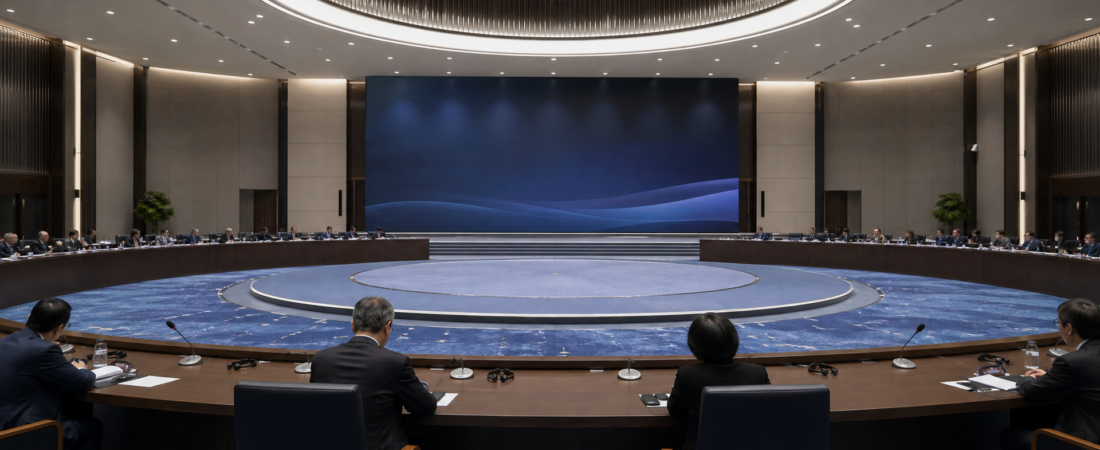
According to the available source information, China has formally launched the World Artificial Intelligence Cooperation Organisation, or Waico, as a China-led intergovernmental initiative with 29 founding members. The source summary describes the move as part of Beijing’s push to lead global AI governance and to build an alternative technology coalition oriented toward developing economies.
That factual core is narrow, but strategically important. The significance of Waico does not appear to rest on a new model, chip, or product launch. Instead, it points to a more structural contest over who shapes the rules, norms, and cooperative frameworks around artificial intelligence. In the AI era, governance is becoming a strategic asset in its own right, especially for countries that are still building digital infrastructure and institutional capacity.
For Asia, this matters because the region sits at the center of both AI adoption and geopolitical competition. If China is moving from rhetoric to formal institution-building in AI governance, the implications could extend beyond diplomacy into standards-setting, technology partnerships, and the long-term alignment of emerging digital ecosystems across developing markets.
At the same time, the available reporting does not provide critical details such as Waico’s formal mandate, governance structure, founding member list, or operational agenda. That means the most important conclusions remain conditional. At this stage, Waico is best understood as an early institutional signal with potentially large implications if it develops into a substantive governance platform.
Watch the Short Brief
Watch this short visual briefing for the key strategic implications behind the story.
Key Developments
According to the source summary, Waico has been formally launched as a China-led intergovernmental initiative. The organization is reported to have 29 founding members, although the available information does not identify them individually.
The source summary frames the launch as part of Beijing’s effort to play a leading role in global AI governance. It also describes the initiative as a strategic attempt to build a technology coalition aimed at developing economies. On that basis, the launch appears to carry geopolitical intent alongside any technical or cooperative mission the organization may eventually pursue.
What is confirmed, however, is still limited. The available source information does not specify whether Waico will focus on standards, policy coordination, capacity-building, research cooperation, or diplomatic positioning. It does not clarify whether the organization will issue binding rules, voluntary principles, or simply provide a platform for member coordination. Nor does it establish how membership is structured, how decisions will be made, or what resources members are expected to commit.
Those missing details matter because they will determine whether Waico becomes an operating institution with real influence or remains primarily symbolic. Even so, the formal launch itself is notable. In geopolitical terms, moving from discussion to institution-building often signals an effort to create durable influence rather than a one-off diplomatic statement.
Strategic Analysis
The most important implication of Waico is that AI governance may be entering a more explicit phase of institutional competition. For several years, the global technology contest has been dominated by hardware restrictions, semiconductor controls, compute access, and model development. Waico suggests that governance architecture may now be emerging as another strategic layer of that competition.
This matters because governance is not only about ethics or regulation. In practice, governance frameworks can shape how countries approach data handling, risk management, public-sector adoption, procurement standards, certification, and cross-border technology partnerships. If a China-led intergovernmental body begins to offer a coherent governance pathway for developing economies, that could gradually influence how those markets evaluate AI systems and their suppliers.
For Asia, the relevance is especially strong. Many Asian economies are balancing rapid digital adoption with uneven regulatory capacity. Some are large enough to build their own AI policy frameworks; many others may prefer to adapt external models rather than design them from scratch. In that context, a formal cooperation platform led by China could become attractive if it offers practical support, policy templates, technical coordination, or access to wider state-to-state networks.
One implication is that AI governance may become less globally uniform over time. That does not mean fragmentation is already happening in any confirmed sense. But the reported launch of Waico raises the possibility that multiple governance ecosystems could evolve in parallel, particularly if major powers and regional blocs increasingly sponsor their own standards, principles, and coordination platforms.
If that happens, the consequences could extend well beyond policy language. Diverging governance approaches may eventually affect software certification, public procurement requirements, data transfer expectations, and the operating assumptions of cloud and AI service providers. They could also shape which vendors are seen as trusted partners in state-backed AI deployments. None of that is confirmed by the current reporting, but it is a plausible strategic pathway investors and policymakers should monitor.
Another reason the launch matters is that developing economies are becoming a decisive arena in technology geopolitics. In semiconductors, telecommunications, and digital infrastructure, influence has often been built not only through product leadership but through ecosystem design. A governance organization aimed at developing markets may indicate that China is seeking a similar position in AI: not just as a producer of technology, but as an organizer of the institutional environment around it.
That would fit a broader pattern in which technology power is exercised through rules, financing, standards, and institutional relationships as much as through products themselves. From an Asia intelligence perspective, this is where geopolitics and AI converge most clearly. The long-term strategic question is not only who has the best models or the largest compute clusters, but who can embed their preferred governance assumptions into the growth markets where future adoption will expand.
Still, it is important not to overstate Waico’s significance too early. A formal launch with 29 founding members sounds meaningful, but the organization’s real weight will depend on execution. The key questions are whether members are substantively committed, whether Waico develops an operational agenda, and whether its outputs are adopted in ways that affect actual AI deployment decisions.
If the organization remains broad and declaratory, its impact may be limited to symbolism and diplomatic messaging. If, however, it begins to issue practical frameworks, coordinate state-led AI projects, support regulatory capacity, or shape member procurement and compliance norms, its importance could rise quickly. The distinction between those two outcomes is central to how this story should be interpreted.
Investor Takeaway
For investors and corporate strategists, Waico should be viewed as an early geopolitical signal rather than a fully formed market event. The immediate commercial impact is unclear. There is no evidence in the available reporting of direct effects on revenue, contracts, or capital flows. But the launch may matter over time if it becomes a channel through which governance preferences shape technology adoption across developing markets.
The first area to watch is institutional substance. Investors should monitor whether Waico publishes a formal charter, identifies its founding members, defines a technical or policy agenda, or establishes standing programs. A recognizable governance structure would make the initiative more credible than a purely diplomatic announcement.
The second area is standards and policy output. If Waico begins issuing AI principles, risk frameworks, technical guidelines, or capacity-building programs that members actually use, that would suggest the organization is moving into practical influence. For cloud providers, enterprise software companies, AI infrastructure operators, and compliance-related service firms, that could eventually create a more differentiated policy environment across markets.
The third area is geographic traction, especially in Asia and the broader developing world. Membership expansion, active ministerial participation, and references to Waico-aligned frameworks in national AI plans would be stronger indicators than headline announcements alone. The strategic importance of the organization will depend less on its launch and more on whether member states integrate it into real policy and procurement behavior.
The fourth area is second-order supply-chain relevance. There is no current evidence that Waico will directly alter semiconductor sourcing or hardware trade patterns. Even so, if competing AI governance frameworks emerge over time, they could influence which technology stacks are preferred in public-sector deployments and state-backed digital infrastructure programs. That would matter indirectly for cloud architecture, enterprise AI integration, and the broader regional technology ecosystem.
For now, the prudent conclusion is measured attention. According to the available source information, Waico marks a formal Chinese move into AI institution-building at a global level. Whether it becomes a durable pillar of AI governance or a limited diplomatic platform will depend on details that have yet to emerge. For TechPowerAsia readers, the key takeaway is that the geopolitics of AI is no longer only about chips, models, and export controls. It may increasingly be about who builds the institutions that shape how AI is governed across Asia and the developing world.