Executive Summary
The Elmet Group has agreed to invest approximately $124.75 million in Masan High-Tech Materials, acquiring a 4.99% stake in the Vietnam-based company, according to the available source information. The reported transaction also includes long-term supply and conversion agreements for mined tungsten.
On its face, this is a minority equity investment tied to supply access. Strategically, it may matter more than the stake size suggests. Tungsten is an important industrial and defense material, and supply concentration has made it a recurring concern for companies and governments seeking more resilient sourcing options.
For TechPowerAsia readers, the deal is most relevant as an Asia-linked supply-chain development rather than a standalone financial event. It highlights Vietnam’s potential role in critical minerals processing and shows how downstream buyers may use a mix of equity ownership and long-term agreements to improve access to strategic materials.
Watch the Short Brief
Watch this short visual briefing for the key strategic implications behind the story.
Key Developments
The reported transaction centers on a $124.75 million investment by The Elmet Group into Masan High-Tech Materials for a 4.99% equity stake. The source information indicates that the agreement is paired with long-term supply and conversion arrangements for mined tungsten.
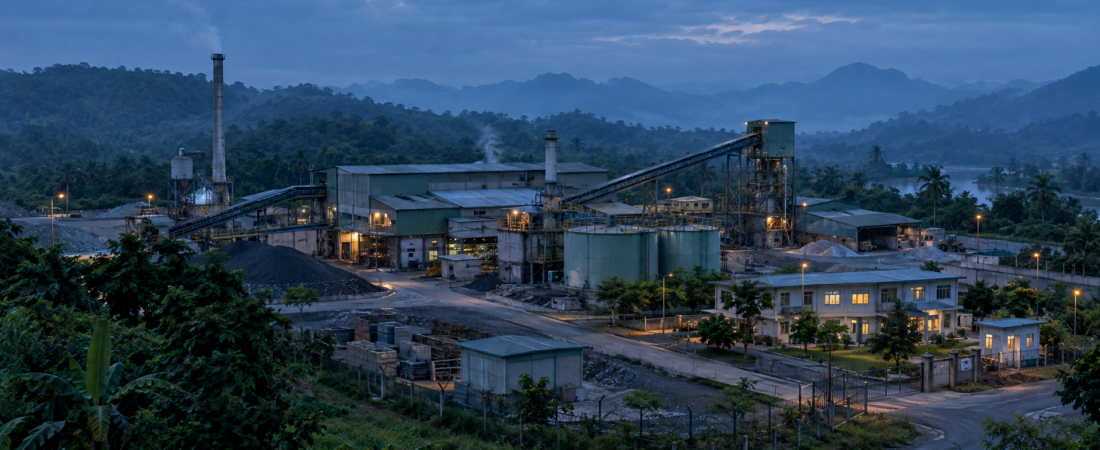
The geography is central to the significance of the deal. Masan High-Tech Materials is based in Vietnam, while Elmet is a US-linked industrial buyer. That gives the transaction both a commercial dimension and a cross-border supply-chain dimension, especially at a time when companies are reassessing dependence on concentrated sources of critical materials.
The source framing also presents the deal as a move to strengthen the tungsten supply chain. That wording matters. It suggests the investment is not simply a portfolio allocation or passive holding, but part of a broader effort by the buyer to secure material access through a structured relationship with an upstream producer and processor.
What is clearly supported by the available information is relatively narrow but important: stake size, investment amount, counterparties, location, and the existence of long-term supply and conversion agreements. Beyond that, the strategic meaning lies in how the structure fits wider trends in industrial sourcing and Asia-based supply-chain diversification.
Strategic Analysis
The most important feature of this transaction is its structure. A 4.99% stake is small enough to avoid implying control, but large enough to signal strategic intent. When a minority investment is linked to long-term supply and conversion agreements, the message is typically less about financial upside alone and more about securing access, alignment, and visibility over supply.
That matters in tungsten. As a material, tungsten is used in defense, tooling, and advanced industrial applications, and it sits inside a broader discussion about how companies reduce exposure to supply concentration. In that context, equity-plus-offtake arrangements can be more durable than simple spot purchasing. They may improve supply assurance, strengthen commercial ties, and give buyers a better position if markets tighten or geopolitical frictions rise.
From an Asia perspective, Vietnam is the key part of the story. The country is already well established in the regional manufacturing conversation, particularly as companies look for production and sourcing options beyond a single-country model. This deal suggests that Vietnam’s role in supply-chain realignment may extend beyond final assembly and into more strategic upstream segments, including minerals and materials processing.
That does not mean Vietnam is automatically becoming a dominant critical minerals hub. The available source information does not support claims about market share, capacity leadership, or a broader policy program behind this specific transaction. But it does support a narrower conclusion: a US-linked buyer is committing capital to a Vietnam-based materials company in exchange for a more embedded supply relationship. That alone is a meaningful data point for Asia supply-chain watchers.
The transaction also illustrates a broader procurement logic now visible across strategic industries. Buyers that depend on critical inputs increasingly appear willing to move beyond arm’s-length purchasing and toward relationship-based supply security. In practice, that can mean minority stakes, prepayments, joint development, processing agreements, or long-term contracted access. This reported deal fits that pattern.
For TechPowerAsia’s core themes, the relevance extends into semiconductors and AI infrastructure in an indirect but important way. Tungsten is not being presented here as an AI-specific material story. However, the wider lesson is that advanced technology ecosystems depend on upstream material reliability. Whether the end market is defense, industrial equipment, or electronics, supply resilience at the raw-material level can shape the operating environment for higher-value technology chains later on.
One implication is that capital flows into upstream materials assets may become a more important signal for technology intelligence than they were in earlier cycles. Investments like this can reveal where buyers perceive vulnerability, which geographies are gaining trust, and what forms of risk-sharing are becoming acceptable. In that sense, a relatively modest minority stake may offer more strategic information than a standard procurement contract would.
It is also notable that the deal combines supply and conversion agreements, not just raw material access. Conversion capacity often receives less attention than mining, but it can be a critical bottleneck in practice. Securing mined material without reliable downstream conversion can still leave buyers exposed. If the reported structure gives Elmet confidence across both supply and processing stages, that would make the arrangement more strategically valuable than a simple feedstock contract.
Even so, caution is warranted. A single transaction does not establish a full regional trend. It may indicate a direction of travel, but it does not by itself confirm a large-scale shift in the tungsten market or a broader policy-backed realignment. Investors and industry observers should therefore treat the deal as an important signal, but not yet as proof of a fully formed new supply architecture.
Investor Takeaway
The clearest takeaway is that this is a strategic supply-chain transaction disguised as a minority equity investment. The reported 4.99% stake matters, but the longer-term importance likely sits in the associated supply and conversion agreements. For investors, that makes this more relevant as a signal about industrial risk management than as a conventional capital-markets event.
Several issues deserve close monitoring.
First, investors should watch whether similar structures begin to appear in other critical materials. If more downstream buyers pursue minority stakes tied to long-term supply rights, that would suggest a broader move toward ownership-linked sourcing security rather than reliance on open-market procurement.
Second, Vietnam’s role bears watching. This transaction adds to the case that Southeast Asia is becoming more strategically significant not only in electronics manufacturing but also in parts of the upstream materials chain. If additional deals emerge involving processing, refining, or long-dated supply commitments, Vietnam’s relevance within regional technology supply chains could deepen.
Third, the processing element may prove just as important as the mining link. Investors should monitor whether future announcements in this area emphasize conversion, refining, or other midstream capabilities. In strategic materials, those stages can carry as much risk as extraction itself.
Fourth, this deal may be read as a sign that industrial buyers are willing to commit real capital to de-risk supply. That does not automatically imply a wave of comparable transactions, but it does suggest that procurement strategy is becoming more balance-sheet intensive in selected sectors.
The main risks are execution and concentration. Long-term agreements can strengthen supply visibility, but they also depend on operational performance, market conditions, and stable cross-border commercial relations. A bilateral arrangement tied to a single material and a single company relationship can improve resilience in one area while still leaving broader sourcing exposure unresolved.
For TechPowerAsia readers, the practical conclusion is straightforward: this is a small but strategically meaningful Asia-linked materials deal. It points to how critical-minerals exposure may increasingly be managed through targeted capital deployment, not just purchasing contracts. If more transactions follow this model, they could offer an early read on how supply-chain resilience is being built across the industrial foundations of the AI era.