Executive Summary
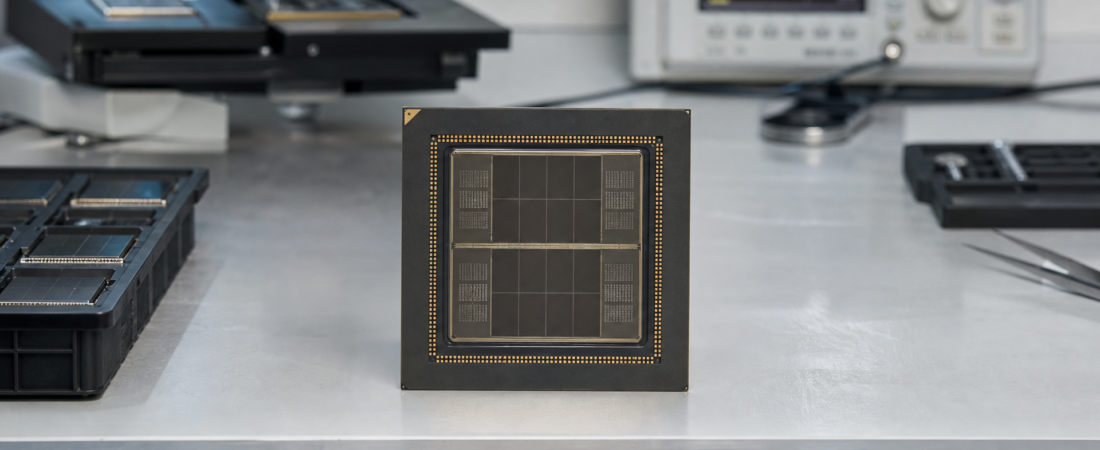
According to the available source information, Etched has raised $300 million in a Series C funding round led by Sequoia Capital, with participation from Andreessen Horowitz, Jane Street, and SK Hynix. The round values the company at $10.3 billion. Etched says it designs application-specific chips dedicated to transformer-model inference and will use the new capital to scale production and expand a new 10 MW research and manufacturing facility in Milpitas, California.
The significance of the round extends beyond headline valuation. It suggests that investors are willing to back a narrowly focused inference architecture at a time when much of the AI hardware market still revolves around general-purpose GPU platforms. That does not establish that specialized inference ASICs will displace incumbent architectures, but it does indicate growing conviction that the economics of inference may support more customized silicon paths.
For TechPowerAsia readers, the Asia relevance is clear in SK Hynix’s participation. Even without disclosed commercial terms, the involvement of a leading South Korean memory supplier links a key Asian semiconductor player to a U.S. inference-chip startup pursuing an alternative compute model. That makes this funding round relevant not only as a venture capital event, but also as a signal in AI-era semiconductor positioning, supply-chain optionality, and capital allocation.
Watch the Short Brief
Watch this short visual briefing for the key strategic implications behind the story.
Key Developments
– According to the available source information, Etched raised $300 million in a Series C round at a $10.3 billion valuation.
– The round was led by Sequoia Capital, with participation from Andreessen Horowitz, Jane Street, and SK Hynix.
– Etched says it builds ASICs dedicated solely to transformer-model inference rather than broader-purpose AI accelerators.
– The company says it will use the funds to scale production and expand a new 10 MW research and manufacturing facility in Milpitas, California.
– The available source information does not disclose the size of each investor’s participation.
– The available source information also does not provide shipment volumes, customer names, or revenue details.
– SK Hynix’s participation gives the round direct relevance to South Korea’s semiconductor ecosystem and to the broader Asian AI hardware supply chain.
Strategic Analysis
This funding round matters because it highlights a changing center of gravity inside AI infrastructure. For the last several years, the dominant conversation in AI hardware has focused on training capacity, large GPU clusters, and the scale advantages of flexible compute platforms. But as AI deployment broadens, inference economics become harder to ignore. Serving models repeatedly in production shifts the focus toward cost per query, power efficiency, utilization, and deployment density. A startup built specifically around inference-only silicon is making a bet that this next phase of demand can reward specialization.
That is where Etched’s positioning becomes strategically interesting. A chip designed only for transformer inference can, in theory, trade flexibility for efficiency. If customer workloads remain concentrated around transformer-based models, a tightly optimized ASIC may offer a more attractive cost and performance profile for production inference than a general-purpose accelerator. But that is still a conditional proposition, not an established market outcome. The advantage of a specialized chip depends on more than hardware design. It also depends on software integration, deployment ease, model compatibility, and the willingness of customers to commit to a narrower architecture.
This is also why the round should be read as a challenge to the current GPU-centric order in strategic terms, not as proof of immediate displacement. Incumbent platforms still benefit from scale, ecosystem maturity, developer familiarity, and architectural flexibility. That combination remains powerful in a market where model designs, software stacks, and enterprise requirements continue to evolve quickly. Specialized inference silicon can become compelling if workloads stabilize enough for efficiency to outweigh flexibility. The key question is whether that stabilization arrives fast enough, and broadly enough, to support a durable alternative at scale.
From an Asia perspective, SK Hynix’s presence is the most important detail. Memory is central to AI compute economics, and leading memory suppliers have a strong interest in understanding how demand could evolve across different accelerator architectures. Financial participation does not by itself confirm a supply agreement or future volume relationship. It may, however, indicate that a major Asian semiconductor company wants visibility into emerging compute models beyond the most established platforms. For South Korea, that matters because the country’s semiconductor position in AI is not limited to shipping components into one ecosystem. It increasingly includes placing strategic exposure across multiple potential compute paths.
The implications extend beyond South Korea. Any credible new accelerator architecture sits within a supply chain that runs through Asia, whether through memory, foundry services, advanced packaging, substrates, or electronics manufacturing. Even when a chip company is U.S.-based, its ability to move from design ambition to production scale usually depends on cross-border semiconductor coordination. That means capital flowing into specialized AI silicon in the United States can still carry meaningful consequences for Asian suppliers, especially if alternative accelerator categories begin to command more of the industry’s future bill of materials.
The size of Etched’s valuation also says something broader about private-market behavior in AI. Investors are continuing to place large, concentrated bets on companies with differentiated semiconductor narratives, even before the market has broad evidence of scaled commercial execution. In software, that can be aggressive but manageable. In hardware, the bar is higher. Manufacturing scale, yield, packaging, thermal design, customer integration, and support capacity can all become gating factors. A large financing round helps solve the capital problem, but it does not remove the operational challenge of converting design thesis into repeatable deployment.
That distinction is important for interpreting the current AI hardware cycle. Capital markets may be signaling strong belief in a specialized inference category, but belief and adoption are not the same thing. The next phase of evidence will need to come from production readiness, system-level performance in real customer environments, and proof that buyers are willing to use a more specialized architecture outside controlled pilots or isolated workloads. Until then, the round is best understood as a high-conviction strategic bet rather than a settled competitive outcome.
Investor Takeaway
Etched’s latest funding round is a meaningful signal in AI infrastructure capital flows. It suggests that private investors see enough potential in inference-specific silicon to support a company pursuing a narrower architectural path than the dominant general-purpose accelerator model.
For Asia-focused readers, SK Hynix’s participation is the core strategic data point. It does not confirm a commercial realignment, but it may indicate that upstream semiconductor players want exposure to multiple AI compute architectures as the market develops. That possibility is relevant for memory demand planning, supply-chain positioning, and future partnership structures across the region.
The most important issues to monitor from here are straightforward. First, investors should watch whether funding converts into verifiable production progress and customer deployment. Second, the durability of transformer-centric inference will remain central to Etched’s thesis. Third, software and ecosystem execution may matter as much as silicon design. Fourth, if specialized inference accelerators gain traction, Asian suppliers across memory, manufacturing, and packaging could benefit from a broader mix of AI hardware demand rather than a more concentrated one.
In short, this round is best read as an early but notable sign that the AI hardware market is expanding beyond a single architectural template. The commercial outcome is still unproven. The strategic significance, especially for Asia’s semiconductor ecosystem, is already worth tracking.