Executive Summary
According to the available source information, LG Energy Solution is converting part of an idled US electric-vehicle battery plant into a production line for lithium iron phosphate energy storage system cells. The reported shift allows South Korea’s largest battery maker to repurpose underused EV capacity toward a market increasingly tied to AI infrastructure, particularly data centers that need large-scale power backup and energy management.
The immediate significance is operational: capacity built for one demand cycle is being redirected to another. The larger significance is strategic. For much of the past decade, battery manufacturing capacity was expanded primarily around expectations for EV growth. LGES’s reported move suggests that AI-related power demand may now be emerging as a second major pull on battery supply chains.
For Asia’s technology ecosystem, the development matters because it shows how AI investment is beginning to affect industrial sectors beyond chips, servers, and networking. A South Korean battery leader is using US manufacturing capacity to respond to an American infrastructure need created by the AI buildout. That creates a useful lens for tracking how capital, capacity, and supply chains are being reallocated across sectors.
The key question is whether this remains a tactical adjustment by one company or becomes an early signal of a wider industry pivot toward stationary storage.
Watch the Short Brief
Watch this short visual briefing for the key strategic implications behind the story.
Key Developments
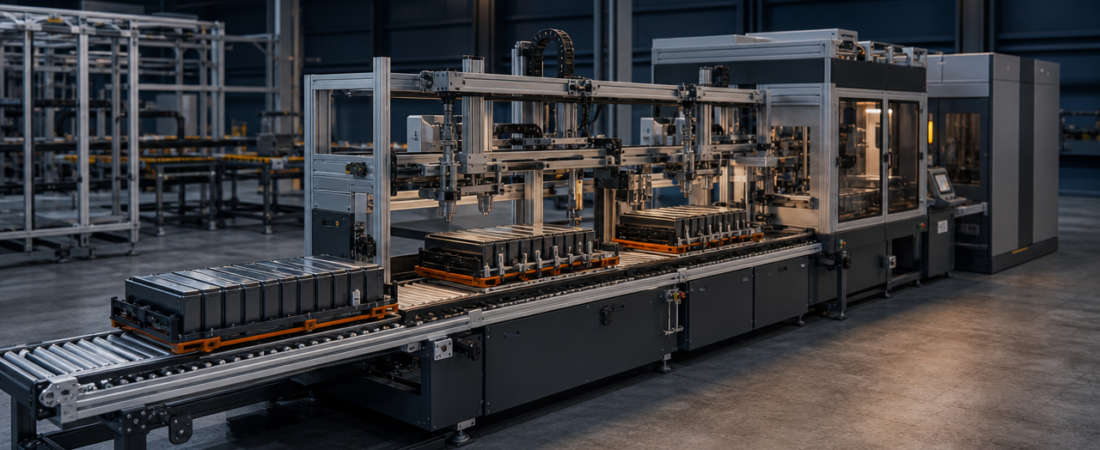
According to the source summary, LG Energy Solution is repurposing part of an idled US EV battery plant to produce LFP cells for energy storage systems. The reported rationale is straightforward: weaker EV demand has left some battery manufacturing capacity underutilized, while energy storage demand linked to AI data centers is rising.
The chemistry shift is also notable. LFP is commonly associated with stationary storage applications because the technology is generally valued for cost efficiency, durability, and thermal stability. Those characteristics make it well suited to installations where the priority is not vehicle range or acceleration, but dependable cycling and power support over time.
That matters in the data center context. AI data centers are power-intensive facilities, and their operators increasingly need more than just grid access. They also need backup systems, load balancing, and infrastructure that can support reliability under high and potentially volatile power demand. Energy storage can play a role at both the facility level and, in some cases, in broader grid interaction.
The reported move also highlights the importance of manufacturing flexibility. Instead of waiting for EV demand to absorb idle lines, LGES appears to be using existing industrial assets to target a different end market. That does not mean EV batteries and stationary storage are interchangeable at every level, but it does suggest that some battery producers can adapt portions of capacity when demand conditions change.
What is confirmed in the available source package is limited to the capacity conversion and its connection to AI data center-related storage demand. Broader commercial details, including customer names, contract structures, and the scale of the conversion, are not established in the provided material and should therefore be treated cautiously.
Strategic Analysis
LGES’s reported factory shift is important less because of its size, which is not specified in the available material, and more because of what it may indicate about the next phase of AI infrastructure spending.
Much of the public discussion around AI supply chains has focused on semiconductors: advanced logic, high-bandwidth memory, packaging, and accelerated server demand. But AI infrastructure also has a power layer. High-density compute clusters require stable electricity, backup capability, and increasingly sophisticated on-site energy management. As AI data center construction expands, that power layer may become a larger source of demand for batteries and energy storage systems.
That creates a new outlet for capacity originally built around EV expectations. Battery producers spent years scaling output for an automotive transition that has not moved at the same pace across all regions and market segments. When EV demand softens or ramps more slowly than planned, the result can be underused plants, delayed utilization, and pressure on returns from heavy capital investment. In that context, stationary storage is not just a new sales category; it can become a tool for absorbing stranded capacity.
From a South Korean and broader Asian technology perspective, this is where the story becomes more consequential. Asian manufacturers have built much of the world’s battery production capability, and they now face a changing end-market mix. If AI-linked storage demand becomes durable, companies across the region may need to think differently about product mix, chemistry strategy, and geographic deployment.
LFP is central to that discussion. In the EV market, chemistry choices often reflect trade-offs among range, cost, performance, and supply chain positioning. In stationary storage, the balance can shift more decisively toward safety, cycle life, and economics. If data center and grid-related storage demand continues to accelerate, it could strengthen the role of LFP in markets where battery makers had been more heavily focused on automotive applications.
Geography also matters. LGES is a South Korean company, but the reported conversion involves US manufacturing capacity. That combination may prove strategically useful if North American customers increasingly prefer local or regionally aligned supply for critical infrastructure. The point here is not that such an outcome is guaranteed, but that manufacturing location could matter more as energy storage becomes part of the AI infrastructure stack.
There is also a competitive implication. For non-Chinese battery producers, stationary storage tied to AI power demand could become an opportunity to expand relevance in a segment where product fit and supply chain positioning are both important. Whether that becomes a lasting advantage will depend on pricing, execution, and how quickly other battery makers respond.
Still, caution is warranted. One factory conversion does not prove a sector-wide reordering. It may simply reflect a practical response to local demand conditions and underutilized capacity. The stronger interpretation is that this is an early operational example of a broader possibility: AI is beginning to redirect industrial assets outside the semiconductor chain.
If similar conversions begin to appear across South Korea, Japan, or other battery manufacturing centers, the thesis becomes more compelling. If not, LGES’s move may remain a targeted adjustment rather than a durable pattern.
Investor Takeaway
For investors and strategic readers, the most useful way to read the LGES development is as a signal, not yet as a confirmed industry trend.
The reported conversion shows that AI infrastructure demand may be creating a real economic outlet for idle or underused EV battery capacity. That is significant because it links two major capital cycles that are often analyzed separately: the battery buildout tied to electrification, and the infrastructure buildout tied to AI.
Several indicators now matter.
First, investors should monitor whether other battery manufacturers announce similar shifts toward ESS production, especially those with underutilized EV lines. If peers begin to redirect capacity in the same way, that would suggest a broader rebalancing of the battery sector.
Second, the market should watch whether AI data center power infrastructure becomes a more visible driver in battery company strategy, investor messaging, or product planning. If storage for data centers moves from opportunistic demand to a recurring business category, that could change how battery producers allocate capital and manage capacity.
Third, chemistry mix is worth watching. If stationary storage demand grows faster than expected, LFP could gain further importance within North American and global battery strategies. That would have implications for supplier positioning, manufacturing planning, and competitive dynamics across Asian battery makers.
There are also risks to this interpretation. EV demand could recover faster than expected, reducing the attractiveness of converting capacity away from automotive use. Data center buildout could slow if AI capital spending moderates. And even if storage demand remains strong, profitability will still depend on pricing discipline and execution rather than demand alone.
The broader takeaway is that AI is no longer only a semiconductor story. It is increasingly a power infrastructure story, and that means its effects can reach into batteries, grid equipment, and industrial manufacturing. LG Energy Solution’s reported US plant conversion is an early example of that spillover.
For TechPowerAsia readers, the core significance lies in the Asia connection: a South Korean battery champion is repositioning capacity in response to an American AI infrastructure demand signal. That is the kind of cross-border industrial adjustment that can reveal where the next supply chain realignments are starting to form.