Executive Summary
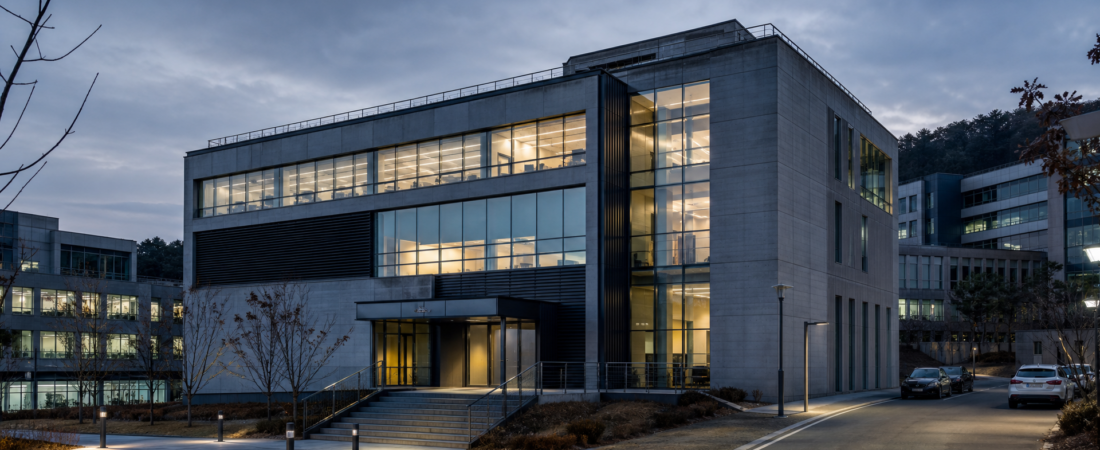
According to NVIDIA’s announcement, NVIDIA and the Korea Advanced Institute of Science and Technology have launched a joint AI research laboratory at the KAIST Kim Jaechul Graduate School of AI in Seoul. The reported collaboration is valued at $300 million over five years and will focus on agentic AI models, Korean-language systems, and industry-specific applications using NVIDIA’s Nemotron open models and local cloud infrastructure.
On the surface, this is a university research partnership. Strategically, it may signal a deeper shift in how global AI infrastructure companies engage with national AI ambitions in Asia. Rather than operating only as chip suppliers, companies such as NVIDIA are increasingly positioning themselves closer to the model, talent, and deployment layers of local AI ecosystems.
For South Korea, the reported partnership fits a broader regional priority: building competitive domestic AI capability without attempting to recreate the full AI hardware and software stack independently. For NVIDIA, it suggests a playbook built around long-duration institutional embedding rather than one-time hardware sales alone.
Watch the Short Brief
Watch this short visual briefing for the key strategic implications behind the story.
Key Developments
According to the available source information, the joint lab is located at the KAIST Kim Jaechul Graduate School of AI in Seoul. The initiative was announced on July 23, 2026, through NVIDIA’s official news channel.
The reported partnership has a five-year term and a stated value of $300 million. NVIDIA said the lab will focus on three core areas: agentic AI models, Korean-language AI systems, and industry-specific applications.
The source summary also indicates that the work will use NVIDIA’s Nemotron open models and local cloud infrastructure. That combination is notable because it ties model development not only to a specific research institution, but also to a particular technical stack and deployment environment.
The available information supports the view that the collaboration is aimed at both research output and local capability development. However, the source package does not provide confirmed details on government co-funding, commercialization timelines, named faculty leadership, or specific performance targets for Korean-language models. Those points remain open questions rather than established facts.
Key confirmed takeaways are therefore relatively clear: a major US AI infrastructure company has entered a multi-year research partnership with one of South Korea’s leading institutions; the work is centered on Korean-language and agentic AI; and the platform foundation is explicitly NVIDIA-aligned.
Strategic Analysis
This announcement matters less because it adds another AI lab to the market and more because it illustrates how sovereign AI is increasingly being built in practice across Asia.
The traditional view of AI infrastructure competition has centered on access to chips. That remains important, especially in a market where advanced compute capacity is strategically valuable. But the KAIST partnership suggests that the competitive arena is widening. The more important question may no longer be only who supplies the GPUs, but who helps shape the local model stack, research agenda, and engineering talent base around them.
That distinction is particularly relevant in South Korea. The country has strong semiconductor capabilities, advanced industrial demand, and a clear need for high-quality Korean-language AI systems. A partnership model that combines global compute architecture with local research capacity may therefore be more practical than pursuing full-stack independence. One implication is that “sovereign AI” in Asia may increasingly mean controlled dependence rather than complete autonomy.
In that sense, the NVIDIA-KAIST lab may represent a negotiated version of sovereignty. South Korea can strengthen domestic AI capability through local institutions, local language development, and local deployment pathways, while still relying on foreign-origin model architecture and infrastructure. That is not necessarily a contradiction. It may instead reflect the economic reality of modern AI development, where national capability often depends on selective integration with a small number of global platform providers.
For NVIDIA, the strategic value appears broader than near-term revenue. A multi-year research presence inside a leading graduate AI institution can deepen influence in several layers at once. First, it helps align future research with NVIDIA’s own model and infrastructure ecosystem. Second, it may strengthen the company’s position in talent formation, as students and researchers build familiarity with NVIDIA tools and model frameworks. Third, it creates a local reference point that could support future enterprise or public-sector adoption if the research outputs gain traction.
That does not mean lock-in is guaranteed, and the available information does not prove that this partnership will define South Korea’s AI standards. But one strategic risk for local institutions is clear: the deeper a national AI effort is built around one vendor’s models, software environment, and infrastructure pathways, the harder diversification can become later. The benefits are speed and coherence. The tradeoff may be reduced flexibility over time.
There is also a broader Asia dimension. Many governments and institutions across the region are pursuing some version of local-language AI, domain-specific models, and domestic talent development. The KAIST structure could therefore be watched as a possible reference case for other advanced Asian economies. If the partnership produces usable Korean-language systems or successful industry-specific applications, it may encourage similar university-centered collaborations elsewhere.
That said, investors and policymakers should avoid assuming that this is already a repeatable regional template. The current evidence supports a single announced partnership, not a fully established regional model. Replication would need to be demonstrated through comparable arrangements in other markets, especially where local regulatory priorities, university systems, and cloud environments differ.
The capital allocation angle also deserves attention. Even when sovereign AI initiatives are framed as national capability projects, a meaningful share of value creation may still accrue to the external platform owner supplying the models, software layer, and compute architecture. In practical terms, this means that Asia’s AI buildout may continue to channel strategic influence and ecosystem control toward a relatively small group of US technology companies, even as domestic institutions expand their local research roles.
For TechPowerAsia readers, this is the core signal. AI competition in Asia is not just about semiconductor supply chains or model releases in isolation. It is increasingly about which companies become embedded inside the institutions that train researchers, define technical baselines, and shape domestic deployment pathways.
Investor Takeaway
The NVIDIA-KAIST lab should be viewed primarily as a strategic signal rather than a near-term financial catalyst.
The reported $300 million scale is meaningful in institutional terms, but the larger point is what it may indicate about NVIDIA’s positioning in Asia. The company appears to be extending its reach beyond hardware supply and into the research, language, and talent layers of national AI development. If that pattern expands, NVIDIA’s role in Asia could become more structurally embedded and harder for rivals to displace.
For South Korea, the key question is whether this partnership translates into durable domestic capability rather than a high-profile announcement. Success would likely mean more than academic output. Investors should monitor whether the lab produces deployable Korean-language systems, useful industry applications, or a pipeline of researchers who remain active in the local AI ecosystem.
Several indicators will matter over time. One is whether similar partnerships emerge in other Asian markets, which would suggest that institutional embedding is becoming a broader competitive strategy. Another is whether Nemotron-based work from the lab gains visible traction in Korea’s enterprise, academic, or public-sector environments. A third is whether South Korea maintains optionality by supporting a broader mix of AI tools and infrastructure providers alongside this collaboration.
There are also execution risks. Research partnerships do not automatically produce commercially relevant systems. Local-language model quality, enterprise adoption, and talent retention all require follow-through. There is also concentration risk if too much of the local ecosystem becomes dependent on a single external platform architecture.
The most useful interpretation, then, is cautious but clear. According to the available source information, NVIDIA and KAIST have launched a substantial long-term AI research partnership in Seoul. The deeper significance is that it may reflect how sovereign AI in Asia is actually being constructed: through local institutions, but on top of globally sourced infrastructure and model ecosystems. For investors tracking AI, semiconductors, and Asia’s technology power balance, that is the development worth watching.