Executive Summary
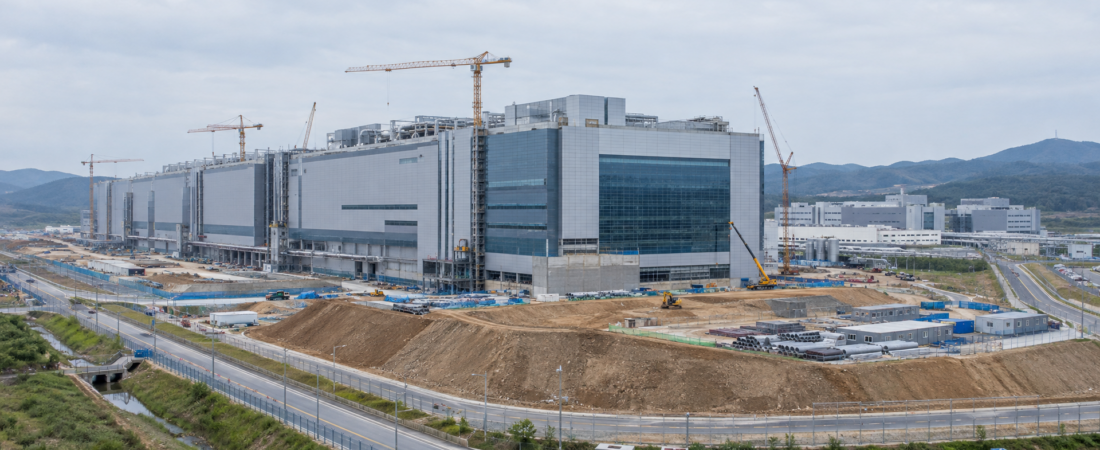
Samsung Electronics has unveiled detailed plans for its Yongin Advanced System Semiconductor National Industrial Complex, a project valued at 360 trillion won, or about $268 billion, according to the available source information. The most important near-term signal is timing: Samsung has reportedly moved up the operational target for the first fab to October 2029, one year earlier than previously planned.
That timeline shift matters more than the headline investment figure alone. In semiconductors, large capital commitments often stretch across many years and can remain flexible in practice. A decision to bring a first fab target forward suggests a greater sense of urgency around capacity, competitiveness, or strategic positioning, even if the exact driver has not been publicly detailed in the source material provided here.
For South Korea, the Yongin project stands out because it is framed as a national industrial complex, not simply as an isolated corporate facility. The available information does not provide specifics on state support, subsidy mechanisms, or formal policy coordination, but the designation alone points to broader strategic relevance for the country’s semiconductor posture.
For TechPowerAsia readers, the development sits at the intersection of three closely watched themes: long-cycle semiconductor capital formation, Asia’s competition for advanced manufacturing capacity, and the growing importance of supply-chain resilience as AI-related chip demand reshapes investment decisions across the region.
Watch the Short Brief
Watch this short visual briefing for the key strategic implications behind the story.
Key Developments
According to the reported information, Samsung Electronics has laid out detailed plans for the Yongin Advanced System Semiconductor National Industrial Complex in South Korea.
The project is valued at 360 trillion won, or approximately $268 billion, based on the source summary.
Samsung has also accelerated the operational target for the first fab to October 2029. The report indicates this is one year earlier than the previous schedule.
The project is described as a national industrial complex. That designation is important, although the available source information does not specify the exact roles of government agencies, incentive structures, or regulatory support.
Beyond those core facts, the reported information remains limited. The source summary does not provide confirmed details on process technologies, planned wafer capacity, customer commitments, equipment procurement, supplier participation, or the timing of later fabs within the broader Yongin buildout.
That means the central story at this stage is clear but narrow: Samsung is pairing a very large long-term semiconductor investment plan with a faster target for bringing the first fab online.
Strategic Analysis
The strongest strategic signal in this announcement is not simply the scale of the investment, but the change in schedule. Semiconductor megaprojects are inherently long duration. They require land, power, water, transport links, cleanroom construction, equipment installation, workforce development, and eventual process ramp. A one-year pull-forward on the first fab target may indicate that timing itself has become a competitive variable.
That matters in Asia’s current semiconductor landscape. Regional governments and major chipmakers are increasingly competing not just on technology and capital, but on how quickly advanced capacity can move from plan to operation. In that context, a faster Yongin timeline could improve Samsung’s strategic flexibility if the company sees a need to secure future production capacity earlier than expected.
The national industrial complex label also deserves attention, but with caution. It would be too strong to treat this as definitive proof of a fully coordinated state-industry strategy based only on the information provided. Still, the framing suggests that Yongin is being positioned as more than a normal corporate expansion. At minimum, it appears to carry significance for South Korea’s broader industrial base and semiconductor ecosystem.
That has several possible implications. First, projects of this scale can shape supplier geography over time. Even without confirmed partner names, a semiconductor complex of this magnitude could influence demand for equipment installation, specialty materials, utility infrastructure, engineering services, and skilled labor. In South Korea’s case, that may strengthen domestic clustering effects if more upstream and downstream activity concentrates around Yongin.
Second, the timing of the first fab is relevant to the AI era even if the available source information does not specify end products. Advanced semiconductor capacity has become strategically important because AI infrastructure depends on increasingly complex chip supply chains, spanning logic, memory, packaging, and manufacturing support systems. A faster fab schedule in South Korea could therefore have broader relevance for regional technology competitiveness, even if the exact product mix remains unclear.
Third, the announcement reinforces a wider pattern across Asia: semiconductor investment is being treated as strategic capacity building rather than routine cyclical expansion. This does not mean every announced project will proceed exactly on schedule, and it does not eliminate the risk of later revisions. But it does suggest that large manufacturers are making long-horizon decisions in an environment shaped by geopolitics, supply-chain concentration concerns, and uncertainty about future compute demand.
It is also worth noting what cannot yet be concluded. The available information does not establish why Samsung accelerated the schedule. The move could reflect internal confidence, competitive pressure, ecosystem readiness, or a combination of factors. Without clearer disclosure, it is more accurate to treat the timeline change as a signal of intent rather than as proof of a specific demand outlook.
Similarly, the source material should not be stretched into a claim that Samsung has already secured a decisive advantage in any particular chip segment. The Yongin project may strengthen South Korea’s manufacturing position over time, but execution remains the key variable. In semiconductor manufacturing, announced timelines and actual operational milestones are not the same thing.
This is where the Asia angle becomes especially important. South Korea remains one of the world’s core semiconductor production centers, and Samsung’s decisions carry implications beyond a single company. Large-scale fab construction can affect regional supply-chain planning, cross-border capital allocation, and competitive responses from other manufacturers. If Yongin advances on the revised schedule, it may influence how other Asian semiconductor hubs think about timing, infrastructure readiness, and industrial concentration.
Investor Takeaway
The Yongin announcement should be viewed as an important strategic signal, but still an early-stage one.
The confirmed core is straightforward: Samsung has detailed a 360 trillion won semiconductor complex in Yongin and reportedly moved the first fab’s operational target forward to October 2029. For investors and industry observers, the next question is whether this schedule acceleration translates into visible execution milestones over the next several years.
Several markers matter from here.
The first is project follow-through. Investors should monitor whether future Samsung disclosures, construction updates, or related industry announcements continue to support the revised 2029 target. In semiconductor megaprojects, consistency over time often matters more than the initial headline.
The second is capital deployment. The reported project value is very large, but the available information does not show how spending will be phased. Future disclosures may provide a clearer view of how much of the headline figure is tied to near-term fab construction versus longer-term buildout across the broader complex.
The third is ecosystem confirmation. Independent signals from equipment vendors, engineering contractors, materials suppliers, or infrastructure partners could help indicate whether Yongin is moving from strategic vision to operational reality.
The fourth is policy visibility. Because the site is described as a national industrial complex, investors should watch for any future South Korean government measures linked to infrastructure, tax treatment, permitting, or industrial support. Those details would help clarify whether Yongin is primarily a company-led project with national significance or part of a more actively supported industrial push.
The fifth is competitive context. If other major Asian semiconductor players adjust their own capacity plans or timelines in response to changing demand conditions, Yongin may need to be understood as part of a broader regional race to secure advanced manufacturing readiness rather than as a standalone corporate expansion.
The main risk is execution. Fab construction at this scale can face delays related to infrastructure, labor, equipment timing, macro conditions, or shifts in end-market demand. That is why the Yongin development is best understood as a long-duration semiconductor and industrial-capacity story, not a near-term conclusion.
For now, Samsung’s accelerated target adds weight to the view that advanced manufacturing capacity in Asia remains a strategic priority. The headline number is large, but the more revealing indicator will be whether the revised 2029 milestone begins to anchor real supply-chain and capital-allocation decisions across South Korea’s semiconductor ecosystem.