Executive Summary
Southeast Asia’s technology funding market posted a sharp headline increase in 2026, but the underlying picture appears more concentrated than broad-based. According to the available source information, which cites Tracxn data, tech startup funding in the region reached $13.5 billion in the first nine months of 2026, up 176 percent year on year.
The reported jump matters, but so does what drove it. The available information indicates that a small number of large late-stage rounds accounted for much of the increase, with capital flowing to data center infrastructure and AI platform companies, including DayOne Data Centers and Kling AI. That suggests the region’s fundraising momentum was tied less to a generalized expansion in startup financing and more to a narrow set of large transactions linked to the AI economy.
For TechPowerAsia readers, the signal is less about startup exuberance than about capital allocation. If the reported pattern holds, investors are showing growing willingness to deploy large sums into assets tied to AI capacity, digital infrastructure, and platform-layer capabilities in Southeast Asia. The key question is whether this reflects the start of a sustained regional funding shift or a temporary spike driven by a handful of outsized deals.
Watch the Short Brief
Watch this short visual briefing for the key strategic implications behind the story.
Key Developments
According to the source summary, Southeast Asia tech funding totaled $13.5 billion in the first nine months of 2026. That represented a 176 percent increase from the comparable period a year earlier.
The same source information indicates that the rise was driven by only a few large deals rather than a broad-based increase across the market. That point is central to interpreting the data: headline funding growth and ecosystem depth are not necessarily the same thing.
Two companies are specifically identified in connection with the surge. DayOne Data Centers was named as a data center infrastructure-related funding driver, while Kling AI was identified as a video AI platform linked to the capital spike. The available information does not provide a fuller breakdown of deal sizes, sector allocations, or the share of total funding represented by those transactions.
Singapore is also highlighted in the available source material as a key regional hub. However, the reported information does not provide a country-by-country view across Southeast Asia, making it difficult to determine how much of the increase was concentrated in one market versus distributed across the region.
The data was reported by TechNode Global on October 5, 2026, citing Tracxn. Based on the information available here, the main confirmed takeaway is straightforward: Southeast Asia recorded a major year-on-year increase in tech funding, and that increase was closely tied to a small number of large AI- and infrastructure-linked rounds.
Strategic Analysis
The most important strategic point is that this does not read as a standard venture recovery story. A 176 percent year-on-year increase would usually imply a significantly stronger fundraising environment across stages and sectors. But the available information points instead to a more selective pattern in which a few large transactions reshaped the overall funding total.
That distinction matters because concentrated funding tells a different story from broad ecosystem expansion. If capital is clustering around large late-stage rounds in data centers and AI platforms, one implication is that investors may currently see more durable value in infrastructure and scaled platform assets than in a wider field of earlier-stage companies. In other words, the reported surge may say as much about where capital feels safest or most strategic as it does about overall startup momentum.
Within Asia, this is a meaningful signal. AI deployment increasingly depends on a stack that includes compute access, data handling capacity, software platforms, and specialized applications. According to the available source information, the two sectors named in this funding surge were data center infrastructure and video AI. Even with limited detail, that pairing is notable. It suggests that at least some of the largest pools of capital are targeting the enabling layers of the AI economy rather than purely consumer internet or general software categories.
For Southeast Asia, this may indicate a gradual shift in how the region is being valued by growth investors. Rather than viewing the region only through the lens of digital consumption and market expansion, some capital may now be looking at Southeast Asia through an AI infrastructure and platform lens as well. That interpretation should remain cautious: the available source information does not prove a lasting regional repositioning. But it does suggest that AI-linked assets are increasingly capable of pulling in very large funding rounds.
Singapore’s mention in the available information adds another layer to that analysis. While the source details are limited, Singapore’s role as a regional financing and technology hub makes its presence unsurprising. What is less clear is whether this funding concentration points to a region-wide buildout or primarily to activity centered in one or two established hubs. That distinction matters for anyone assessing Southeast Asia’s competitive position in AI-related capital flows.
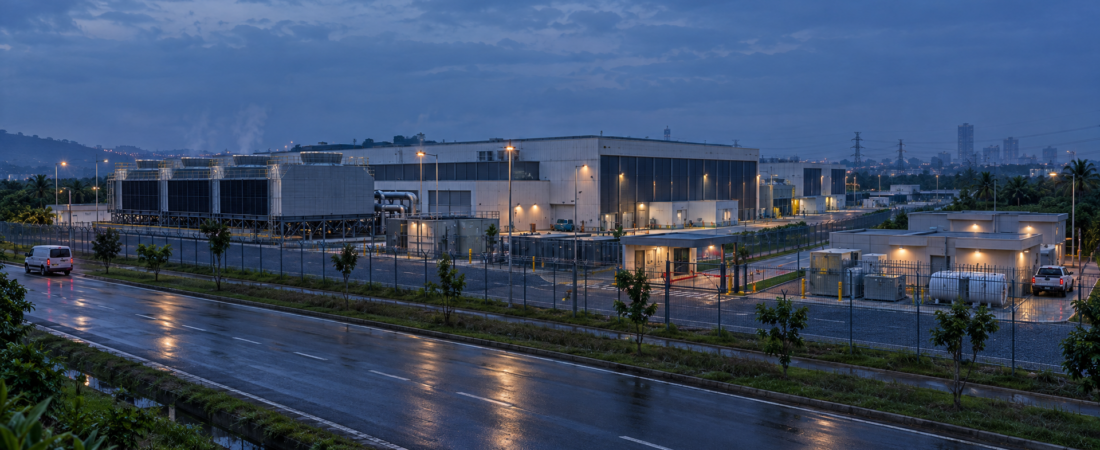
The DayOne Data Centers reference is strategically important because infrastructure rounds often have different implications from conventional software funding. Large funding for data center-related businesses can signal demand expectations around compute, hosting, enterprise workloads, or AI-adjacent digital infrastructure. It can also indicate that investors are willing to treat parts of the technology stack more like strategic infrastructure assets than like traditional venture bets.
Kling AI’s inclusion points to a related but distinct theme: sizable capital is not limited to physical infrastructure alone. The available information suggests that investors are also willing to back application- or platform-layer AI businesses at significant scale. That does not, by itself, confirm the emergence of a fully developed regional AI ecosystem. It does, however, indicate that the reported funding surge spans more than one part of the AI value chain.
At the same time, concentration creates interpretive risk. A market lifted by three major deals can look stronger in aggregate data than it feels for most founders or operators on the ground. Without additional information on deal counts, early-stage financing, or mid-stage follow-on activity, it would be premature to describe the 2026 funding increase as evidence of broad ecosystem strengthening. A safer reading is that Southeast Asia saw a major capital inflow event tied to a narrow set of AI- and infrastructure-linked transactions.
That nuance is especially important for Asia technology intelligence. Across the region, large capital commitments tied to AI infrastructure can influence how markets are perceived, how strategic assets are valued, and where future financing attention flows. But headline totals alone do not show whether that activity is deepening the overall innovation base or simply concentrating capital in a few perceived winners.
Investor Takeaway
The strongest takeaway is that Southeast Asia’s reported funding rebound appears to be real at the top line but narrow in composition. According to the available source information, the region attracted materially more capital in 9M 2026 than a year earlier, yet that increase was driven by a small number of large deals rather than broad market expansion.
For investors and strategic operators, that means the trend should be monitored through four lenses.
First, watch whether AI infrastructure remains the primary magnet for large capital rounds. If future quarters continue to show outsized funding for data centers, compute-related assets, or AI platforms, that would strengthen the case that a durable capital allocation shift is underway.
Second, monitor breadth. The key question is whether early-stage and mid-stage funding are also improving, or whether the market remains dominated by a few mega-rounds. A healthier regional innovation pipeline would likely show more balance across stages, not just larger totals.
Third, track geography. The available information highlights Singapore, but it does not establish how funding was distributed across Southeast Asia. Investors should watch whether other markets in the region also begin attracting substantial AI- and infrastructure-linked capital, or whether this remains heavily concentrated in established hubs.
Fourth, separate funding volume from ecosystem quality. Large late-stage rounds can be strategically significant even if they do not reflect broad startup strength. The implication is not that the headline number is misleading, but that it should be interpreted carefully.
In practical terms, this development may be an early sign that Southeast Asia is becoming more relevant to AI-era capital flows, particularly where infrastructure and scaled AI platforms are concerned. But based on the available information, the prudent conclusion is narrower: funding surged, the surge was concentrated, and the most important signal is where the money went.