Executive Summary
Tata Electronics and Nexperia have announced a strategic partnership spanning semiconductor manufacturing, technology, and innovation, according to the available source information. The reported operating structure is clear: Nexperia’s MOSFET portfolio is set to be manufactured at Tata Electronics’ upcoming 300mm fab in Dholera, Gujarat, while discrete chips are to be assembled at Tata’s packaging facility in Jagiroad, Assam.
For India’s semiconductor push, the importance of the announcement is less about disclosed scale and more about commercial form. A named international semiconductor company is being linked to both wafer fabrication and downstream assembly within India’s emerging chip manufacturing footprint. That does not by itself validate the long-term competitiveness of the Dholera project, and the available information does not include production volumes, timelines, pricing, or financial terms. But it does provide a more concrete data point than policy ambition alone.
For TechPowerAsia readers, the partnership is best read as an early commercialization signal for India’s semiconductor buildout. It suggests that Tata Electronics is trying to position its India-based facilities as part of a practical manufacturing chain rather than as isolated industrial assets. The key question now is whether that reported linkage can convert into repeatable execution, additional customer engagement, and broader ecosystem credibility.
Watch the Short Brief
Watch this short visual briefing for the key strategic implications behind the story.
Key Developments
According to the source summary, Tata Electronics and Nexperia announced a strategic partnership across semiconductor manufacturing, technology, and innovation on September 17, 2026.
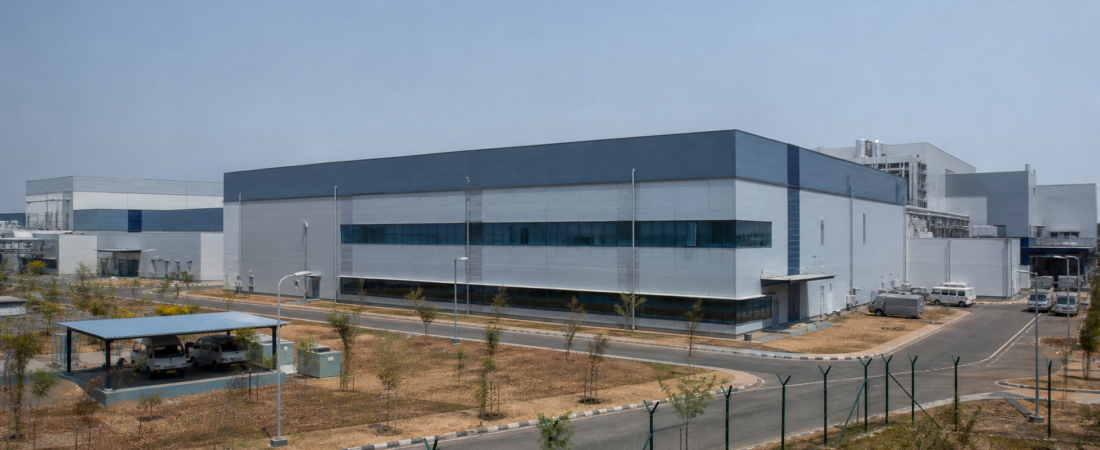
The source summary states that Nexperia’s MOSFET portfolio will be manufactured at Tata Electronics’ upcoming 300mm fab in Dholera, Gujarat. It also states that discrete chips will be assembled at Tata’s packaging facility in Jagiroad, Assam.
The announcement ties together two different layers of semiconductor manufacturing within India: front-end wafer fabrication in Gujarat and back-end assembly in Assam. That structure is strategically relevant because it connects fabrication capacity with packaging activity inside the same national buildout.
At the same time, several important details remain undisclosed in the available information. There are no reported production timelines, no stated volume commitments, no disclosed investment value tied specifically to the partnership, and no published financial terms in the source material provided here.
The announced scope also extends beyond manufacturing into “technology and innovation,” but the available source information does not define what that collaboration will include in practice. As a result, the most dependable reading of the announcement is the manufacturing arrangement itself: MOSFET production at Dholera and discrete chip assembly at Jagiroad.
Strategic Analysis
The partnership matters because it begins to move the India semiconductor story from capacity creation toward commercial relevance. Much of India’s chip narrative has centered on incentives, project announcements, construction plans, and industrial policy. What tends to matter next is whether real manufacturing programs can be attached to those assets. In that context, a reported arrangement with Nexperia gives Tata Electronics a more market-facing reference point than infrastructure planning alone.
That does not mean the commercial significance should be overstated. The available information does not show how much production is involved, how quickly manufacturing will ramp, or how central the arrangement is to either company’s broader operating model. But as a strategic signal, it is meaningful that the announcement links a named semiconductor company to specific facilities in Gujarat and Assam rather than speaking only in general terms about future capability.
The product focus is also notable. MOSFETs and other discrete semiconductor devices are important building blocks in power management and a wide range of electronic systems. From a manufacturing strategy perspective, this could suggest a pragmatic entry point for a new fabrication base. In general industry terms, mature-node and discrete-oriented manufacturing can offer a more realistic path for new capacity than an immediate attempt to compete in the most advanced logic categories. The source information does not say this is Tata Electronics’ explicit strategy, but that is one plausible reading of why this type of product collaboration may matter.
A second strategic implication is ecosystem design. The reported split between Dholera and Jagiroad suggests that Tata Electronics is trying to connect front-end and back-end capabilities rather than building standalone facilities with weak internal linkage. For India, that matters. Semiconductor competitiveness is rarely determined by a fab in isolation. It depends on whether design, materials, equipment support, packaging, logistics, qualification, and customer relationships can operate in a coordinated chain. A fabrication site in Gujarat paired with packaging activity in Assam does not complete that chain, but it may indicate the intended direction of travel.
There is also a broader Asia supply-chain angle. Semiconductor customers and manufacturers across the region have spent the past several years reassessing concentration risk, geographic resilience, and the value of additional manufacturing nodes. The source material does not state Nexperia’s motivation, so it would be inappropriate to present the partnership as confirmed evidence of a de-risking strategy. Still, the announcement fits a wider regional pattern in which companies are at least exploring additional manufacturing geographies beyond the most established hubs.
For India specifically, the announcement may help shift outside perception of the country’s semiconductor effort from a purely policy-led story to an operational one. That shift, however, will depend on execution. Semiconductor manufacturing credibility is not built by announcements alone. It is built by equipment installation, process qualification, yield stability, customer trust, and repeat business. None of those later-stage indicators are provided in the current source package.
That is why the partnership should be seen as an early marker rather than a definitive breakthrough. It points to commercial intent. It may indicate that Tata Electronics is gaining traction in converting industrial buildout into customer-linked manufacturing activity. But the available information is still too limited to support stronger claims about long-term competitiveness, utilization, or financial impact.
Investor Takeaway
For investors and strategic observers, the most useful way to read this development is as a monitored signal rather than a settled conclusion.
First, execution at Dholera and Jagiroad now matters more than narrative. The headline value of the partnership will rise materially if Tata Electronics can move from announced cooperation to visible manufacturing progress. Investors should monitor whether future disclosures provide clearer milestones on commissioning, qualification, output, and ramp.
Second, the next layer of proof will be customer breadth. A single strategic partnership can establish credibility, but broader market relevance usually depends on repeatability. If Tata Electronics announces additional semiconductor customers, or if the current relationship expands in scope over time, that would strengthen the case that India’s manufacturing platform is becoming commercially usable at scale.
Third, the product mix will be important. The current announcement centers on MOSFETs and discrete chips, according to the source summary. If Tata Electronics remains concentrated in these categories, that may still be strategically valuable, particularly for building execution discipline. But investors should watch whether the company can broaden into adjacent semiconductor manufacturing segments without overextending too early.
Fourth, the undefined parts of the partnership deserve attention. The announcement references manufacturing, technology, and innovation, but only the manufacturing arrangement is clear from the available information. Future detail on technology transfer, process collaboration, or joint development would materially change how the partnership is assessed.
Finally, this is an Asia supply-chain story as much as an India industrial story. If India can link fabrication and packaging into reliable customer programs, it could gradually become a more relevant node in regional semiconductor manufacturing. If execution slips or partnerships remain isolated, the country risks retaining a strong policy narrative without equivalent operating depth.
In short, the Tata Electronics-Nexperia announcement is a constructive commercial signal for India’s semiconductor ambitions, but it remains an early-stage one. The strategic value is real. The decisive evidence will come later, in execution, expansion, and repeatable industrial performance.