Executive Summary
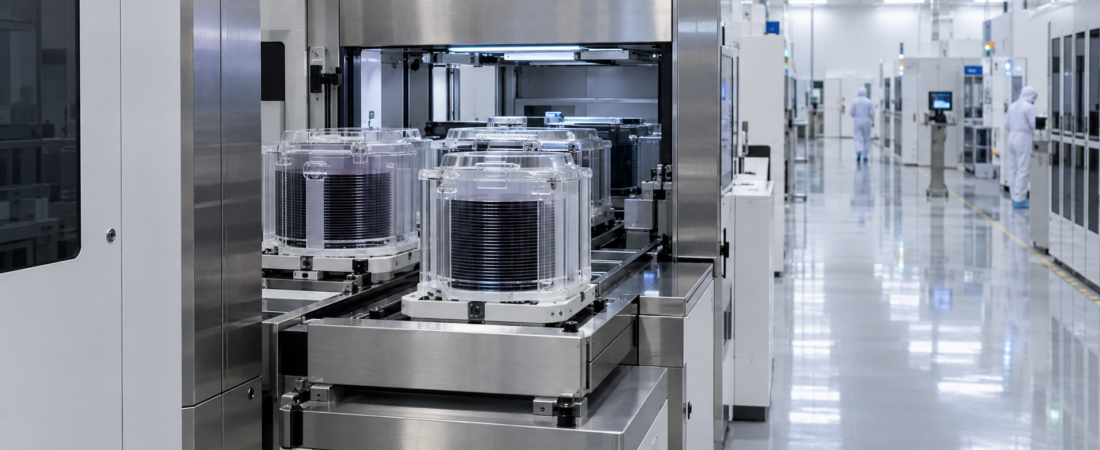
TSMC has reportedly begun pilot production of its 1.4-nanometer process, internally referred to as A14, according to the available source information. The report also indicates that early testing is underway at the company’s Hsinchu and Taichung facilities in Taiwan, with mass production planned for 2028.
If accurate, the development matters less as a near-term volume event and more as a roadmap signal. Leading-edge process transitions shape the competitiveness of future AI accelerators, mobile application processors, and high-performance computing chips. In practice, advanced-node progress influences customer planning, equipment demand, and expectations for who will control the most important manufacturing bottleneck in the AI hardware stack.
For Asia technology watchers, the reported milestone also reinforces a broader structural point: Taiwan remains central to the world’s most advanced semiconductor production. That has implications not only for foundry competition, but also for supply-chain concentration, geopolitical risk, and the capital flows tied to next-generation AI infrastructure.
Watch the Short Brief
Watch this short visual briefing for the key strategic implications behind the story.
Key Developments
According to the report, TSMC has entered pilot production for its 1.4nm node, designated A14. The available information describes this as an early production and testing phase rather than a full commercial launch.
The same report says initial work is taking place at TSMC facilities in Hsinchu and Taichung. Those site details should be treated as reported information rather than confirmed company disclosure.
The source title indicates that mass production is planned for 2028. That timeline is best understood as a reported target, not an officially confirmed commitment from TSMC based on the information currently available.
What is not in the available source set is equally important. There are no confirmed details on yields, transistor performance, power efficiency, customer allocation, capital expenditure linked specifically to A14, or volume commitments from end customers. There is also no direct TSMC statement in the provided material confirming the node’s current status.
That distinction matters. Pilot production is an important step in semiconductor development, but it does not by itself establish commercial readiness. The path from pilot activity to high-volume manufacturing typically includes process tuning, yield improvement, ecosystem preparation, and customer qualification.
The companies most closely tied to the strategic context around this development include TSMC, Intel, and major fabless chip designers such as Apple. However, the available source information does not confirm any specific customer relationship, product tape-out, or sourcing decision tied to A14.
Strategic Analysis
The most important implication of this report is not the node label alone, but what it may indicate about the next phase of foundry competition. At the leading edge, each process transition raises the cost, engineering complexity, and execution risk required to move from R&D into repeatable manufacturing. That dynamic tends to favor a small number of companies with the balance sheet, customer base, and process integration depth to sustain multi-year node development.
If the reported A14 pilot production is accurate, it suggests that TSMC is continuing to push its roadmap deeper into the angstrom-era category of manufacturing. For the market, that would support the view that advanced-node leadership remains one of the most valuable forms of strategic control in semiconductors. The companies that can manufacture the most advanced chips at scale sit at a critical choke point in the AI economy.
This matters because AI infrastructure is not only a software story. Training and inference systems depend on a hardware stack that includes advanced logic, packaging, memory integration, and power delivery. The most demanding AI processors are designed around leading-edge process technologies because performance-per-watt and compute density have become decisive competitive variables. A credible path to 1.4nm-class manufacturing could therefore shape expectations for the next generation of AI accelerators and custom silicon, even if commercial deployment remains years away.
From an Asia perspective, the report reinforces Taiwan’s continuing role as the core geography for frontier chip production. That has been one of the defining features of the semiconductor industry for years, but the concentration becomes even more consequential as AI demand accelerates. If the most advanced manufacturing capacity remains heavily centered in Taiwan, then the global AI buildout remains exposed to a narrow set of physical production hubs.
That concentration creates both strength and vulnerability. It strengthens Taiwan’s position in global technology value chains and sustains the strategic weight of its semiconductor ecosystem. At the same time, it keeps geopolitical and supply-chain risk tightly linked to the same geography. For governments, customers, and investors, this means that every forward step in TSMC’s roadmap can simultaneously look like technological progress and a reminder of unresolved concentration risk.
The competitive angle also deserves attention. Intel remains a key reference point in any discussion of next-generation foundry leadership. The core strategic question is not simply which company announces the most aggressive roadmap, but which can convert roadmap claims into reliable high-volume output with commercially acceptable yields and costs. In advanced-node manufacturing, that gap between development milestone and industrial execution is often where leadership is either validated or questioned.
That is why pilot production should be interpreted carefully. It is a meaningful signal, but not a final verdict. A reported pilot phase may indicate confidence in process readiness, but it does not remove the usual risks around scaling, defect density, customer adoption, and timetable slippage. For investors and industry planners, the more durable signal will come from subsequent disclosures on manufacturing readiness, capacity buildout, and ecosystem support.
There is also a capital allocation dimension. Advanced-node transitions drive spending not only at the foundry level, but across the semiconductor equipment and materials chain. Even without specific capex figures in the source material, the direction of travel is clear: each new generation at the leading edge tends to reinforce demand for highly specialized manufacturing tools, process materials, and supporting infrastructure. That makes roadmap credibility strategically important well before revenue from the node fully materializes.
In that sense, the reported A14 milestone sits at the intersection of semiconductors, AI, geopolitics, supply chains, and capital flows—the core areas that define the current technology landscape in Asia. It may be an early-stage data point, but it is a strategically meaningful one.
Investor Takeaway
The immediate significance of this report lies in signaling rather than near-term financial impact. Investors should treat the development as an early indicator of TSMC’s continued push at the leading edge, while keeping in mind that the underlying details remain reported rather than officially confirmed in the material provided.
The clearest implication is for advanced semiconductor positioning. If TSMC is moving forward on A14 on a timeline that points toward 2028 mass production, that could support the broader thesis that leading-edge manufacturing capacity will remain scarce, capital-intensive, and strategically concentrated in Asia.
The next set of signals to watch should come from primary-source disclosures. These include TSMC earnings calls, technology symposium commentary, roadmap updates, and any direct statements that clarify the status of A14, the intended production ramp, or the readiness of supporting ecosystem elements. Investors should also monitor whether management begins to discuss the node in the context of long-term capacity planning or customer demand.
A second category of indicators involves execution quality. Any future commentary on yields, process maturity, equipment readiness, or customer qualification would matter more than the initial pilot-production headline. In advanced manufacturing, timelines can move, and the difference between technical progress and commercial success is usually determined by execution discipline over several years.
A third category is competitive response. Intel’s own advanced-node progress remains relevant as a comparative benchmark for foundry credibility and strategic positioning. The issue is not marketing language around node naming, but who can translate engineering ambition into dependable, large-scale manufacturing.
Finally, the broader risk framework remains unchanged. Taiwan’s centrality to leading-edge production continues to anchor the global semiconductor system, but it also sustains concentration risk for AI infrastructure and premium logic supply chains. As a result, every reported advance in TSMC’s roadmap may strengthen confidence in its technological leadership while also reminding markets that diversification at the true frontier remains limited.
For now, the prudent view is that the report adds to the case for TSMC’s continued leadership ambitions in angstrom-era manufacturing, but does not yet settle the more important questions around scale, timing, and commercial execution. Those are the questions that will determine whether this reported milestone becomes a durable strategic inflection point or simply an early marker on a longer and more complex path to 2028.