Executive Summary
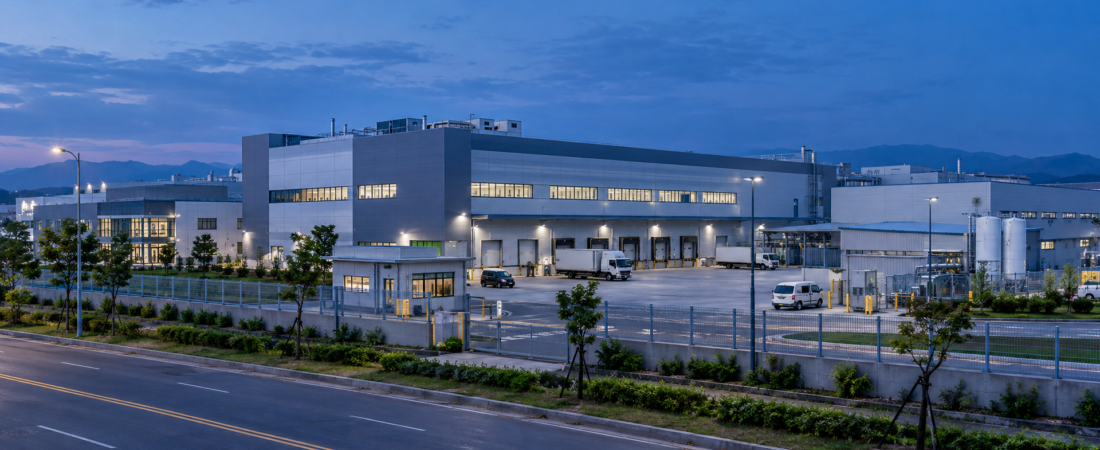
Taiwan’s National Science and Technology Council has signaled the start of Phase III development at Chiayi Science Park, and according to the available source information, TSMC reportedly plans to build five additional advanced packaging plants there.
The reported expansion matters because advanced packaging has become one of the key physical constraints in the AI hardware supply chain. Leading-edge chip production no longer depends only on wafer fabrication. It also depends on the ability to package high-performance logic, memory, and chiplets into deployable accelerators at scale.
For TechPowerAsia readers, the significance is less about one park expansion in isolation and more about what it may indicate: Taiwan appears to be extending its strategic role not only in front-end semiconductor manufacturing, but also in the back-end processes that increasingly determine how fast AI compute can reach the market. If the reported buildout proceeds, it could reinforce Taiwan’s centrality in the infrastructure layer behind the AI cycle.
Watch the Short Brief
Watch this short visual briefing for the key strategic implications behind the story.
Key Developments
According to the source summary, Taiwan’s National Science and Technology Council has signaled the start of Phase III development at Chiayi Science Park.
The same source summary says TSMC reportedly plans to build five additional advanced packaging plants at the site. The available information does not provide official detail on the timing, plant specifications, investment scale, or the exact packaging technologies involved.
That lack of detail matters. At this stage, the reported signal is strategically important, but the practical impact will depend on whether the expansion is formally confirmed, how quickly facilities are constructed and equipped, and what processes they are intended to support.
Even with those caveats, the direction of travel is clear enough to analyze. A reported addition of five advanced packaging plants would be consistent with the semiconductor industry’s broader response to AI-driven demand, where packaging capacity has become a major determinant of system-level output.
For Taiwan, the development also fits a wider pattern. The island’s technology importance has historically been tied to advanced chip production. Expanding packaging capacity in parallel would strengthen Taiwan’s position deeper into the semiconductor value chain, especially where AI infrastructure depends on high-complexity assembly and integration.
Strategic Analysis
The strategic importance of this development rests on a simple shift inside the AI hardware stack: bottlenecks have moved downstream.
For much of the semiconductor industry’s modern history, the main scarcity point was leading-edge wafer fabrication. That remains critical, but AI demand has elevated another constraint. Advanced packaging is now essential for turning high-performance silicon into usable accelerator systems, particularly where multiple dies and high-bandwidth memory need to be tightly integrated. In that sense, packaging is no longer a routine back-end step. It is part of the performance architecture.
This is why the Chiayi signal matters beyond local industrial policy. If TSMC is adding meaningful packaging capacity at a Taiwan science park, that could suggest the company sees this part of the production chain as a long-duration investment priority rather than a temporary response to a short-term AI demand spike.
One implication is that Taiwan may be deepening its role as a concentration point not just for making advanced chips, but for preparing them for deployment into AI systems. That carries two consequences at the same time.
The first is operational logic. Concentrating advanced packaging near an existing semiconductor ecosystem can improve coordination across manufacturing stages, suppliers, engineering talent, utilities, and logistics. In high-complexity semiconductor operations, clustering often delivers real execution advantages.
The second is strategic concentration risk. The more advanced packaging capacity sits in one geography, the more exposed the AI hardware chain becomes to disruption in that geography. For global customers and policymakers, the issue is not only access to wafers. It is also access to the packaging capacity required to convert wafers into final high-value components.
This matters particularly for Asia because the region remains the center of gravity for much of the semiconductor supply chain. Taiwan’s role within that structure already shapes capital allocation, industrial planning, and geopolitical attention across the region. A further buildout in advanced packaging would reinforce the idea that critical AI-enabling infrastructure is still concentrating in East Asia rather than dispersing broadly.
The development also has supply-chain implications beyond TSMC itself. New packaging plants, if built and ramped successfully, would likely create knock-on demand for packaging equipment, substrates, specialty materials, testing capacity, cleanroom systems, and industrial infrastructure. The article should not overstate any specific beneficiary without more evidence, but the broader industrial effect is straightforward: packaging expansion tends to pull a wider ecosystem with it.
There is also a capital allocation angle. Semiconductor packaging capacity is not added instantly. It requires multi-year planning, construction, tooling, and workforce development. That means the Chiayi signal, if confirmed in fuller detail later, could be read as evidence that AI-related infrastructure demand is strong enough to justify another round of physical capacity commitments in Taiwan.
At the same time, readers should avoid treating the reported expansion as an immediate solution to AI hardware constraints. Without verified timelines, there is no clear basis to assume near-term relief for supply shortages or faster system deliveries. The strategic signal is stronger than the near-term operational forecast.
It is also important not to over-specify the technology mix. Advanced packaging has become closely associated with AI accelerators and with techniques used in high-performance compute, but the available source information does not explicitly tie these reported plants to a named packaging platform. The cleaner interpretation is that this is a meaningful packaging-related expansion signal in a part of the market where advanced integration has become strategically important.
From a TechPowerAsia perspective, the larger takeaway is structural. As AI shifts from a software narrative to an infrastructure buildout, value increasingly depends on real-world bottlenecks: power, memory, interconnects, and packaging. Chiayi fits into that framework. It is a reminder that the AI race is being shaped not only by model capabilities and chip design, but by the industrial capacity to assemble complex hardware at scale.
Investor Takeaway
Investors should view the Chiayi development as an early but important supply-chain signal.
The reported plan for five additional advanced packaging plants suggests continued confidence in packaging as a strategic control point within the semiconductor value chain. That is relevant for anyone tracking AI infrastructure, semiconductor capital formation, and Taiwan’s role in regional technology concentration.
The key question is not simply whether more capacity is planned, but whether the expansion translates into real, usable output on a timeline that matters for AI demand. Investors should monitor for formal confirmation from TSMC or Taiwanese authorities, clearer construction and ramp schedules, and evidence of ecosystem activity around equipment, staffing, utilities, and materials.
The main strategic upside is straightforward. If the reported expansion proceeds, it could support a broader increase in the throughput of advanced semiconductor products tied to AI and high-performance computing. That would reinforce Taiwan’s role in one of the most supply-constrained parts of the global technology stack.
The risks are equally clear. Greater concentration of advanced packaging in Taiwan may improve efficiency, but it also increases exposure to geopolitical tension, natural disruption, and infrastructure stress. Investors should also keep execution risk in view. Large semiconductor projects often take time to ramp, and announced capacity does not automatically become effective capacity.
In short, Chiayi is best understood as a strategic indicator rather than a finished outcome. According to the available source information, Taiwan is preparing more room for advanced packaging expansion, and TSMC is reportedly part of that story. For Asia technology watchers, that is a meaningful development because packaging is no longer a secondary process in the AI era. It is part of the core industrial bottleneck.