Executive Summary
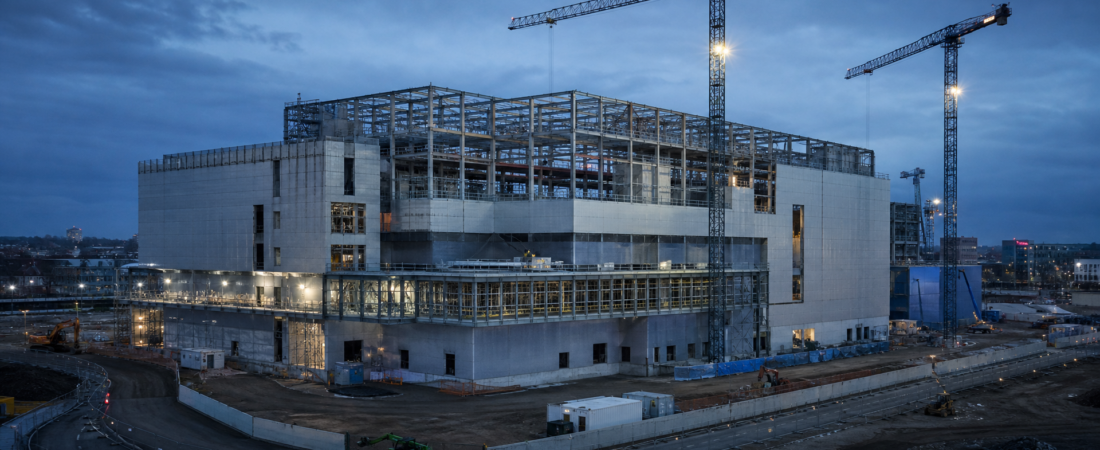
European Semiconductor Manufacturing Co, the Dresden-based venture linked to Taiwan Semiconductor Manufacturing Co, has reached a visible construction milestone in Germany. According to the available source information, the project held a topping out ceremony, indicating that the fab has reached its structural high point and remains on schedule.
On its own, a topping out ceremony is not a production milestone and does not answer the harder questions that determine semiconductor project success, including equipment installation, process qualification, customer ramp, and long-term utilization. Even so, this development matters because large fabs are complex, delay-prone projects, especially when manufacturing capacity is being built outside an operator’s established home ecosystem.
For TechPowerAsia readers, the significance is broader than construction progress in Dresden. The project sits at the intersection of two structural trends: Europe’s effort to localize more semiconductor capacity, and Taiwan’s gradual expansion of foundry manufacturing footprints beyond Asia in response to supply-chain risk, customer diversification needs, and government industrial policy. The milestone does not settle whether Europe can build a durable semiconductor manufacturing base at scale, but it does offer an early execution signal worth tracking.
Watch the Short Brief
Watch this short visual briefing for the key strategic implications behind the story.
Key Developments
According to the report, European Semiconductor Manufacturing Co held a topping out ceremony for its fab in Dresden, Germany. In practical terms, that marks the completion of the building’s structural high point and signals continued progress in the construction phase.
The available source information also indicates that the project is on schedule. That is a notable point in semiconductor manufacturing, where timelines can slip because of permitting, utility readiness, labor bottlenecks, specialized construction needs, or delays in tool delivery.
The development is relevant to both Germany and Taiwan. Germany is central because the fab is being built in Dresden, one of Europe’s more important semiconductor clusters. Taiwan is central because TSMC’s involvement makes the project part of a wider pattern in which Taiwanese semiconductor know-how is being extended into overseas manufacturing sites.
The report links the milestone to TSMC and also names Robert Bosch, Infineon Technologies, and NXP Semiconductors in the broader company set associated with the project. The available information for this article does not establish a detailed operational role for each company, so this update is best read as a milestone report rather than a full disclosure of partner responsibilities, production plans, or future customer commitments.
What is not confirmed in the available source material is just as important as what is. The report summary does not provide verified details on process technology, production capacity, investment size, first-tool timing, commercial ramp dates, or named supply agreements. As a result, the strategic reading of this event should remain focused on execution progress rather than extrapolating too far into future output or financial impact.
Strategic Analysis
The Dresden milestone matters because it tests whether advanced semiconductor manufacturing projects can move through early execution phases on time outside the concentrated Asian ecosystems that have historically supported them most effectively. TSMC’s home advantage in Taiwan is not only about technology. It also rests on dense supplier networks, experienced engineering talent, established logistics channels, and a regulatory environment accustomed to supporting major semiconductor expansion. Reproducing even part of that model elsewhere is difficult.
That is why an on-schedule construction marker carries more weight than it might in another industry. A fab is not a standard industrial building. It is a highly specialized asset in which civil works, cleanroom readiness, water and power infrastructure, contamination control, and equipment choreography all have to align. A topping out milestone does not prove that later phases will run smoothly, but it may indicate that project management discipline remains intact at this stage.
For Europe, one strategic implication is that semiconductor localization efforts are progressing from policy ambition into physical infrastructure. Europe’s chip strategy has often been framed around resilience: reducing exposure to external supply disruptions in critical components, especially after the global semiconductor shortages that affected automotive and industrial production earlier in the decade. The Dresden project fits naturally into that broader policy logic, even if the available report does not itself detail the policy architecture behind the build.
That makes this a meaningful signal for Europe’s industrial credibility. Policymakers can announce incentives and sovereignty goals, but semiconductor strategy becomes real only when concrete, steel, cleanrooms, and eventually production tools arrive on time. In that sense, the project is more than a regional construction update. It is an early test of whether Europe can translate semiconductor ambition into operating assets with support from a global manufacturing leader rooted in Asia.
For Taiwan, the milestone is relevant in a different way. TSMC’s international projects are closely watched because they speak to how far the company can extend its manufacturing model geographically without diluting execution quality. Every overseas fab carries questions about cost structure, staffing, local supply chains, and operational transferability. If overseas projects stay on schedule, that may strengthen confidence that Taiwanese semiconductor leaders can serve strategic customers and governments through a more distributed footprint while preserving Taiwan’s central role in the global semiconductor system.
This point is important for Asia technology intelligence. Semiconductor geography is no longer just a matter of where chips are cheapest to produce. It is increasingly shaped by geopolitics, industrial policy, resilience planning, and customer pressure for regionalized supply. As a result, a Germany construction milestone can still be highly relevant to Asia because it reflects how Taiwanese manufacturing capability is being repositioned within a more fragmented global technology order.
At the same time, investors and industry readers should avoid overstating what this event means. A topping out ceremony is an execution datapoint, not evidence that the fab will ramp on budget, achieve strong yields, or secure high utilization. The most difficult phases still lie ahead. Semiconductor projects can remain on schedule through structural completion and still encounter delays during equipment installation, process integration, workforce training, or qualification with end customers.
It is also too early to draw hard conclusions about how this facility will alter Europe’s competitive position relative to Asian manufacturing centers. One fab, even if executed well, does not by itself replicate the scale, supplier density, or accumulated process learning that underpins East Asia’s semiconductor leadership. What it can do is modestly broaden the map of trusted manufacturing capacity and create a reference case for future regional expansion.
Investor Takeaway
The reported milestone should be read as a constructive but limited signal. It reduces one layer of execution uncertainty by showing that the Dresden project is advancing through construction as planned, according to the available information. For investors focused on semiconductors, supply chains, and industrial policy, that matters because schedule discipline is a prerequisite for everything that follows.
The more consequential questions now shift to the next phases. Investors should monitor:
– whether subsequent construction and cleanroom milestones continue to arrive on time
– when equipment installation begins and whether tool delivery remains orderly
– any updated disclosures on process scope, capacity, or expected production timing
– signs of labor, utility, or energy constraints that could affect later-stage execution
– whether the project becomes a template for additional Europe-based semiconductor capacity linked to Asian manufacturing leaders
From a thematic perspective, the development supports continued attention to three areas. First, semiconductor supply-chain diversification remains active and capital intensive. Second, Taiwan’s technology influence increasingly extends through overseas manufacturing partnerships, not just domestic production concentration. Third, Europe’s semiconductor strategy will be judged less by policy announcements than by whether projects can move from construction milestones to reliable volume output.
For now, the right interpretation is measured. The Dresden topping out ceremony is not a commercial end-state, but it is a relevant checkpoint in a longer reordering of semiconductor manufacturing geography. If later milestones also hold, this project could become a stronger indicator that cross-regional semiconductor capacity buildouts are moving from strategic intent toward operational reality.