Executive Summary
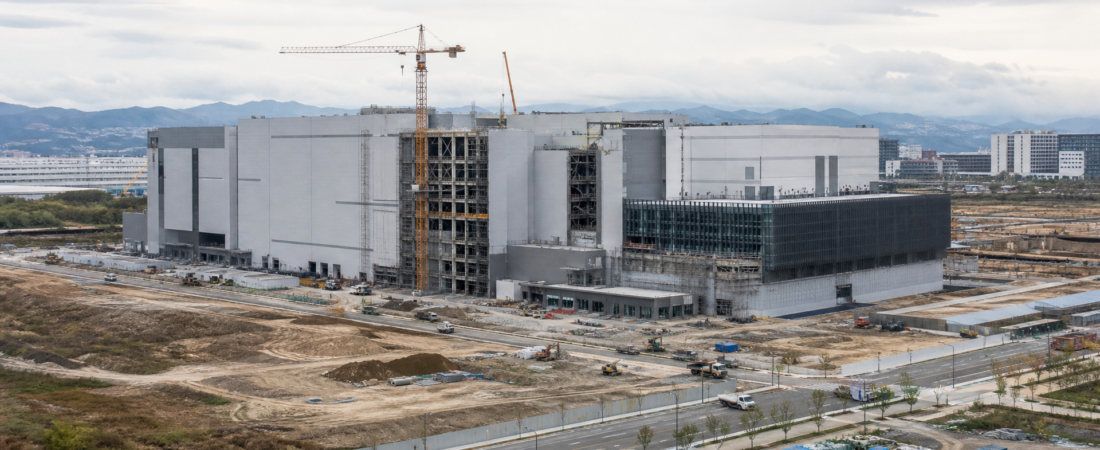
TSMC’s 1.4-nanometer fab expansion in Taichung is progressing ahead of schedule, according to the available source information. The report says Taichung Mayor Lu Shiow-yen inspected the project at Central Taiwan Science Park, where Plant 1 is expected to be completed before April 2027, with full production targeted for 2028.
On its face, this is a construction update. Strategically, it matters more than that. TSMC’s advanced-node execution remains one of the most important variables in the global semiconductor industry, especially as AI infrastructure demand continues to put pressure on leading-edge manufacturing capacity. A fab moving faster than planned may indicate disciplined project execution at a time when customers, suppliers, and policymakers are all watching how quickly next-generation chip capacity can come online.
For Asia’s technology landscape, the message is also geographic. Even as governments and companies discuss diversification, the most advanced chipmaking capacity is still being built at scale in Taiwan. If the reported timeline holds, the Taichung project would reinforce Taiwan’s role as the operational core of cutting-edge semiconductor production into the next phase of the AI buildout.
Watch the Short Brief
Watch this short visual briefing for the key strategic implications behind the story.
Key Developments
According to the report, Taichung Mayor Lu Shiow-yen visited TSMC’s expanding 1.4nm fab project at the Central Taiwan Science Park. The central reported point is that construction is ahead of the original schedule.
The available source information indicates that Plant 1 is expected to be completed before April 2027. Full production is targeted for 2028. Those dates are the clearest factual anchors in the report and are the main basis for assessing the project’s strategic importance.
Beyond the construction milestone itself, the report underscores that TSMC is continuing to advance new leading-edge capacity in Taiwan. That matters because facilities at this level are not ordinary industrial projects. They sit at the center of the supply chain for the most advanced classes of chips, including processors used in AI workloads, high-performance computing, and premium mobile devices.
What the report does not establish is equally important. It does not provide investment figures, customer allocations, equipment installation details, or confirmed end-market commitments for the fab’s output. It also does not, based on the source package provided, support more detailed claims about later-phase plant status, trial production timing, or specific sustainability features. As a result, the strategic significance of the project is clearer than the commercial details attached to it.
Strategic Analysis
A leading-edge fab moving ahead of schedule is noteworthy because time is one of the most contested variables in semiconductors. Advanced manufacturing capacity takes years to plan, permit, build, equip, qualify, and ramp. Any signal that one of those timelines is tightening can affect expectations across the ecosystem, from chip designers and cloud operators to materials suppliers and policymakers.
In TSMC’s case, the implications reach beyond one city or one facility. The company remains the key manufacturing partner for much of the world’s highest-end chip design activity. That does not mean a construction milestone automatically translates into immediate supply relief. Yield ramp, tool readiness, customer qualification, and product transition timing all matter. But an ahead-of-schedule physical buildout may suggest that one major part of the process is tracking well.
For the AI market, this could matter in two ways.
First, it may support confidence in the medium-term supply outlook for leading-edge silicon. The AI boom has not only increased demand for advanced chips; it has also increased the strategic importance of the foundry timetable behind those chips. Developers of accelerators, custom silicon, and supporting processors need visibility into when next-generation capacity will become available. A reported 2028 full-production target for a 1.4nm facility does not answer the allocation question, but it does contribute to the broader timeline the market uses to think about future supply.
Second, it highlights the degree to which the AI stack still depends on manufacturing execution in Asia, and specifically in Taiwan. Many discussions about AI competitiveness focus on models, data centers, and capital spending. Those are important, but they sit on top of a much narrower industrial base than is often acknowledged. If the most advanced process nodes continue to be developed and scaled primarily in Taiwan, then the island’s operational stability remains deeply linked to global AI deployment.
That concentration cuts both ways. On one hand, Taiwan’s ecosystem depth gives TSMC meaningful advantages in supplier coordination, engineering talent, and manufacturing know-how. Leading-edge fabs benefit from dense industrial clusters, and Taiwan has spent decades building one. On the other hand, concentration remains a structural risk. The more the world relies on one geography for advanced-node output, the more any disruption there would reverberate across cloud infrastructure, electronics, and defense-related technology supply chains.
This is why a local construction update deserves wider attention. It is not just about whether one facility opens on time. It is about whether the industrial center of gravity for advanced logic remains firmly anchored in Taiwan even as geopolitical pressure and supply-chain diversification efforts continue.
There is also a competitive dimension. TSMC’s ability to keep flagship projects moving on an aggressive timeline can influence how the broader foundry market is perceived. In advanced semiconductors, roadmap credibility matters almost as much as announced node targets. Customers do not only evaluate nominal process names; they evaluate who can build reliably, scale consistently, and transition capacity without major disruption. If TSMC sustains a pattern of disciplined execution, that could strengthen its position in customer planning conversations well before a fab reaches full output.
Still, caution is warranted. Construction speed is only one stage in a multi-stage process. Semiconductor investors and industry planners have learned repeatedly that a fab’s strategic value is not determined at the groundbreaking or structural completion stage alone. Equipment delivery, process maturity, defect reduction, yields, and customer qualification are where schedules often face their biggest tests. For that reason, the Taichung update is best read as a positive operational signal rather than a definitive production outcome.
Investor Takeaway
The reported acceleration of TSMC’s Taichung 1.4nm fab strengthens the company’s image as the region’s most important executor of advanced semiconductor capacity. For TechPowerAsia readers, the main takeaway is not simply that construction is moving quickly. It is that the timing of Taiwan’s next wave of leading-edge fabs remains central to the future supply of AI-era chips.
Several issues now matter more than the headline itself.
The first is schedule discipline through the next stages of the project. Investors should monitor whether the current pace carries through equipment installation, process qualification, and the approach to full production in 2028. In advanced manufacturing, being ahead of schedule early is meaningful, but sustaining that edge is harder.
The second is demand visibility. The available source information does not identify customers or products tied to this fab. Future disclosures that clarify how 1.4nm capacity will be allocated would help the market distinguish between a capacity-led buildout and one closely aligned with already-visible customer demand.
The third is Taiwan concentration risk. This development reinforces a broader point: despite global efforts to diversify chip production, the most advanced logic capacity is still deeply rooted in Taiwan. That reality supports the island’s strategic importance, but it also keeps geopolitical and supply-chain resilience questions at the center of any long-term semiconductor assessment.
The fourth is competitive signaling. Even without detailed financial disclosure, an ahead-of-schedule project can shape perceptions of roadmap reliability. In a market where advanced-node leadership influences ecosystem decisions years in advance, execution milestones can matter well before revenue contribution becomes visible.
In short, the Taichung update is a constructive signal for TSMC’s operational momentum and for Taiwan’s continued centrality in the semiconductor value chain. It does not by itself confirm future demand, commercial returns, or ramp success. But it does offer a meaningful early indicator of how Asia’s most important advanced-chip manufacturer is positioning for the next phase of AI-driven semiconductor competition.