Executive Summary
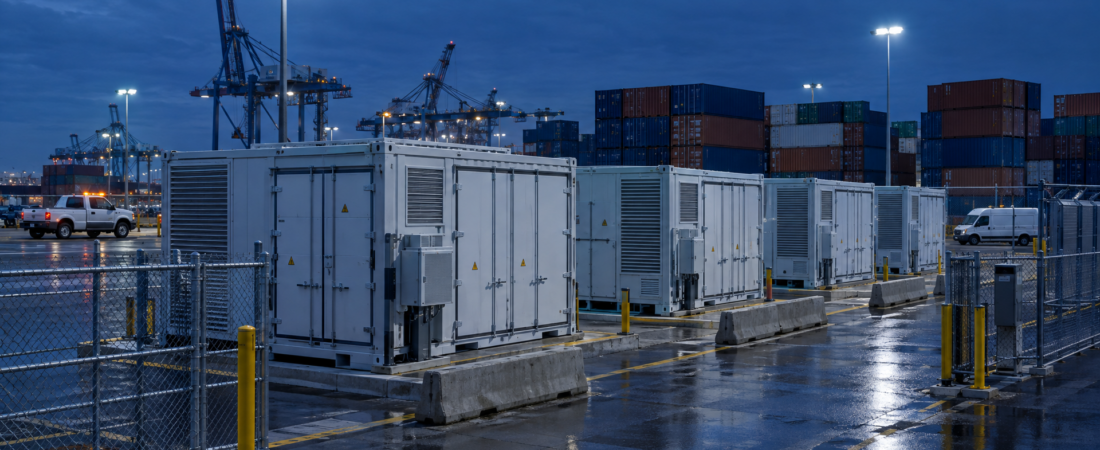
According to DigiTimes, unpredictable shifts in US regulatory trade enforcement and import limits on battery energy storage systems are creating supply bottlenecks and project delays across North America. On the surface, this is an energy storage and trade compliance story. Strategically, it may matter more broadly.
Battery energy storage systems are increasingly important to grid stability, renewable integration, and large power projects. That makes them relevant not only to utilities and clean energy developers, but also to power-hungry digital infrastructure. One implication is that disruption in battery storage deliveries could become a secondary constraint on US infrastructure buildouts that depend on timely access to power capacity, including some AI datacenter expansion plans.
For TechPowerAsia readers, the Asia angle is central. The reported disruption sits at the intersection of US trade enforcement and China-linked battery supply chains, with CATL and BYD named as related companies and Tesla also listed among relevant industry participants. The available source information does not define their exact roles in the reported disruption, so they should be understood here as key companies in the broader ecosystem rather than confirmed direct beneficiaries or victims in specific transactions.
The core point is not that battery trade restrictions have already slowed AI deployment in a confirmed way. The better-supported conclusion is narrower: policy volatility in one strategically sensitive supply chain is now creating uncertainty in another foundational layer of technology infrastructure.
Watch the Short Brief
Watch this short visual briefing for the key strategic implications behind the story.
Key Developments
DigiTimes reported on October 19 that changing US regulatory trade enforcement and import limits on battery energy storage systems are triggering supply bottlenecks and project delays across North America. Based on the available source information, several points appear supported.
First, the central issue is unpredictability. The report does not describe a single, clearly defined policy action with fully disclosed parameters. Instead, the available information suggests a trade enforcement environment that has become difficult for importers, developers, and project planners to navigate.
Second, the disruption is tied specifically to battery energy storage systems rather than to the broader battery market as a whole. That distinction matters because grid-scale storage occupies a separate strategic role from electric vehicle batteries or consumer electronics cells. Utility and grid-connected storage projects are often tied to complex delivery schedules, permitting timelines, and interconnection planning. Delays in component flow can therefore ripple across larger infrastructure schedules.
Third, the US-China supply chain dimension is central. China remains deeply embedded in global battery manufacturing, and the companies named in the source package reflect that reality. CATL and BYD are major Chinese battery manufacturers, while Tesla is a major US company with meaningful battery and energy storage exposure. However, the available source material does not specify whether these firms are acting as affected importers, suppliers, domestic substitutes, or simply major players relevant to the market under discussion.
Fourth, the geographic impact extends beyond isolated shipments. DigiTimes described project delays across North America, which suggests the issue is material enough to affect deployment schedules rather than only customs processing or isolated procurement adjustments.
What remains unclear is equally important. The available source information does not confirm the specific policy tools involved, the responsible enforcement bodies, any tariff schedule, any formal implementation timeline, or quantified project delay data. It also does not provide named examples of projects that have been delayed. That limits the precision of any near-term impact assessment.
Strategic Analysis
The strategic significance of this development lies in where battery storage now sits inside the broader infrastructure stack. Grid-scale batteries are no longer just an energy-transition product. They are increasingly part of how grids absorb intermittent generation, manage peaks, and support large new loads. In that sense, the battery storage supply chain is becoming a technology infrastructure issue as much as an energy one.
That matters because the United States is trying to expand several strategic systems at once: domestic manufacturing, electrified industry, modernized grids, and AI datacenter capacity. These buildouts do not operate independently. They compete for the same permitting attention, capital budgets, and infrastructure inputs. When one input becomes harder to source, the pressure can spread.
One implication is for power-intensive datacenter development. Many AI-focused datacenter projects require not just server capacity but dependable, scalable electricity arrangements. Battery energy storage can play a role in supporting those power systems, depending on project design and local grid conditions. If battery storage imports become harder to secure or project timelines become less predictable, that could create another friction point in the race to bring new compute capacity online.
That should still be treated as a scenario, not a confirmed outcome. The available source information does not state that specific AI datacenter projects have already been delayed because of BESS restrictions. But for investors and operators, this is exactly the kind of second-order risk that deserves attention before it becomes visible in earnings calls or project revisions.
A second strategic issue is substitutability. If imports tied to Chinese manufacturing become harder to bring into the US market, the key question is whether domestic or allied supply can fill the gap quickly enough. In principle, tighter trade enforcement can accelerate localization. In practice, battery manufacturing expansion takes time, capital, and supply-chain coordination. Even where domestic assembly exists, upstream dependence on cells, components, or precursor materials may remain significant.
That is where the Asia relevance deepens. Battery supply chains are not only concentrated in production capacity; they are also embedded in a wider network of materials processing, component manufacturing, and industrial know-how that has developed heavily in Asia. Any US attempt to tighten import exposure must therefore confront not just finished-system dependency, but ecosystem dependency. This does not mean diversification is impossible. It does suggest the transition may be slower and more operationally complex than trade policy alone implies.
Regulatory volatility itself may be the most immediate risk factor. Businesses can often adapt to a known rule set, even if costs rise. What is harder to manage is uncertainty over how rules will be interpreted, enforced, or changed. For project developers, that can affect procurement decisions, financing assumptions, and contingency planning. For suppliers, it can complicate inventory positioning and contract negotiations. For customers downstream, it can widen the gap between announced capacity plans and actual delivery schedules.
From a geopolitical perspective, the story also fits a broader pattern. US-China strategic competition has already reshaped thinking in semiconductors, critical minerals, advanced manufacturing, and industrial policy. Energy storage increasingly belongs in that same category. The reported disruption suggests that battery systems are moving from being treated primarily as clean-energy hardware toward being viewed as infrastructure with national and strategic importance.
Investor Takeaway
The immediate takeaway is not to overstate what has been confirmed. The strongest supported fact is that DigiTimes reported supply bottlenecks and project delays tied to shifting US trade enforcement and import limits on battery energy storage systems. The broader importance lies in what this may signal about infrastructure fragility.
Investors should watch three areas closely.
The first is policy clarity. If US authorities provide clearer guidance on the scope, timing, and enforcement mechanisms behind these import limits, some of the market disruption could ease even if restrictions remain in place. If ambiguity persists, planning risk may become as important as the restrictions themselves.
The second is supply-chain substitution. Market participants will want to know whether US or non-China-linked suppliers can offset any shortfall in a commercially viable timeframe. That question affects not just battery vendors, but utilities, developers, and digital infrastructure operators whose plans depend on timely project execution.
The third is spillover into adjacent technology infrastructure. Investors should monitor whether companies exposed to power-intensive expansion begin discussing longer interconnection timelines, storage procurement challenges, or higher infrastructure costs. Any such commentary would help determine whether this remains a contained energy-storage issue or develops into a broader constraint on US capacity buildouts.
For Asia-focused readers, the larger lesson is familiar but increasingly urgent: supply-chain power often sits in layers below the headline technology. The market tends to focus on chips, servers, and software when discussing AI expansion. But batteries, grid equipment, and industrial components can become equally important chokepoints when policy risk rises.
In that sense, the reported BESS disruption is less a narrow trade story than a reminder of how deeply infrastructure strategy now depends on Asia-linked manufacturing networks. Whether the US can reduce that dependency without creating new bottlenecks remains an open question. For now, the reported disruption suggests that battery storage has become another strategic fault line where trade policy, supply chains, and next-generation technology infrastructure increasingly intersect.