Executive Summary
The US House Ways and Means Committee has used a recent hearing to elevate a familiar supply-chain concern into a more explicit trade and industrial-policy question: how to reduce dependence on China in critical minerals and related processing. According to the available source information, the hearing focused on strategic partnerships and new trade corridors, particularly in Africa and Central Asia, as part of a broader effort to secure critical resources.
That matters well beyond mining. Critical minerals sit upstream of multiple technology chains that Asia depends on, including semiconductors, batteries, grid equipment, defense electronics, and AI infrastructure. A policy push to diversify supply away from China could eventually influence sourcing patterns, cost structures, and geopolitical leverage across the region.
At this stage, the hearing is best understood as a signal of policy intent rather than evidence of a completed supply-chain shift. The available information points to a US effort to widen access to mineral-rich regions, but it does not establish new agreements, new processing capacity, or a clear timeline for execution. For Asia-focused readers, the strategic significance lies in the direction of travel: Washington appears to be treating upstream materials security as a core component of technology competition.
Watch the Short Brief
Watch this short visual briefing for the key strategic implications behind the story.
Key Developments
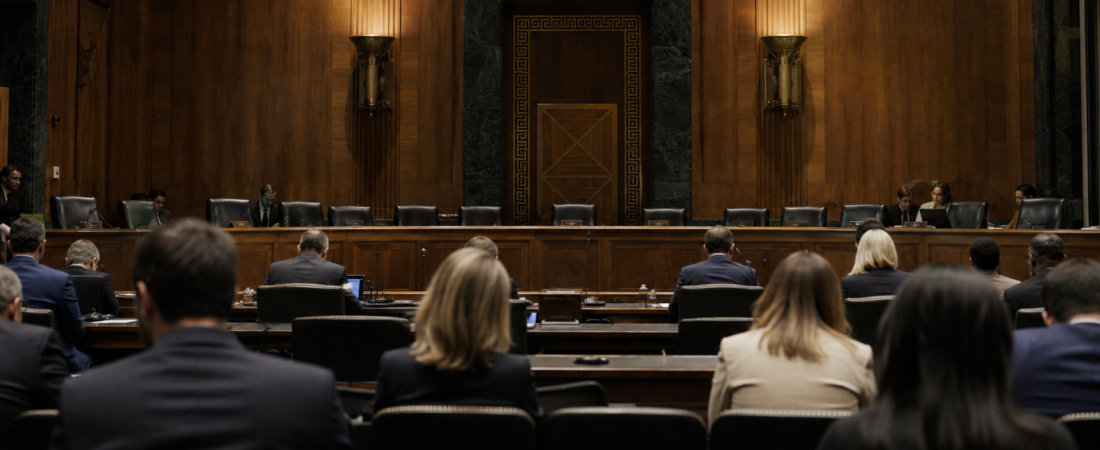
The confirmed development is the hearing itself. According to the source summary, the US House Ways and Means Committee held a hearing on strategic partnerships to secure critical resources and supply chains, with a stated focus on reducing China’s dominant position in critical minerals.
The available source information indicates two geographic priorities in that discussion: Africa and Central Asia. In policy terms, that framing is notable. It suggests Washington is looking beyond domestic extraction debates and toward external trade corridors and partnerships as part of its supply-chain response.
The hearing also fits a broader pattern in US industrial strategy. Over the past several years, semiconductors, batteries, and clean-energy systems have all moved closer to the center of national economic security planning. Critical minerals are an upstream extension of that logic. Without reliable access to inputs used in magnets, batteries, specialty materials, and advanced manufacturing equipment, downstream resilience becomes harder to achieve.
What the available information does not show is equally important. There is no confirmed evidence here of signed mineral agreements, financing packages, processing projects, or named corporate participants. There are also no verified production targets, import quotas, or implementation milestones in the source package provided. That means the hearing should be read as an institutional marker of political intent, not as proof that alternative supply corridors are already operational.
For Asia, the relevance is immediate even if the policy remains early stage. Much of the world’s semiconductor assembly, battery manufacturing, electronics integration, and industrial production is concentrated in Asian economies. Any serious attempt by the US to reshape upstream mineral sourcing will eventually intersect with Asia’s manufacturing base, whether through procurement shifts, new trade alignments, or competition over refining and processing investment.
Strategic Analysis
The central strategic issue is not simply access to mineral deposits. It is control over the chain from extraction to processing to industrial use. In technology supply chains, upstream concentration often matters most where conversion and refining capacity are difficult to replicate quickly. That is why hearings like this one deserve attention even before they produce immediate policy outputs.
For the US, the logic appears straightforward. If China retains strong influence over critical mineral supply and processing, then downstream industries in chips, batteries, defense systems, and AI infrastructure remain exposed to geopolitical and commercial pressure. A diversification push through Africa and Central Asia could therefore be aimed at creating optionality rather than immediate replacement. Optionality, in this context, may be the first realistic policy objective.
That distinction matters for Asia. Many Asian technology manufacturers are deeply integrated into global supply networks that include Chinese processing, Chinese intermediate materials, and Chinese industrial inputs. Even companies that assemble products outside China often rely on materials whose earlier-stage treatment passed through China-linked networks. If Washington is serious about creating alternative corridors, Asia-based manufacturers may eventually face a more fragmented sourcing environment in which resilience and cost efficiency become harder to balance.
Central Asia is especially relevant because it sits at the intersection of resources, geography, and power politics. For Washington, the region may represent an opportunity to develop alternative economic relationships around strategic materials. For regional governments, this could create space to diversify partnerships. For China, it introduces the possibility of greater competition in a zone where infrastructure, logistics, and political ties already matter heavily. The result is not a simple substitution story. It is more likely to be a contest over influence, financing, and industrial integration.
Africa presents a parallel but distinct challenge. Many African economies are central to global resource discussions, but resource access alone does not solve the technology supply problem. The harder question is whether new trade corridors can support value-added processing, logistics reliability, environmental compliance, and financing structures that are durable enough for industrial customers. If the US approach remains focused mainly on securing raw-material access, it may reduce some supply risk but leave a large share of processing dependence untouched.
This is where the hearing has broader significance for the semiconductor and AI era. Investors and industry strategists often focus on fabs, packaging, data centers, and GPUs. But those sectors ultimately rest on material systems that begin much earlier in the supply chain. A constraint in critical minerals does not always show up first in headline chip output. It can emerge through higher input costs, slower equipment availability, weaker bargaining power, or more volatile procurement terms.
One implication is that supply-chain resilience is becoming more vertically defined. It is no longer enough for governments to support downstream manufacturing while leaving upstream dependencies largely unchanged. The hearing suggests Washington increasingly recognizes that trade policy, industrial security, and technology competition are connected at the materials layer.
Still, the gap between policy attention and industrial execution remains large. Building alternative corridors is not only a diplomatic exercise. It requires transport infrastructure, contract structures, financing, environmental permitting, technical know-how, and, in many cases, local political stability. Processing capacity is especially difficult because it demands long lead times, specialized capabilities, and customers willing to commit to non-incumbent supply relationships. That is why this hearing should be treated as the start of a strategic process, not the end of one.
For Asia, the medium-term question is whether diversification efforts led by the US produce a genuinely broader materials ecosystem or simply a more politically segmented one. A broader ecosystem could reduce concentration risk for semiconductor and battery producers across the region. A segmented system, by contrast, could force manufacturers to manage separate sourcing channels for different end markets, especially where export controls, industrial subsidies, or security screening become more tightly linked to materials provenance.
Investor Takeaway
The main takeaway is that critical minerals are moving further into the center of technology policy, and that shift has clear implications for Asia’s industrial base. The hearing does not confirm a near-term realignment of supply chains, but it does reinforce the direction of US policy thinking: upstream resource security is increasingly being treated as part of competition with China.
For investors, the most important issue is follow-through. Hearings matter when they lead to durable policy tools, cross-border agreements, financing mechanisms, or commercially viable infrastructure. Until those pieces emerge, the development remains an early signal rather than a proven market shift.
Several indicators are worth monitoring. First, watch for formal trade or partnership announcements involving critical minerals in Africa or Central Asia. Second, watch for evidence that policy attention is extending beyond extraction toward refining, processing, and transport capacity. Third, watch whether downstream manufacturers in semiconductors, batteries, defense electronics, and industrial technology begin adjusting procurement language, partnership structures, or capital spending assumptions around non-China supply options.
The Asia angle is especially important. Any meaningful diversification effort could affect manufacturers across East Asia, Southeast Asia, and South Asia, even where production footprints remain unchanged. Companies with heavy exposure to materials-intensive technology chains may need to plan for a world in which supply resilience carries higher upfront costs but lower geopolitical concentration risk.
The near-term conclusion is cautious. The hearing is a meaningful policy signal, but not yet a structural break. The longer-term significance is potentially much larger: if Washington can convert trade rhetoric into workable mineral corridors and processing alternatives, the balance of leverage in global technology supply chains could begin to shift. For Asia’s semiconductor, battery, and AI-linked industries, that is a development worth tracking closely.