Executive Summary
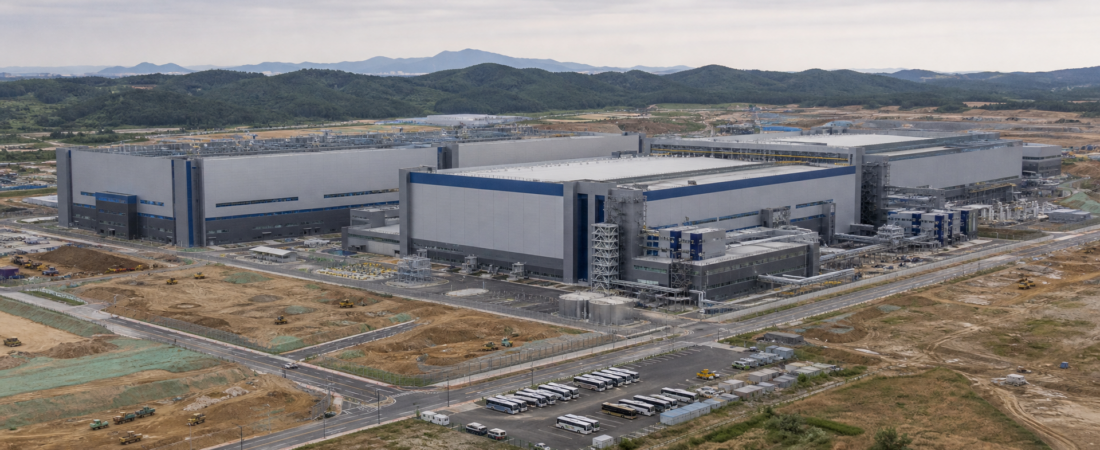
According to the available source information, U.S. officials have directly named South Korea’s Honam Semiconductor Mega Project during investment negotiations, reportedly marking the first time Washington has explicitly referenced the domestic chip cluster in this context. The report says the project is associated with roughly KRW 800 trillion in planned value and that the reference was used to press Korean chipmakers to prioritize memory manufacturing investment in the United States.
The immediate significance is not just diplomatic tone. If accurate, the episode suggests a sharper phase in allied semiconductor bargaining, where a partner country’s flagship domestic manufacturing plan is no longer treated as separate from U.S. onshoring goals. Instead, it may be becoming a negotiating variable.
For Samsung Electronics and SK Hynix, the issue is fundamentally about capital allocation. Both companies sit at the center of South Korea’s memory ecosystem, and both also face strategic pressure to deepen their U.S. manufacturing footprint. When governments on both sides want the same companies to anchor advanced industrial capacity at home, investment timing and location become geopolitical questions as much as corporate ones.
For Asia, this matters because South Korea is one of the world’s most important memory bases. Any shift in where future capacity is built could affect supply-chain geography, policy leverage, and the distribution of semiconductor investment tied to the AI era.
Watch the Short Brief
Watch this short visual briefing for the key strategic implications behind the story.
Key Developments
According to the report, U.S. officials directly cited South Korea’s Honam Semiconductor Mega Project in talks over semiconductor investment. The source summary describes this as the first time the cluster has been named explicitly in such negotiations.
The same source information describes the Honam project as a major South Korean semiconductor initiative with an indicated scale of about KRW 800 trillion. Based on the available material, the project appears to be central to South Korea’s domestic ambition to reinforce its semiconductor manufacturing base.
The report further suggests that Washington is using the existence and scale of the Honam cluster to press Korean companies to place more memory fabrication investment in the United States. The companies most directly implicated are Samsung Electronics and SK Hynix, the two leading South Korean memory producers.
What is not established in the available information is equally important. The source summary does not provide the exact language used by U.S. officials, the formal terms of any request, the detailed investment timetable under discussion, or any public response from Samsung, SK Hynix, or South Korean authorities. It also does not specify whether the reported pressure is tied to a broader package involving trade, subsidies, or other bilateral economic considerations.
Even with those caveats, the basic signal is clear enough: Washington appears willing to reference South Korea’s own industrial priorities more directly when discussing where Korean semiconductor champions should place future manufacturing capacity.
Strategic Analysis
The reported naming of the Honam cluster matters because it may indicate a change in the style of semiconductor diplomacy between allies. In earlier phases of industrial policy, governments often framed domestic incentives as additive: one country could subsidize local fabs while partners pursued their own national projects. The reported U.S. approach suggests a more competitive frame, where allied projects are not merely parallel efforts but part of an implicit contest for finite corporate capital.
That distinction matters in semiconductors because capacity decisions are expensive, slow, and path dependent. A large memory fab is not a symbolic commitment. It influences supplier location, utility planning, talent concentration, logistics patterns, and future expansion decisions. Once capital is committed at scale, it shapes industrial geography for years.
For South Korea, the Honam project appears to represent more than a single investment site. It is part of a broader effort to preserve domestic strength in a sector where the country already has global strategic weight. South Korea’s semiconductor competitiveness rests not only on corporate excellence at Samsung and SK Hynix, but also on clustering effects: engineers, equipment servicing, materials suppliers, power infrastructure, and institutional support all benefit from geographic concentration.
If the United States is now explicitly invoking that domestic cluster in negotiations, one implication is that Washington sees Korean memory investment decisions as strategically contestable rather than commercially neutral. This is especially notable because memory sits close to the center of AI infrastructure. AI servers and accelerators depend heavily on high-performance memory, and broader data-center expansion depends on reliable memory supply even beyond the highest-end segment. That does not prove a specific U.S. policy hierarchy, but it does help explain why future memory capacity would attract greater political attention.
For Samsung and SK Hynix, the challenge is not simply whether to invest in the United States. It is how to balance domestic ecosystem advantages against political expectations from a key ally. A stronger U.S. manufacturing presence could improve policy alignment with Washington and potentially reduce geopolitical exposure in one dimension. But heavier U.S.-bound spending could also compete with domestic Korean priorities, especially if both governments are seeking large-scale, long-duration commitments from the same firms.
This tension is a recurring feature of the semiconductor industry in the AI era. Governments increasingly view semiconductors not just as commercial products, but as strategic infrastructure. That changes the role of national champions. Companies are still making commercial allocation decisions, but those decisions are now interpreted through the lenses of national resilience, alliance politics, and technological sovereignty.
The report also highlights a less discussed risk: allied industrial coordination can become allied industrial rivalry. Publicly, partners may share broad goals such as supply-chain resilience and trusted manufacturing capacity. In practice, however, each government still wants the highest-value production, the deepest local ecosystem, and the strongest employment and tax base within its own borders. When the same companies are expected to satisfy both domestic and allied demands, friction is almost inevitable.
From an Asia perspective, that friction deserves close attention. South Korea is not a peripheral player in semiconductors; it is a core node in global memory supply. A more explicit U.S. effort to pull memory investment onto American soil could create second-order effects across Korean regional development, supplier strategy, and future state support for domestic clusters. It could also influence how other Asian governments think about protecting local semiconductor investment pipelines when negotiating with major allies.
None of this means a zero-sum outcome is certain. Samsung and SK Hynix could still pursue a mixed geographic strategy, expanding in both markets over time. But the report suggests that the political cost of where capacity is built is rising. That alone is a meaningful strategic signal.
Investor Takeaway
The most important issue for investors and industry watchers is whether the reported pressure translates into observable capital allocation changes.
First, monitor company disclosures and investment announcements from Samsung Electronics and SK Hynix for signs that U.S. memory manufacturing plans are accelerating, expanding, or being framed in more strategic terms. The key question is whether future U.S. commitments appear incremental, or whether they begin to compete more directly with domestic Korean cluster development.
Second, watch for policy signaling from Seoul. If the Honam project is as strategically important as the report suggests, South Korea’s government is unlikely to view any major diversion of investment as a routine corporate decision. Investors should monitor whether Korean authorities respond with stronger incentives, public messaging, or other measures designed to keep high-value semiconductor capacity anchored domestically.
Third, track supply-chain follow-through rather than headline announcements alone. Semiconductor ecosystems depend on materials, equipment support, engineering talent, and infrastructure planning. If the United States succeeds in attracting more memory-related manufacturing, the more telling indicator will be whether suppliers and adjacent industrial capacity begin to follow.
Fourth, keep the AI angle in view. Memory remains a foundational layer of AI system buildout, particularly as server density and performance requirements rise. Any shift in the location of future memory capacity could eventually matter for the broader AI hardware supply chain, even if the commercial effects take time to emerge.
Finally, investors should treat this development as an early geopolitical signal rather than a completed industrial realignment. According to the available source information, the core fact is the reported U.S. decision to name the Honam cluster directly in negotiations. The strategic importance lies in what that may foreshadow: a more explicit contest over where allied semiconductor champions deploy their next wave of manufacturing capital.
For Asian technology observers, that is the central takeaway. The next phase of semiconductor competition may not only be between rival powers. It may increasingly play out within alliances, through pressure over where critical capacity is built, who captures the ecosystem around it, and which country secures the industrial foundations of the AI era.