Executive Summary
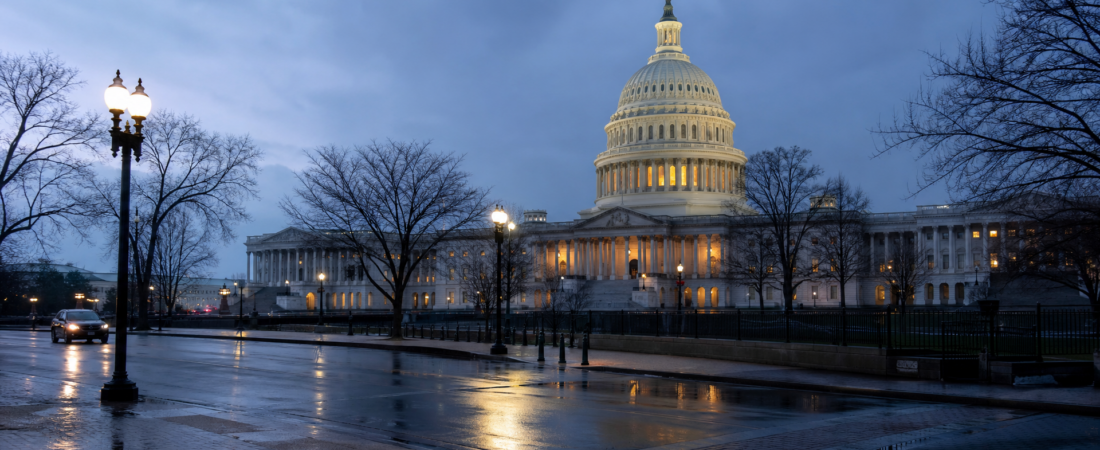
According to the available source information, the US House of Representatives is expected to take up next week the Lindsey O. Graham Sanctioning Russia and Iran Act of 2026, a bill that could give the US president broad authority to impose tariffs of up to 100% on countries engaged in significant trade with Russia, including major energy buyers such as India and China.
For Asia-focused technology and supply-chain watchers, the importance of this development is not limited to Russia policy. The reported mechanism would extend US pressure beyond the primary sanctions target and into third-country trade relationships. That matters because India and China are deeply embedded in global manufacturing, electronics, AI infrastructure demand, and cross-border capital flows.
If enacted and later used, the measure could widen the overlap between sanctions policy and trade policy. Even before any tariff is imposed, the existence of such authority could raise policy risk around US-Asia commercial ties. For companies and investors exposed to Asian supply chains, the key issue is not only whether tariffs are ultimately applied, but whether Washington is moving toward a more expansive use of tariff power as a geopolitical instrument.
Watch the Short Brief
Watch this short visual briefing for the key strategic implications behind the story.
Key Developments
According to the source summary, the US House of Representatives will vote next week on the Lindsey O. Graham Sanctioning Russia and Iran Act of 2026. The same source summary says the bill would grant the president expansive authority to impose tariffs of up to 100% on trading partners that continue significant trade in Russian energy.
India and China are specifically relevant because the source summary identifies them as potential targets of that authority. In practical terms, this places two of Asia’s largest economies inside the bill’s risk perimeter, not because they are the primary sanctions target, but because of their trade links to Russia.
What is clear from the available information is the broad direction of the proposal: it would allow the United States to use tariffs not only against a sanctioned state, but also against third countries whose commercial activity is seen as supporting that state’s revenue base.
What remains unclear from the available reporting are the operational details. The source information does not specify the threshold for “significant” trade, the timetable for implementation, the criteria for exemptions, or how tariff levels would be set in practice. Nor does the available material provide official responses from India, China, or the US administration.
That distinction matters. The reported legislative move is real enough to warrant close monitoring, but the eventual effect on trade, diplomacy, and corporate strategy would depend on how the authority is written into law, whether it is signed, and how aggressively it is used.
Strategic Analysis
The broader significance of the bill lies in the policy model it appears to advance. According to the available source information, Washington is considering a framework in which energy purchases from Russia could trigger sweeping tariff exposure for third-country economies. That would represent a more explicit fusion of sanctions enforcement and trade coercion.
For Asia, this is strategically important because India and China are not peripheral markets. They are central to industrial demand, electronics manufacturing, logistics networks, and investment planning across the region. Any US policy tool that introduces the possibility of extreme tariffs on trade with those economies may affect decision-making well beyond the energy sector.
One implication is that geopolitical risk could become more difficult to isolate. Traditionally, companies might treat energy sourcing, export strategy, and technology supply-chain planning as related but separable issues. A measure of this kind would blur those boundaries. Russian energy exposure, US trade relations, and Asia manufacturing strategy could become more tightly linked in corporate risk assessments.
That possibility is especially relevant for technology-linked supply chains. India and China matter not only as consumer markets, but also as production locations, assembly bases, and strategic nodes in broader electronics ecosystems. If US tariff authority can be aimed at large economies on geopolitical grounds, multinational firms may need to evaluate not just direct sanctions compliance, but also second-order exposure across procurement, manufacturing footprints, and customer concentration.
This does not mean a supply-chain shift is inevitable. The available source information does not show that companies have changed sourcing plans, and it does not establish that tariffs will be imposed. But the reported proposal could still influence boardroom discussions if it raises the perceived probability of future trade disruption.
There is also a capital-flows angle. Measures that increase uncertainty around large trade relationships can affect how investors and corporations think about country risk, timing of investment, and portfolio exposure. Here again, caution is necessary: the available source information does not show capital outflows, corporate hedging, or repricing of assets. Still, one strategic implication is that a policy tool framed around 100% tariffs may lead market participants to pay closer attention to geopolitical contingencies involving India and China.
For India, the issue may be particularly sensitive because the country is simultaneously deepening its role in electronics manufacturing and trying to attract more strategic capital into industrial and technology sectors. A US measure that creates even conditional tariff risk tied to Russian energy trade could complicate that positioning, especially if global firms begin to question how stable future market access would be under a more politicized trade environment.
For China, the implications sit within an already tense US-China trade and technology relationship. In that context, a Russia-linked tariff mechanism may be seen less as a standalone measure and more as another example of how geopolitical disputes can spill over into broader economic restrictions. If so, the bill could reinforce a view among Chinese policymakers and firms that external commercial risk is becoming structurally less predictable.
At a higher level, this development may indicate that US economic statecraft is becoming more flexible, but also more expansive in its reach. Instead of treating sanctions, tariffs, and strategic competition as separate tools, Washington appears willing to consider combinations that increase pressure on multiple fronts at once. For Asian governments and businesses, the challenge is that such combinations can create uncertainty even when the final policy outcome remains undecided.
The key analytical point, then, is not that a 100% tariff regime is now imminent. The available information does not support that conclusion. Rather, the development suggests that the US policy debate is moving further toward secondary pressure on large third-country economies, including in ways that could touch trade relationships central to Asia’s technology and industrial landscape.
Investor Takeaway
Investors should view this as a policy-risk signal rather than a confirmed trade outcome.
The first question is legislative: whether the House advances the bill in a form that preserves the reported tariff authority. Any amendment that narrows presidential discretion, reduces the tariff ceiling, or limits the scope of affected trade would materially change the risk profile.
The second question is executive use. Even if the authority becomes law, the available source information indicates a grant of power, not an automatic tariff trigger. That means the practical impact would depend on future White House decisions, diplomatic trade-offs, and enforcement priorities.
The third question is Asia-specific exposure. Investors with interests tied to India- and China-linked manufacturing, logistics, industrial demand, or technology supply chains should monitor whether the bill begins to appear in corporate commentary, policy statements, or strategic planning language. The earliest market-relevant signal may not be a tariff announcement, but a change in how companies frame geopolitical risk.
The fourth question is whether energy trade becomes a broader proxy for commercial alignment. If that happens, sanctions policy could become more directly relevant to sectors that do not trade in energy at all, including technology hardware and industrial supply chains. That would be a meaningful shift for Asia, where cross-border production systems depend on predictable trade conditions.
In short, the immediate fact pattern is narrow but important: according to the source summary, the House is preparing to consider a Russia sanctions bill that could authorize tariffs of up to 100% on trading partners such as India and China. The broader significance is that it may expand the range of geopolitical scenarios that Asian businesses and investors need to price into supply-chain, trade, and capital-allocation decisions.