Article Title:
Vietnam’s Haiphong Free Trade Zone Signals a New Phase in Semiconductor Supply Chain Diversification
Executive Summary
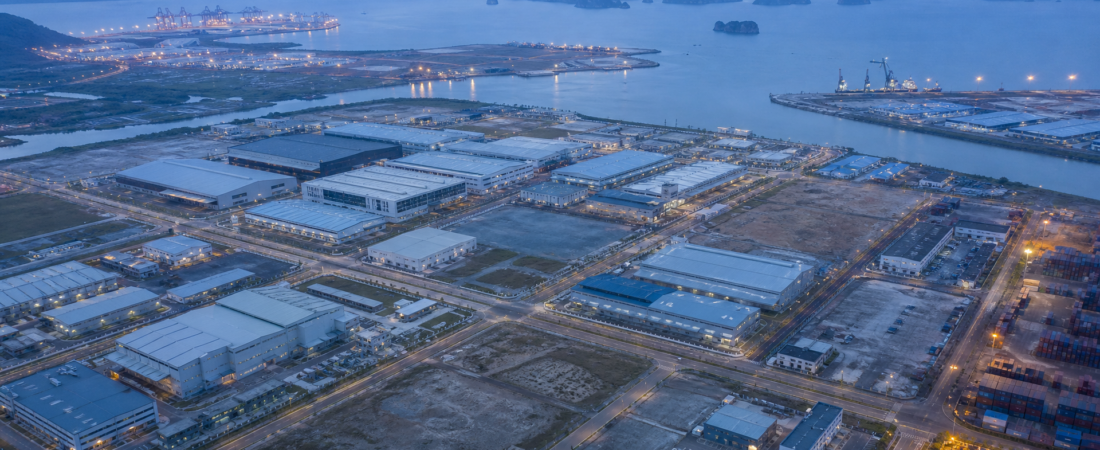
Vietnam has launched the Haiphong Free Trade Zone, described in the available source information as northern Vietnam’s first free trade zone, with an explicit focus on attracting higher-value investment in semiconductors, precision manufacturing, and logistics.
That matters because it suggests Vietnam is moving beyond simply absorbing spillover manufacturing demand and is instead using a dedicated policy platform to compete for more strategic positions in regional technology supply chains. In the broader reported context around the launch, South Korea’s LG Innotek has been identified as an early semiconductor-related participant, reinforcing the cross-border capital and supply-chain dimension of the project.
For TechPowerAsia readers, the significance is less about one zone alone and more about what it may indicate: Southeast Asian governments are increasingly trying to institutionalize semiconductor-adjacent investment flows at a time when manufacturers are reassessing geographic concentration risk. Haiphong’s launch does not by itself prove that Vietnam has secured a durable leadership position in semiconductors, but it does strengthen the case that the country wants a more formal and higher-value role in the regional electronics and chip ecosystem.
Watch the Short Brief
Watch this short visual briefing for the key strategic implications behind the story.
Key Developments
According to the available source information, Vietnam has officially opened the Haiphong Free Trade Zone in northern Vietnam.
The zone is being positioned to attract investment in three targeted sectors: semiconductors, precision manufacturing, and logistics. That sector mix is notable. Rather than presenting the FTZ as a general-purpose industrial expansion, the reported framing points to a more selective effort to draw higher-value manufacturing and supply-chain activity.
The available reporting also links the development to South Korea through LG Innotek, which appears in the research context as a related company and an early semiconductor-focused example associated with the zone. While the provided source summary does not include detailed project terms, the company’s presence is strategically relevant because it suggests Vietnam is not only marketing the zone conceptually, but also trying to align it with recognized regional technology manufacturers.
At the same time, several important details are not established in the source information provided here. There is no confirmed information in the supplied materials on the exact incentive structure of the FTZ, the legal and operational framework governing it, production capacity, employment impact, or the scale and timeline of any individual company project. Those unanswered questions do not negate the importance of the announcement, but they do mean investors and industry observers should separate the confirmed policy move from the still-emerging commercial picture.
Strategic Analysis
The Haiphong FTZ is best understood as a signal about Vietnam’s industrial direction. The core fact is straightforward: the government has opened a designated zone and tied its positioning to semiconductors, precision manufacturing, and logistics. The strategic implication is broader. Vietnam appears to be trying to formalize its pitch as a destination for technology supply-chain investment rather than relying only on its reputation as a lower-cost manufacturing base.
This matters in an Asian context because semiconductor competition is no longer defined only by leading-edge wafer fabrication. The regional supply chain includes materials, substrates, packaging-related inputs, electronics components, specialized manufacturing, and the logistics systems that support all of them. For economies that are not immediate contenders for the most capital-intensive front-end production, semiconductor-adjacent segments can still offer meaningful strategic value. Haiphong’s positioning suggests Vietnam sees an opening in that layer of the market.
If the reported semiconductor emphasis translates into sustained tenant activity, the zone could become part of a wider Southeast Asian effort to capture more of the chip value chain as companies diversify operations. That diversification trend is often discussed under the “China+1” framework, but the Haiphong case suggests a more organized phase may be emerging. The key distinction is between opportunistic relocation and state-supported ecosystem building. A dedicated FTZ aimed at semiconductor-related sectors points to the latter.
The South Korea angle is also important. Even with limited detail in the source materials, the association with LG Innotek indicates that Vietnam’s pitch is resonating with at least some established Asian technology manufacturers. That matters for capital flows as much as for production. In practice, one credible cross-border participant can help test whether a zone is commercially viable, operationally workable, and capable of attracting follow-on suppliers or adjacent manufacturers.
Still, the current evidence supports only an early-stage conclusion. Haiphong’s launch may indicate stronger Vietnamese ambition in semiconductors, but it does not yet confirm ecosystem depth. There is a meaningful difference between announcing a sector-focused zone and proving that it can attract a cluster of manufacturers over time. The first is a policy signal. The second is market validation.
That distinction is especially relevant for semiconductors because ecosystem strength usually depends on accumulation, not on a single project. Manufacturers look for reliability of infrastructure, supplier access, labor quality, operational predictability, and long-term policy consistency. None of those factors can be fully inferred from the FTZ launch alone. What the announcement does show is that Vietnam is trying to place itself more deliberately into the conversation.
There is also a supply-chain interpretation worth noting. By combining semiconductors, precision manufacturing, and logistics in one reported policy platform, Vietnam may be signaling that it understands semiconductor competitiveness as a systems issue rather than a standalone factory decision. Even without confirmed details on the exact operating model of the zone, the sector combination suggests an attempt to align production activity with supporting industrial and movement capabilities. In Asia’s semiconductor landscape, that integrated approach is often what separates symbolic announcements from scalable manufacturing strategies.
From a geopolitical perspective, this development fits the broader pattern of middle-power economies in Asia seeking a larger role in technology supply chains without trying to replicate the full stack of established semiconductor leaders. Vietnam does not need to become a leading-edge fab hub for Haiphong to matter. If it can deepen its role in supporting semiconductor manufacturing, packaging-related inputs, or electronics precision production, that alone could increase its importance in regional supply-chain planning.
Investor Takeaway
The Haiphong Free Trade Zone should be viewed as a credible strategic signal, but not yet as definitive proof of a large-scale semiconductor shift.
For investors and industry decision-makers, the first issue to watch is conversion from policy intent to operating reality. Vietnam has made a clear sectoral statement by opening the FTZ and linking it to semiconductors, precision manufacturing, and logistics. The next question is whether that framing produces a growing base of tenants, suppliers, and related infrastructure commitments.
Second, the LG Innotek connection is meaningful because it provides a named technology anchor in the broader reported context, but the commercial significance will depend on follow-through and whether other companies join. One anchor example can improve credibility; it does not by itself establish an ecosystem.
Third, Haiphong should be monitored as part of a wider Asian supply-chain competition story. If Vietnam can turn this zone into a repeatable platform for semiconductor-adjacent investment, it could strengthen its position against other regional manufacturing destinations. If additional tenant announcements do not materialize, the FTZ may remain more of a policy statement than a transformative industrial mechanism.
Finally, investors should be careful not to overextend the signal. The available information supports a constructive read on Vietnam’s ambition in semiconductor-related manufacturing, but not a conclusion that the country has already secured a dominant role in the sector. The more practical takeaway is that Haiphong may become an important test case for how Southeast Asia captures the next layer of semiconductor and precision-manufacturing capital flows in the AI era.