Executive Summary
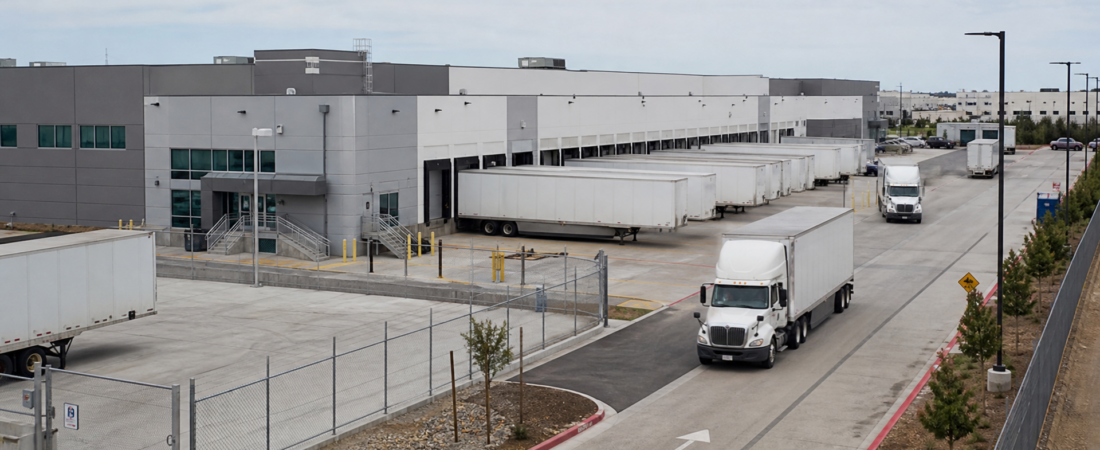
Industrial logistics demand in the United States reached a four-year high in the second quarter of 2026, according to the available source information. The reported demand was driven by e-commerce, data center construction, defense activity, and high-tech supply chains rebuilding inventories.
On its face, this is a U.S. commercial real estate story. But it also offers a useful signal for technology investors and operators because logistics capacity is part of the physical foundation behind AI infrastructure, semiconductor supply chains, and manufacturing expansion. Warehouses, distribution hubs, and industrial support facilities are not usually treated as core technology assets, yet they often determine how quickly capital projects can move from announcement to execution.
For TechPowerAsia readers, the importance of this development is indirect rather than evidentiary. The source does not document similar conditions in Asia, and it should not be read as proof of a comparable regional trend. Still, the reported tightening in U.S. logistics space may indicate a broader issue that matters across technology value chains: even when funding, policy support, and end-market demand are available, physical infrastructure can become a constraint.
Watch the Short Brief
Watch this short visual briefing for the key strategic implications behind the story.
Key Developments
According to the source summary, demand for industrial logistics space in the United States hit a four-year high in Q2 2026. The reported drivers were e-commerce activity, data center construction, defense-related demand, and high-tech supply chains rebuilding inventories.
That mix matters. E-commerce has long been a large user of warehouse and distribution space, but the inclusion of data center construction, defense, and high-tech inventory rebuilding points to a broader industrial demand base. In other words, the pressure on logistics capacity is not being framed as a single-sector surge. It appears to reflect several parts of the economy competing for industrial space at the same time.
The source information does not provide detailed figures on vacancy, rents, completions, or regional breakdowns within the United States. It also does not identify specific technology manufacturers or data center developers. As a result, the most reliable conclusion is narrow but still meaningful: reported demand for logistics space is strong, and some of that strength is linked to technology-adjacent infrastructure activity.
This is especially notable because the demand drivers are tied to sectors that tend to require not only transport and storage, but also staging, assembly, equipment handling, and inventory buffering. Data center construction depends on large volumes of electrical equipment, cooling systems, power components, and networking hardware. High-tech inventory rebuilding can require more warehouse capacity as companies hold additional stock to improve resilience. Defense and advanced manufacturing projects can add further pressure to the same industrial footprint.
Strategic Analysis
The clearest strategic implication is that technology infrastructure is more physical than many market narratives imply. AI expansion is often discussed in terms of chips, computing demand, model development, and power availability. Semiconductor strategy is often framed around fabs, advanced packaging, subsidies, and export controls. Those are critical variables, but they do not eliminate the need for storage, distribution, staging, and industrial support space.
The U.S. logistics story matters because it highlights a lower-visibility layer of execution risk. If warehouse and industrial capacity tightens while demand from data center construction and high-tech supply chains rises, project timelines may become more dependent on logistics availability than investors expect. That does not mean industrial space is now the dominant bottleneck. It does suggest that infrastructure constraints can emerge outside the categories most closely followed by technology markets.
This has broader relevance for AI infrastructure. Large-scale data center buildouts depend on long equipment chains and synchronized delivery schedules. Servers, racks, switchgear, backup systems, cooling equipment, and construction materials move through physical nodes before facilities become operational. If those nodes become congested, the effect may not be as visible as a chip shortage or a power-permit delay, but it can still slow deployment.
The same logic applies to semiconductor and electronics supply chains. Inventory rebuilding, cited in the source summary as one driver of demand, may reflect a more cautious operating model after years of supply disruption. Companies that once optimized aggressively for just-in-time delivery may now be willing to carry more buffer stock. If that behavior persists, logistics real estate becomes more strategically relevant because resilience requires space as well as capital.
For Asia-focused readers, the key value of this development is as a framework for what to watch rather than as evidence of an Asian trend. Asia remains central to semiconductor manufacturing, electronics assembly, and many AI hardware supply chains. If similar warehouse and industrial tightness were to appear in markets linked to those networks, it could affect the pace of diversification, regional capacity expansion, and cross-border inventory strategies. But that is an analytical extension, not a confirmed conclusion from the current source.
One reason this matters for Asia technology intelligence is that supply-chain debates are often dominated by geopolitics and policy. Export controls, localization efforts, and industrial incentives are important, but they do not automatically create usable capacity on the ground. A company can decide to diversify manufacturing or expand AI infrastructure, yet still encounter delays tied to logistics, storage, and industrial land availability. In that sense, warehouse demand is not just a real estate metric. It can function as an operational signal for how much real economic activity is trying to move through the system.
There is also a capital allocation angle. When logistics capacity tightens in parallel with data center and high-tech demand, cost inflation can spread beyond the most obvious components of the buildout cycle. Investors tend to monitor semiconductor equipment spending, GPU supply, and utility access. They may need to pay closer attention to second-order infrastructure categories that shape implementation speed and project economics.
That does not justify sweeping conclusions. The current source package supports a cautious interpretation, not a broad thesis that warehouse scarcity is redefining the technology cycle. Still, it points to an underappreciated issue: industrial logistics conditions can reveal where technology expansion is colliding with physical limits.
Investor Takeaway
Investors should read this development as a signal about execution conditions, not simply as a U.S. real estate datapoint. According to the report, logistics demand is being supported by sectors that matter to the modern technology stack, including data center construction and high-tech inventory rebuilding. That makes the story relevant to supply-chain planning, infrastructure timelines, and industrial cost pressure.
The first question to monitor is whether this demand remains broad-based. If future reporting continues to show logistics demand linked to technology infrastructure, defense, and inventory rebuilding rather than only e-commerce, the strategic significance becomes stronger. A multi-sector squeeze is more likely to persist than a narrow cyclical surge.
The second question is geographic spillover. For TechPowerAsia readers, the most important follow-on indicator is whether comparable tightness appears in Asian logistics markets tied to semiconductors, electronics, data centers, or export manufacturing corridors. If it does, warehouse capacity could become a more visible factor in regional technology execution.
The third question is whether companies begin explicitly describing logistics constraints as an operational issue. Investors should watch for commentary around storage needs, project staging delays, inventory buffers, or industrial site bottlenecks. Those signals would help clarify whether warehouse demand is merely a coincident indicator of activity or an emerging constraint on deployment.
The broader takeaway is straightforward. Technology expansion depends on more than chips, power, and policy. It also depends on the less glamorous physical systems that move, store, and stage equipment and inventory. The reported rise in U.S. logistics demand may be an early reminder that in the AI era, supply-chain resilience and infrastructure readiness still begin with the ground-level industrial network.